Interview: Natalya Butakova, CEO of AP Companies Global Solutions

Natalya Butakova, CEO of AP Companies Global Solutions, talks to ITIJ about expanding into Chile, geopolitics, and what’s next for the company
How’s 2025 going so far, have you been busy travelling all over the world?
This year has started off with great momentum. AP Companies has been actively participating in international conferences and forums, further strengthening our global network and presence. We’ve continued to expand in key markets, particularly in Latin America and Asia. Thanks to our international structure and distributed team, we’re always close to our clients – no matter where they are. In many ways, we truly travel the world every day, both physically and virtually, to ensure the highest standards of care and service.
What new products, services or operational launches in the business can you share with our readers?
I’m happy to share big news that we’ve recently opened a full-service office in Chile – our first, and long waited for by many regional hubs in Latin America. This step allows us to offer more customised and local support in the region. Our medical provider network in Chile is very robust and covers the entire country, not only big cities.
Our medical provider network in Chile is very robust and covers the entire country, not only big cities
To support both cost-effective and cashless access to medical care, we’ve introduced a proprietary AP GlobalHealth Card that grants access to medical facilities worldwide at discounted rates. This unique solution, developed in-house, bridges the gap and enables clients to receive 100% cashless services globally, making it one of the most comprehensive systems in the market today. We rolled it out across the board for our clients in early 2025 and are happy to see the positive impact it has already made.
In the US we’ve built a robust medical network, including direct contracts with clinics offering discounts of up to 85%. We also partner with leading insurance companies in the US, gaining access to preferred networks and optimised rates. Our selection of partners is customised based on state-specific needs and regulations.
We’ve also expanded our telemedicine offerings, strengthened mental health support services, and enhanced our cost analysis processes through artificial intelligence (AI)-driven tools. In parallel, we’ve upgraded our CRM system and implemented new digital tools to maintain the highest standards of quality and data security. So, as you can see, the start of the year has been very busy for AP, but very productive as well, which is rewarding and inspiring.

South America can be a complex region in which to do business. What strategies are AP Companies using to overcome these challenges?
The key to our strategy is local presence. Operating in Latin America requires cultural sensitivity, logistical understanding, and agility. Our new Chilean office has been instrumental in accelerating these efforts. We build long-term partnerships with both clients and healthcare providers, combining our global expertise with local insight.
The staff in our Santiago office are seasoned professionals with deep knowledge of the Latin American healthcare landscape. With their help, we’ve been able to penetrate even the most remote corners of the continent – not only securing cashless agreements for patients, but also negotiating discounts directly with clinics, supported by the high volume of cases we handle in the region.
Why did you decide to base the operation in Chile over other countries?
Chile stands out as one of the most stable and predictable markets in Latin America, with a well-developed healthcare infrastructure. We already had a strong network of medical providers in the country, so establishing a formal presence there was a natural next step. Our office in Santiago now serves as a launchpad for expanding into neighbouring markets including Argentina, Peru, and Brazil.
Have you noticed variations in terms of customer expectations varying geographically following your entry into the South American medical assistance market?
Absolutely. Clients in Latin America place a high value on personalised service and rapid response times, as well as speaking the local language. We’ve adapted our processes to meet those expectations, including extending the working hours of customer service representatives in addition to 24/7 call centres. That said, we maintain the same high global standards of quality across all operations, as this is what our clients expect when bringing their cases to be managed by AP.

Geopolitics are affecting a lot of travellers at the moment, whether business or leisure. What is AP Companies doing to support its clients with globally mobile individuals?
AP Companies provides 24/7 multilingual medical support, telemedicine consultations, and emergency evacuation services worldwide. We serve both tourists and corporate clients, including shipping companies and cruise lines. Our network spans over 125,000 healthcare providers, allowing us to respond quickly even in politically unstable areas. Our globally distributed medical team is well trained in handling complex evacuations in accordance with local geopolitical conditions.
Our globally distributed medical team is well trained in handling complex evacuations in accordance with local geopolitical conditions
But, having said all that, we do not think it’s enough these days. I think the biggest asset which we have at AP is handling each case with a lot of compassion, personal touch and ‘hand-holding’. We have noticed lately a number of cases or even calls from members who do not necessarily need medical help here and now, but they need peace of mind during their travel, a list of providers available, understanding that we are on standby 24/7 for them whatever happens, which might be unpredictable nowadays. And we do our utmost to provide them with this comfort and feeling of security. This is what brings true value to our members and clients.
With financial tariffs affecting the movement of cargo ships, are you seeing any knock-on effects as seafarers might be away from home for extended periods and need additional telemedicine support, whether for their physical or mental wellbeing?
Indeed, this is a growing area of concern. We’re seeing increased demand for telemedicine solutions tailored to seafarers, especially for long-haul journeys. AP Companies offers remote consultations, mental health support, and emergency evacuation assistance. We have such programmes in place for several major maritime operators, which work very well.
What makes our solution unique is that telemedicine consultation is conducted by the doctor with maritime experience/background. This makes a big difference in the quality of services as the doctor understands exactly what limitations there might be on board in terms of available medicines, [and has] the ability to make an informed decision in case of disembarkation needs, which brings a much better outcome of the treatment plan as a whole.
Increasing medical inflation is particularly noticeable in certain countries, including the US and India. How is AP Companies monitoring the effects of medical inflation and mitigating those effects for clients?
High inflation in medical costs has become a reality in the past five years in many countries unfortunately. AP’s strategy to manage costs and inflation varies depending on the country due to different healthcare systems, billing patterns, accessibility of care etc. We’ve developed an advanced system for intelligent medical invoice auditing that helps detect inflated charges. Our in-house medical experts conduct detailed audits and negotiate with clinics to reduce costs for our clients. While we cannot eliminate the inflation completely, we have been able to manage medical costs overall by using multiple techniques and minimise the impact of it on the medical costs for our clients.
With direct provider contracts and robust internal cost containment protocols, we effectively manage rising healthcare costs without compromising care quality.
What are your hopes for the rest of this year in terms of business development opportunities?
Our goal is to strengthen our presence in Latin America and Asia, expand further into Africa, and concentrate our efforts on cost containment strategies. We’re also growing our leadership team to support internal expansion and innovation. Plans include opening additional regional offices and deepening our partnerships with both local and global insurers.
AP Companies has been delivering medical assistance for over 27 years. As we look ahead, we remain focused on sustainable growth, technology-driven innovation, and putting the insured member at the heart of everything we do.
Natalya Butakova, CEO, AP Companies Global Solutions
Natalya is CEO of AP Companies Global Solutions, a leading international independent third-party administrator (TPA), healthcare management, cost containment and emergency medical assistance company. Natalya has been with AP Companies since 2005, having previously worked in private hospitals. Within AP, she has been involved in business development projects, client management, new office set-ups, sales and digitalisation processes.
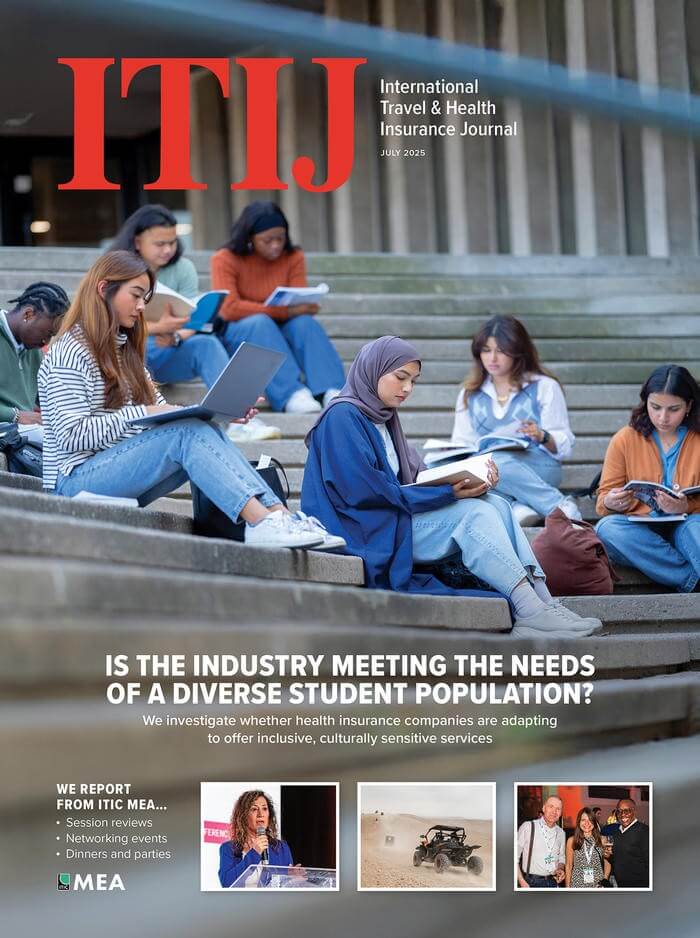
July 2025
Issue
In this issue we look at health insurance for international students, and ask if the industry is adapting to offer inclusive, culturally sensitive policies. We also examine the potentially lucrative world of bancassurance, plus we investigate wait times in the American hospital system.
Editorial Team
The Editorial Team updates the ITIJ website daily, and works on features for the print edition. With expert industry knowledge and years of experience in writing about complex travel insurance issues, the Editorial Team is ready to investigate and report on the topics that matter most to ITIJ's readers.












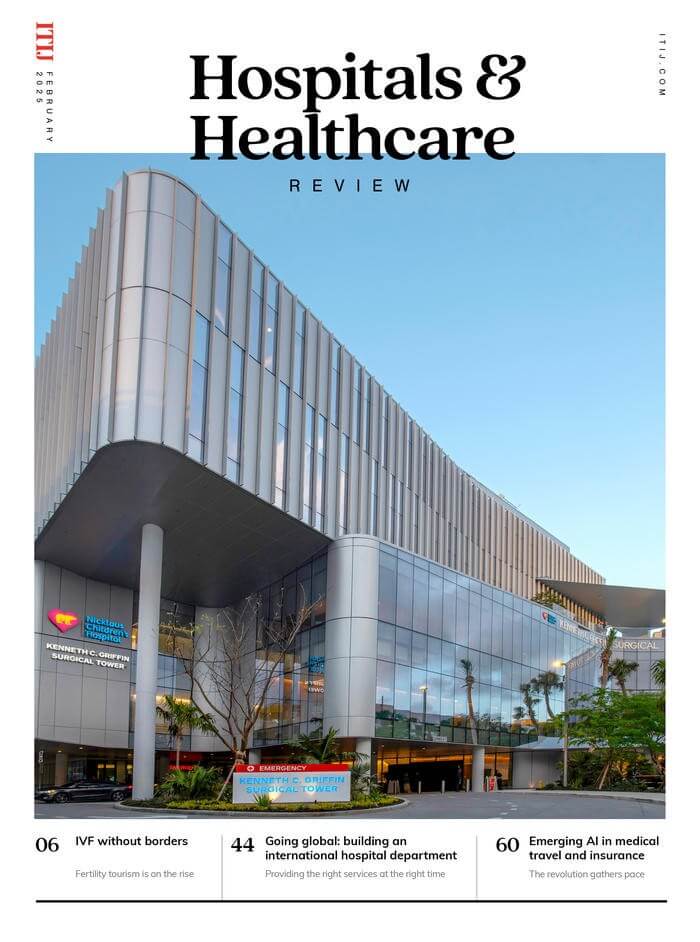
February 2025
Issue
Offering readers a deep dive into the issues facing providers and payers of healthcare services around the world. Cost containment, international patient department development, the role of AI in healthcare delivery and more.