American health insurers – what’s next?

Milan Korcok examines the current mood towards health insurance in the US, and what’s next for the industry
Every year, between 1 October and 7 December, American television pitchmen and women take over living room screens offering an array of supplemental healthcare benefits to the 68 million Medicare-eligible beneficiaries, offering them upgrades to supplemental plans (called Medicare Advantage) that offer everything from gym memberships and wellness seminars to Uber rides to doctors’ offices, subsidies for certain services, more medication choices, dental, eye, hearing care, etc. And for low-income applicants, there are credit cards for groceries and other over-the-counter daily-need items at supermarkets and pharmacies in their own neighbourhoods, refillable up to US$250 per month.
And if you miss one high-energy pitch, don’t worry, another will be along in eight minutes or so – from independent brokers, marketing firms, various third-party entities (like once-great athletes) or somewhat more polished ‘spokespersons’ representing the largest health insurance companies in the world.
According to KFF (a health news/analysis service founded by the Kaiser Family Foundation), “nearly 650,000 airings of Medicare ads appeared during the recent nine weeks of advertising – more than 9,500 airings per day – most in local-media markets”. That was enough to provide each average senior in the market with 43 choices.
Something for everyone
There’s something for every taste and wallet: health maintenance organisation (HMO) plans, preferred provider organisation (PPO) plans, special needs plans for people with chronic conditions, even many free plans for low-income applicants. The flavours are endless – and assertively marketed. Given the fervour of sign-ups during those 10 weeks, it’s clear seniors love them. And so do the insurance providers: UnitedHealthcare, Humana, Cigna, Aetna, Anthem and hundreds of smaller local variants, tending to specific needs of individual states.
On 4 December 2024, just as the sign-up period was winding down a record season, the unthinkable happened
And then, on 4 December 2024, just as the sign-up period was winding down a record season, the unthinkable happened: Brian Thompson, 50, a family man with a wife and two children, and CEO of UnitedHealthcare (the largest of the private health insurers competing for the rich seniors market), is shot down and killed on his way to an investors’ meeting in New York. Five days later police locate and arrest 26-year old Luigi Mangione in Altoona, Pennsylvania, 231 miles from New York, where he defiantly declares: “It had to be done,” and a handwritten manifesto he has on him when arrested that refers specifically to UnitedHealthcare says: “The reality is these [indecipherable] have gotten too powerful, and they continue to abuse our country for immense profit because the American public has allowed them to get away with it.”
A new ‘hero’
Normally that would be the end to a bad chapter, except that within hours, a current of sympathy for the underdog springs to Mangione’s defence and anonymous donors open their wallets – up to US$350,000 to date, and still going. A new ‘folk hero’ is born.
Then, when the New York Times runs an opinion piece by Andrew Witty, CEO of UnitedHealth Group, the parent of UnitedHealthcare, in which he admits the US healthcare system is “flawed”, in need of reform, and Thompson was “one of the people trying to make it better”, all hell breaks loose and the Times is forced within hours to shut down its comments page in the face of vitriolic reaction from hundreds of readers citing their own litany of alleged delays by insurers, UnitedHealthcare among them, of alleged service deferrals, denials of care, and the abandonment of patients and family members at their time of greatest need. The mood stayed ugly.
Ironically, as that was happening, Americans will have signed up for health insurance at a greater rate than ever, with only a few staying on the sidelines, insisting they had the right to spend their money as they wished. No law said they had to buy insurance.
Nonetheless, according to Statista, 92.1% of Americans – more than ever – have health insurance coverage. And they pay handsomely for it, spending 17.7% of their GDP, more than any of the 38 countries in the Organisation for Economic Co-operation and Development (OECD) – of which only the US, Switzerland and Lithuania are predominantly dependent on private insurance. How is that spending parsed? Employer-provided insurance covers 53.7% of Americans, and publicly funded plans cover 36.3%. Of the 68 million in Medicare, 32.8 million are enrolled in the Medicare Advantage sector, with UnitedHealthcare, Humana, Cigna, and CVS/Aetna controlling the biggest piece of action. The single biggest carrier is UnitedHealthcare (active in 49 states and Washington DC).
What is Medicare Advantage (MA) and where does it fit in?
Private insurance companies receive a set amount of federal Medicare funding for providing Part A (hospital) and Part B (physician services) coverage through Medicare Advantage plans. Each MA insurance company is approved and contracted by Medicare and must fulfil guidelines for coverage as established by the government.
Medicare Advantage plans are additionally financed by monthly premiums paid by subscribers. The premium amounts vary by company and plan. Subscribers may also be asked to pay a certain amount of their expenses in the form of deductibles or copayments. But the most popular – and most highly touted market choices – are those that waive premiums and rely on a combination of Medicare and state Medicaid coffers to cover their low-income subscribers. Persons in this group are known as dual eligibles.
It seems there’s plenty of money around if you know where to look for it, and healthcare insurers are pretty good at the game.
But ‘offering’ coverage and ‘providing’ it are two different entities and they sometimes get tangled in the weeds
But ‘offering’ coverage and ‘providing’ it are two different entities and they sometimes get tangled in the weeds. When an insured patient seeks out a physician (or goes to hospital) for a concerning set of symptoms, the physician (usually approved by the insurer) is required to file a request with the insurer to go ahead and treat the patient (and to make sure he or she gets paid). At the insurer’s end this making a decision, by whoever is on deck to validate the request and send back a prior approval, too often doesn’t happen quickly, and that’s the issue that has enflamed relations between the nation’s physicians and their paymasters, more so in the Medicare Advantage market than in more conventional pay-as-you-go plans, PPO, HMO, or private pay plans.
Prior approvals are only required for post-acute care (that is non-emergent services). In the US, all hospitals are required to provide emergency care to anyone who needs it – irrespective of insured status. Once the emergency is treated, approvals come into play.

This is where the problems start
In October 2024 a Senate Homeland Security subcommittee released results of its investigations into prior authorisation use patterns by the three largest MA insurance companies. They found that UnitedHealthcare, Humana, and CVS/Aetna declined prior approvals three times more often for MA clients than they did for clients in their conventional insurance plans. The subcommittee also deduced that, in 2022, the named insurers denied 3.4 million prior authorisation requests (7.4% of all submitted). And they emphasised that patients appealed only 10% of denials, claiming they were just too intimidating (“tough to understand”). I have seen some of these denial review forms – some four to five pages of really fine print, indecipherable by normal earthlings. Even given my lifetime of writing about medical/clinical affairs, I could see why the patient just gave up.
Subcommittee analysts also found that during the survey period 2019 to 2022, CVS/Aetna’s denial rates increased by 57.5% (far higher than the 40% growth in MA enrolments overall); and Humana’s denial rate for long-term acute care hospitals, (the most expensive type of non-emergency care) grew by 54% between 2020 and 2022.
Another interesting revelation in the Senate report was the increasing use of predictive technologies (a class of artificial intelligence/AI) in ‘refining’ their prior approval assessments: one observer noted that adjustment of certain algorithms produced “faster handle times” for cases, as well as “an increase in adverse determination rate”, which the meeting minutes attributed to “finding contraindicated evidence missed in the original review”.
The American Medical Association (AMA), which has been upfront in challenging “overuse” and inefficient application of prior utilisations, emphasises: “Medical practices spend an average of two business days a week per physician to comply with health plans’ inefficient and overused prior-authorisation (PA) protocols. One-third of practices employ staffers who spend every second of their working hours on PA requests and follow-ups.”
The AMA is pushing federal authorities to impose 48-hour limits for non-urgent requests – preferably 24 hours. It also favours advancing peer-to-peer contacts so that only qualified examiners make clinical determinations, and it advocates limiting decisions handed down by “unqualified” persons.
As for using AI, which the association has re-titled ‘augmented intelligence’, for the prior authorisation process, AMA Board Member Marilyn Heine MD does not see it as a “silver bullet”, as the sheer volume of prior authorisation requirements continues to be a massive burden for physicians and creates significant barriers to care for patients. “The bottom line,” she emphasises, “remains the same: we must reduce the number of things that are subject to prior authorisation.”
End note
In 1965, when President Lyndon Johnson passed Medicare into law, it was a bare-bones fee-for-service product with deductibles and co-pays, and fees so low many physicians spurned the programme totally. It was nothing like the more extensive coverage plans being introduced in Canada (at close to the same time) and that had been functioning in many European countries for much longer. The intent was clear: get out of the way and let the private sector take care of. They did. Block by block. Not all fitting too well, but Americans are now virtually all covered. Nobody said it was going to be a piece of cake.
March 2025
Issue
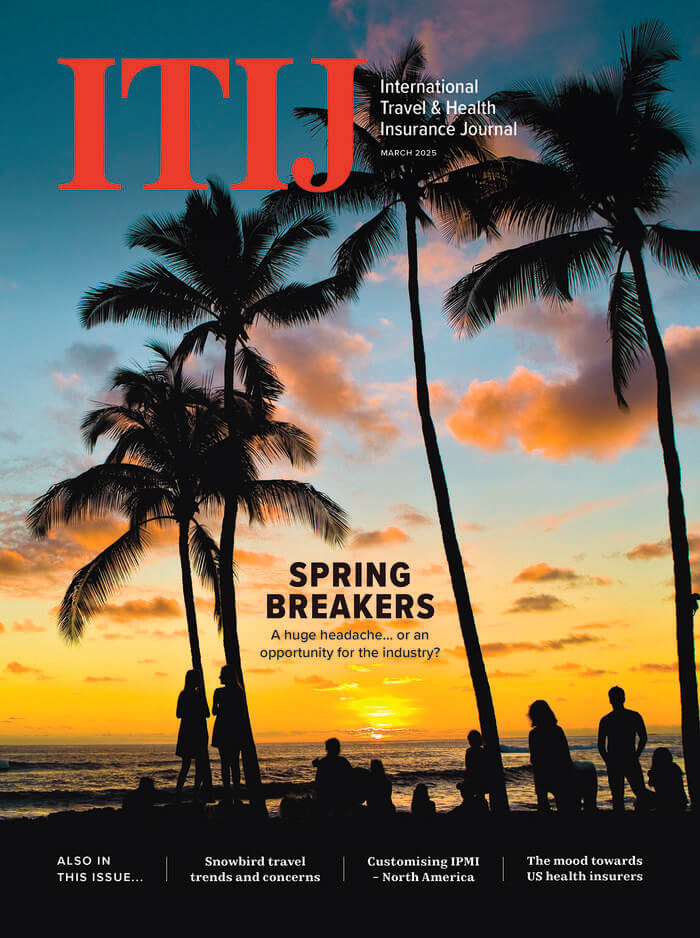
In the March issue of ITIJ we examine spring break trends; look at the changing snowbird market; and investigate IPMI policies in North America. Included with this issue is the Air Ambulance Review, which has features on clinical care for ABIs; investing in fleet; the role of brokers in the air ambulance industry and an accreditation update.
Milan Korcok
Milan Korcok is a national award-wining medical writer who has been covering international healthcare activities and trends in Canada, the US and abroad for many years. He has long served as contributing editor to the Canadian Medical Association Journal and the Journal of the American Medical Association. He is a founder of – and has served as editor of – the US Journal of Drug and Alcohol Dependence; a founder of the Travel Health Insurance Association of Canada, and currently serves as contributor to ITIJ.













February 2025
Issue
Offering readers a deep dive into the issues facing providers and payers of healthcare services around the world. Cost containment, international patient department development, the role of AI in healthcare delivery and more.