Patients without borders

Global travel has rebounded from its pandemic slump – and medical tourism is no exception. IH&H explores the top destinations for cross-border care, and the treatments patients are seeking
The global market for medical travel is – appropriately enough – in excellent health. According to a recent report from market research and consulting firm Global Market Insights, the value of the sector more than doubled between 2022 and 2024, from US$31.3 billion to $66.8 billion. Barring another pandemic or similarly seismic global catastrophe, the report expects this value to balloon from an estimated $84.5 billion in 2026 to a staggering $174.1 billion in 2035.
The value of the global medical travel sector nearly doubled between 2022 and 2024
Much of this growth is driven by the fact that standards of care in developing countries are increasingly matching the average in developed countries, but at a fraction of the cost. As a result, demographics like expatriates and high-net-worth individuals are more likely to expect – or even prefer – to travel for certain procedures, as they anticipate a level of quality that is at least equal to, if not better than, the country in which they reside. Naturally this poses a question for insurers, who must thread a delicate needle between cost-effectiveness, quality of care, and patient expectations.
So, which destinations are proving particularly popular for patients seeking cross-border care?
The UK
The UK remains a perennially popular healthcare destination for foreign nationals, with London maintaining an enviable global reputation. London’s Cleveland Clinic reports growing demand from overseas patients and expatriates seeking medical procedures in the UK, often for complex and specialist procedures, where trusted local expertise, infrastructure, and equipment – as well as cultural familiarity – are key.
“International medical travel patterns continue to evolve,” Professor Nadey Hakim MD, International Relations Director at the Cleveland Clinic, told IH&H. “We continue to care for patients from the Gulf Cooperation Countries (GCC) through our long-established relationships with governments, embassies, and insurers, and we also increasingly see patients from the wider Middle East, as well as Europe and Africa.”
One of the benefits of seeking treatment in the UK is that a level of cultural sensitivity tends to be baked into the process. London is a global centre for many high-powered industries, and healthcare professionals are accustomed to dealing with customers from all over the world, at all times of day. So, while developing destinations are certainly punching above their weight in terms of quality of care and competitive costs, there can sometimes be a lack of experience in this area, meaning veteran destinations may retain an edge.
“For international patients, expectations are fundamentally built on trust, transparency, and consistency,” said Dr Nick Losseff, the Cleveland Clinic’s Medical Director for Global Patient Services. “That trust is earned through clear clinical communication, outcomes data, international accreditations, and reputation. We offer Arabic-speaking staff, cultural liaisons, and VIP coordinators, alongside faith-sensitive care, halal catering, private suites, and flexible visiting policies. We also work closely with embassies and referring medical offices to ensure continuity of care and clarity throughout the process.”

When it comes to the types of care that these international patients desire, Dr Losseff noted several clear patterns, including increasing demand for preventative and wellness-focused services, such as executive health screenings, advanced cardiac assessments, and lifestyle medicine.
“At the same time,” he said, “complex tertiary referrals remain a key driver – particularly in oncology, cardiology, orthopaedics, and neurological rehabilitation. These patients are often seeking multidisciplinary, high-acuity care delivered within a single, integrated system they trust.”
IH&H also spoke to Mohamed Ibrahim, Head of International Business Development at The London Clinic, which receives a “steady influx” of overseas and expatriate patients. Many of these are “embassy” patients, who receive sponsorship from their embassies to travel to London for treatment, though many are self-pay. According to Ibrahim, the split is roughly 70% embassy patients and 30% self-pay. In terms of source markets, a large number of The London Clinic’s returning patients are from the Gulf states, particularly Kuwait, though they are seeing increasing numbers of patients from China and Africa too.
The UK remains a perennially popular healthcare destination for foreign nationals
“We are seeing a lot of patients coming to us for cancer treatment,” said Ibrahim. “We specialise in oncology and haematology treatment, and we see good outcomes, so word of mouth travels. What we hear anecdotally from patients is they trust us and the quality of treatment we offer, which they find superior to what they may find in their home country. [But] we have many areas of speciality, so as well as coming to us for cancer treatment, we have consultants in haematology, urology, lung health, breast and gynae, as well as overall male and female health, orthopaedics, and ophthalmology. A good example is deep brain stimulation – which is a neuromodulation technique used by specialists to treat a wide range of movement disorders, including Parkinson’s disease and tremor. This is a very niche treatment.”
Mexico
Mexico is another extremely popular medical travel destination, one of the most sought-after in the world – particularly for patients coming from the US, attracted by both the lower average cost of care and the high number of Joint Commission International (JCI)-accredited hospitals.
Dr Misael Uribe, Chairman and Founder of the multi-award-winning Médica Sur in Mexico, said that the hospital had seen a sustained increase in foreign patient inflow over the last few years, which mainly breaks down into two particular segments: medical tourists coming from the US for specialised treatment, and Mexico’s growing expatriate community, who tend to favour hospitals like Médica Sur for consultations, diagnostic testing, and surgical procedures.
“We have recorded a significant upward trend,” said Dr Uribe, “with an estimated 20% increase across [these] patient categories. We have [also] identified a high concentration of demand within specific high-complexity and elective clinical pathways. International and expatriate patients primarily seek specialised care in orthopaedics, cardiology, and bariatric surgery, as well as high-precision services in ophthalmology, otolaryngology, plastic surgery, and advanced dentistry.”


Accessible costs are naturally a factor in these patient trends, but Dr Uribe also pointed to endorsements from JCI and the General Health Council as crucial factors that make patients feel safe. International standards provide patients “with the necessary certainty that facilities and medical procedures align with the same rigorous standards found in the US”, he said.
One aspect of cross-border treatment that can sometimes cause discomfort for patients is the lack of joined-up care – in an already stressful situation, a complex healthcare pathway with too many moving parts can make things even more difficult. Hospitals that can offer what Dr Uribe calls an “all-in-one healthcare ecosystem” may well have an advantage here.
“[We are] the only high-specialty institution in Mexico capable of managing the entire patient journey,” he told IH&H, “from bilingual staff and private transportation to on-site hospitality services at our hotel.”
International standards provide international patients with the necessary certainty that facilities and medical procedures align with the same rigorous standards found in the US
This is the kind of wide-ranging, detailed service that patients are increasingly going to expect as the medical travel sector continues to grow – though one might naturally be concerned about how hospitals around the world can maintain their competitive costs when they’re providing everything from cutting-edge medical care to local taxi services.
Malaysia
Looking to the Asia-Pacific region, Malaysia has been growing in popularity as a medical travel destination over the past decade, and the sector has become a national priority. Last year, Malaysia launched its Year of Medical Tourism, which has been strategically aligned with this year’s Visit Malaysia 2026 initiative.
Tourism Malaysia and the Malaysia Healthcare Travel Council (MHTC) have joined forces to promote the nation, with prominent upgrades to hospital infrastructure and improvements in service standards in line with international expectations. These are being widely promoted in the hope of enticing more international health travellers to take advantage of its internationally accredited hospitals, highly trained professionals, and widely adopted new medical technologies.
And while Malaysia – like most places – suffered a dip in popularity due to the Covid-19 pandemic, it has more than bounced back. A spokesperson for the MHTC told IH&H: “The pre-pandemic period 2015–19 saw [medical tourism] industry revenue growing at a compound annual growth rate (CAGR) of 16%. Revenue for 2019 was RM1.67 billion [$406 million], with over 1.2 million foreigners served. During the pandemic period 2020–22, revenue dipped by more than RM1 billion. Post-pandemic saw the industry making [a] full recovery of pre-pandemic achievements. The industry hit its first RM3 billion mark in 2025, within two years of hitting its first RM2 billion mark in 2023. Health tourism revenue CAGR for the period 2023–25 is 20%, and the preliminary 2025 revenue figure is RM3.22 billion, with over 1.8 million foreigners served, [though] data collection
is ongoing.”

According to MHTC figures, between 2023 and 2025, Malaysia saw the most major increases in terms of numbers of medical travellers from Indonesia, China, India, Bangladesh, and Singapore, with Indonesia the most popular source market, and Singapore the fifth most popular. In terms of what patients were travelling for in 2025, the top 10 inpatient specialties were gastroenterology, infectious diseases, respiratory medicine, accidents and injuries, obstetrics and gynaecology, orthopaedic surgery, ENT, oncology, cardiology, and cardiovascular disorders.
Tourism Malaysia and the Malaysia Healthcare Travel Council have joined forces to promote the nation, with prominent upgrades to hospital infrastructure and improvements in service standards in line with international expectations
Interestingly, the MHTC spokesperson also broke down which treatment options were the most popular for patients from different source markets: “Indonesians come for almost all specialties Malaysia has to offer. Orthopaedic surgery and oncology are among the common specialties sought after by travellers from [all] the top five countries. Cardiology is in demand by all these top five countries except for China. Reproductive medicine is popular among medical travellers from Indonesia, China, and Singapore.”
Maintaining efficiency
At the core of these success stories is the symbiotic relationship between medical providers and insurers. Facilitating smooth and efficient cross-border care requires long-term partnerships based on mutual respect, rather than purely transactional relationships.
“Clear alignment on clinical pathways, billing structures, and documentation is essential,” said Dr Losseff, “supported by dedicated international patient and concierge teams. Integrated case management – including translation, interpretation, billing coordination, and family support – also plays a critical role. We place strong emphasis on value-based care, aligning outcomes with cost-effectiveness, and we continue to work through regulatory and data flow challenges to support better pre-and post-travel care for international patients.”
But while respect between insurer and hospital is of course essential, so is respect – and trust – between hospital and patient.
“We have an international development team who deal with all patient needs, [including] translation services, cultural needs, and care pathways,” said Ibrahim. “We are here seven days a week. Many patients return, and we consider many of them friends. When I go to countries, I will meet with some of our patients.”
IH&H also spoke to Diamela Corrales, Director of International Programs and Guest Services at Jackson Health System International, about how the hospital group works with international insurance companies to ensure transparency of operations: “Our international case managers understand the various international insurances (expatriate and travel health insurance) and maintain open communication throughout the entire process with our care partners and insurance company clients. Communication is key – there’s a clear expectation before the transfer occurs, and once the patient arrives, we match the patient and their family with a hospitality coordinator that ensures that all their needs are taken care of and that meetings with their physicians are scheduled in their preferred language to address any questions and concerns they may have.”
With these kinds of services on offer around the world, no wonder patient expectations are so high.

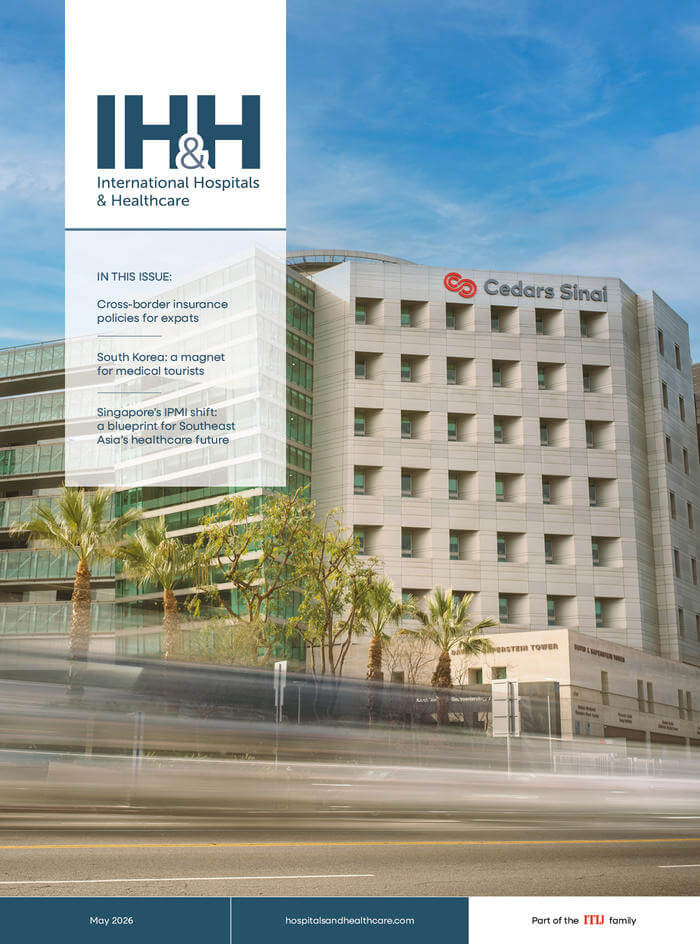
May 2026
Issue
A whirlwind tour of the top medical tourism destinations in this issue encompasses Latin America, South Korea and India – each diverse region and nation appealing to different demographics and with different specialities for those seeking specific care. In-depth analysis from industry experts highlights growth opportunities in the global healthcare sector – so dive in to the latest edition of IH&H for all the latest industry trends.
Editorial Team
The Editorial Team updates the ITIJ website daily, and works on features for the print edition. With expert industry knowledge and years of experience in writing about complex travel insurance issues, the Editorial Team is ready to investigate and report on the topics that matter most to ITIJ's readers.












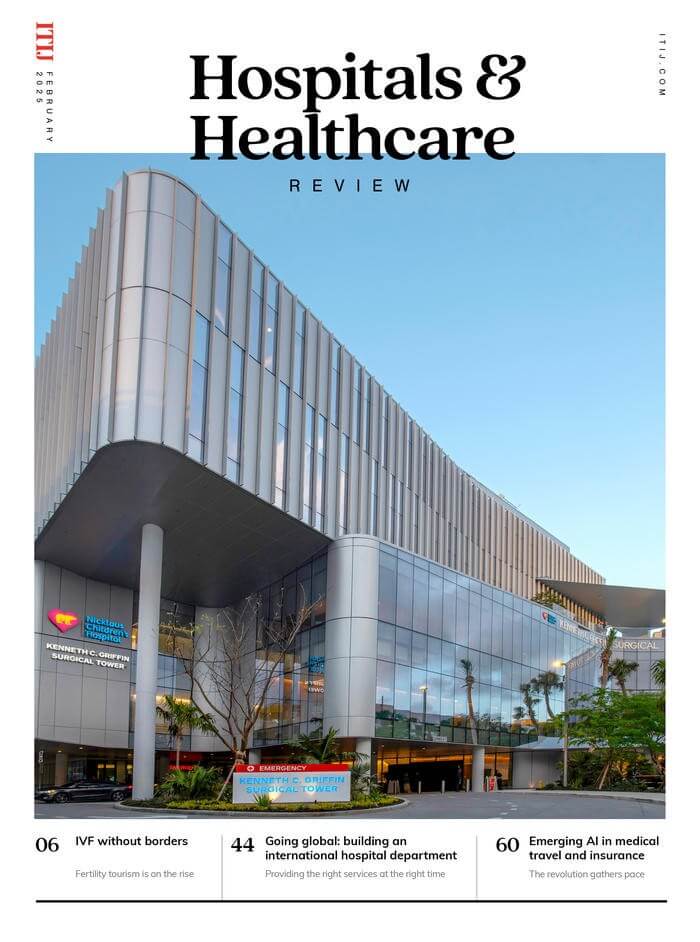
February 2025
Issue
Offering readers a deep dive into the issues facing providers and payers of healthcare services around the world. Cost containment, international patient department development, the role of AI in healthcare delivery and more.