
South Korea’s medical tourism surge

Chloe Fox speaks to industry experts about South Korea’s rise as a medical tourism hub, the global demand for K-beauty and advanced treatments, and the patient-focused services shaping the sector’s future
South Korea has become one of the fastest-growing destinations for medical tourists worldwide, offering a combination of cutting-edge medical technology, cultural emphasis on health and beauty, and highly efficient patient services. Sean Park, Operations Director at Flying Doctors, Korea Tourism Organization (KTO), and Jinsung Park, Founder of MEDIWIN, a Korean healthcare facilitator specialising in medical tourism, shared their perspectives on the key factors driving international interest, the treatments drawing patients, and what the future holds for the sector.
Why South Korea attracts international patients
A major draw, according to Sean Park, is the country’s ability to deliver world-class healthcare at a fraction of the cost of Western nations. “A unique strength of the Korean system is the high level of price transparency and cost-effectiveness; because the government monitors medical costs, there is little disparity between private and public institutions. Consequently, patients can access top-tier care at 30–50% lower costs compared to the US, Europe, or Singapore.”
Patients can access top-tier care at 30–50% lower costs compared to the US, Europe, or Singapore
Speed and accessibility also set the Korean system apart. “Furthermore, the sheer efficiency of the Korean medical process – where diagnostics that typically take nearly a week elsewhere are completed in a single day – remains a major draw for international patients.”
Jinsung Park added that this efficiency extended to the ease of scheduling and accessing care: “Unlike some Western countries, South Korea’s medical system allows all patients (both local and international) to access doctor services such as a full-body check-up, including MRI or CT scan, quickly.
“The Korean government designed its medical system to ensure fast access and a sufficient number of doctors and clinics.”
Building expertise: Korea’s doctors
High-quality care is underpinned by the level of medical expertise in South Korea. Jinsung Park highlighted the role of rigorous education and international influence in shaping the country’s doctors: “Throughout Korea’s modern history, medical education has advanced rapidly. Thanks to a highly educated population and strong academic institutions, Korean doctors have successfully adopted US-based medical knowledge and practices.”

A cultural emphasis on wellness and preventative care further strengthens the country’s medical capabilities: “In Korean culture, being attentive to one’s health and appearance has become an important part of daily life.
“For example, by the time Koreans reach their 40s or 50s, almost every citizen undergoes comprehensive health check-ups, including MRI or CT scans, to prevent potential illnesses or detect oncology-related issues early.”
This focus has also built a strong foundation for medical tourism: “Korea performs more plastic surgeries and skin-beauty treatments than any other country, attracting international patients seeking cosmetic and aesthetic procedures.”
Treatments that draw international patients
Sean Park highlighted the appeal of South Korea for international patients: “For patients from regions with developing healthcare systems, such as parts of Eastern Europe, the Middle East, and Southeast Asia, South Korea has emerged as a top-tier alternative to Western markets. Affordability and standardised pricing are key factors; since medical fees are regulated and consistent across hospital types, international patients benefit from a level of financial predictability rarely seen elsewhere.”
Technology also contributes to meeting the expectations of modern patients: “Korea’s rapid adoption of ‘smart hospital’ systems and IT-integrated healthcare innovations has significantly reduced waiting times. By providing fast and accurate results, South Korea effectively meets the high expectations of international patients who value both clinical excellence and operational efficiency.”
While the international health insurance system is still evolving, most patients currently pay out-of-pocket. Jinsung Park explained: “The role of international healthcare coverage is growing in Korea’s medical tourism industry. However, it is still in the early stages due to differences in policies and coverage among international healthcare providers. Many patients are willing to use such coverage, but the system remains limited.
“Most international patients currently pay for medical services in Korea using cash or credit cards. Previously, the Korean government offered a tax refund on medical expenses for international patients, particularly for plastic surgery and dermatology, but this programme was discontinued in 2026.”
KTO noted: “According to the 2024 statistics on foreign patients by medical specialty, dermatology ranks first with 56.6%, followed by plastic surgery at 11.4%, and internal medicine (integrated care) at 10%.

“In addition, the global popularity of Korean dramas and K-pop has increased interest in the beauty of Korean celebrities. As a result, demand is not only high for visible cosmetic procedures but is also growing for treatments such as dental care, traditional Korean medicine, rehabilitation, and hair-loss treatment.”
The global appeal of K-beauty and anti-ageing
Dermatology and plastic surgery remain central to Korea’s medical tourism industry. Sean Park emphasised the growing role of comprehensive health screenings as part of the medical travel experience.
“Dermatology and plastic surgery have traditionally anchored the market, fuelled by the global fascination with K-beauty and anti-ageing treatments. However, the comprehensive ‘one-stop’ health screening system has recently emerged as a signature product of Korean medical tourism. The VIP diagnostic programmes, which offer everything from endoscopies to PET-CT scans and same-day consultations, allow tourists to integrate high-end check-ups into their travel itineraries seamlessly.
“Additionally, we are seeing a steady rise in critical care patients visiting major university hospitals for complex cancer surgeries and cardiovascular procedures, drawn by Korea’s exceptionally high recovery rates.”
Jinsung Park also noted that social media, cultural trends, and K-pop were influencing patient decisions: “Korea skin beauty (dermatology) and Korean plastic surgery (both invasive and non-invasive) are the current forces driving medical tourism in Korea. In fact, last year, the world-famous Kim Kardashian visited Korea for her skin treatment.”
Dermatology and plastic surgery have traditionally anchored the market, fuelled by the global fascination with K-beauty and anti-ageing treatments
Emerging treatments, such as stem cell therapies, are generating new international interest: “Stem cell-based treatments are the latest trend in Korea and are currently attracting international patients. The stem cell field plays a key role in anti-ageing therapies. For patients from East Asia, both K-beauty services and general hospital care for serious illnesses are in high demand,” said Park.
“At the same time, general hospitals and their medical treatments remain a central part of Korea’s medical tourism. For example, Korea offers advanced fertility treatments and continues to attract a diverse range of international patients, from Asia to Europe.”
Patient-focused services
South Korea’s competitive advantage also comes from its patient-centric approach. Sean Park explained that services extended beyond treatment to the entire patient journey.

“South Korea’s competitive advantage lies in its comprehensive concierge services that support patients throughout their entire journey, from arrival to departure. With prior coordination, patients can access seamless support, including airport pickups, professional interpretation, accommodation, and even local tours. To overcome language barriers, major hospitals employ dedicated coordinators fluent in multiple languages, including Russian, Arabic, Mongolian, English, and Chinese.”
KTO noted that, since 2009, the Ministry of Health and Welfare had implemented a registration system for institutions that attract international patients, ensuring the provision of safe and high-quality medical services. In addition, they said, “in 2016, a mandatory medical malpractice liability insurance system was introduced, further strengthening accountability in the event of medical accidents. These measures help build trust and enhance the overall safety and reliability of medical services for international patients.”
South Korea’s competitive edge lies in comprehensive concierge services that support patients from arrival to departure
Jinsung Park illustrated how personalised care worked in practice: “Personalised treatment is one of the strongest aspects of Korean medical tourism. Korean doctors have extensive experience from handling a high volume of international patients. Their education, professional training, and experience abroad equip them to confidently treat most patients from overseas.
“For example, in cataract surgery, Korean ophthalmologists can complete a patient’s eye examination within an hour and discuss surgical options immediately … The surgery itself can be completed within a single day, with each eye procedure taking less than 10 minutes.”


The road ahead
South Korea welcomed 1.17 million international patients in 2024, exceeding its earlier projection of 700,000 by 2027 under a government strategy announced in May 2023. Following this, the Ministry of Health and Welfare set a new target of 1.4 million foreign patients for 2025, and the actual number is expected to surpass this goal, too. With this in mind, Sean Park emphasised the emerging challenges and opportunities for South Korea: “As the country seeks to attract an increasing number of international patients, it must navigate strong regional competition from Japan, Taiwan, and Thailand. “Addressing the high dependency on specific markets to mitigate geopolitical risks is essential, as is decentralising medical infrastructure beyond the Seoul metropolitan area and managing medical staff burnout.” Referring to the ‘Korean wave’ of interest in Korean culture that has spread around the world, he said: “On the other hand, the global ‘Hallyu’ phenomenon continues to serve as a powerful marketing engine. The expansion of digital healthcare – specifically advanced remote consultations and post-operative monitoring – offers a significant opportunity to lead the future market. Furthermore, the rising preference for Korean medical services in the Middle East and Central Asia presents a strategic opening to diversify the patient base and ensure long-term growth.”
Jinsung Park emphasised the importance of quality control and facilitators in maintaining trust: “From an international patient’s perspective, it can be very difficult to choose a doctor or clinic and verify its legitimacy in terms of medical credentials and quality. Therefore, as a leading medical facilitator in Korean medical tourism, MEDIWIN aims to guide international patients toward appropriate and customised doctor consultations that can lead to meaningful treatment in Korea.
“The role of medical facilitators in South Korea must be highlighted, as they serve as a form of quality control between patients and doctors, helping to maintain the country’s reputation in medical tourism. Korean government-approved medical facilitators are licensed and required to carry medical-related insurance as a form of protection for international patients. One of the biggest challenges, however, remains distance.”
By combining high-calibre doctors, advanced technology, efficient systems, and patient-focused services, South Korea has carved a distinctive niche in medical tourism. The sector continues to grow, shaped by cultural trends, global interest in K-beauty, and a commitment to quality and accessibility. As the industry evolves, maintaining these standards while expanding digital services and diversifying patient markets will be critical to sustaining its global reputation.

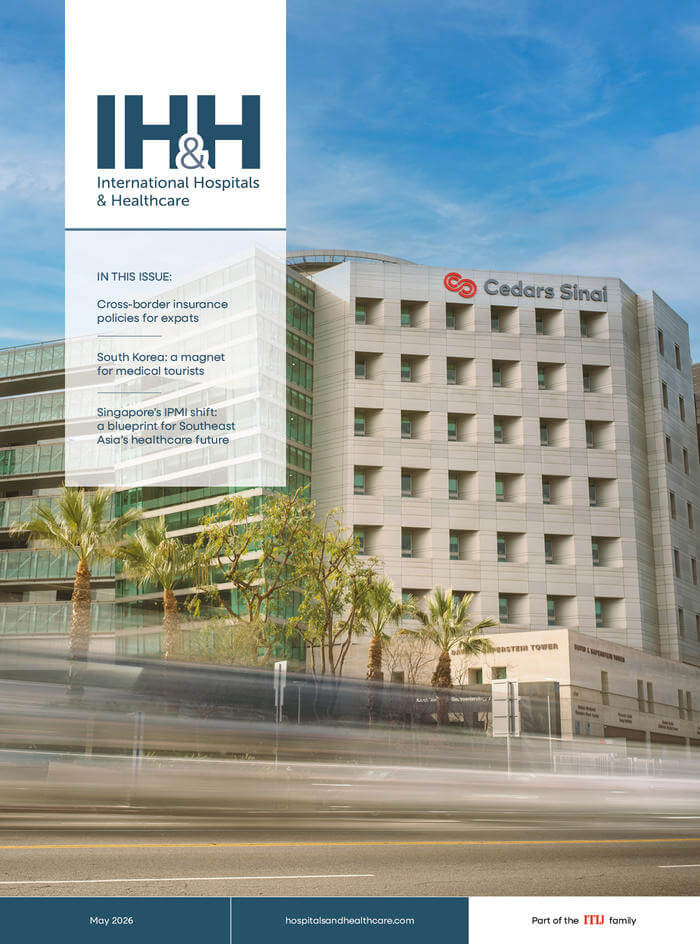
May 2026
Issue
A whirlwind tour of the top medical tourism destinations in this issue encompasses Latin America, South Korea and India – each diverse region and nation appealing to different demographics and with different specialities for those seeking specific care. In-depth analysis from industry experts highlights growth opportunities in the global healthcare sector – so dive in to the latest edition of IH&H for all the latest industry trends.
Chloe Fox
Chloe Fox is a Junior Editor at Voyageur Group, having joined in 2024. She writes for ITIJ and AirMed&Rescue, covering a range of topics including international travel and health insurance, medical assistance provision, and air medical transportation. Chloe holds a BA (Hons) in English and an MA in English Literature from the University of Bristol.











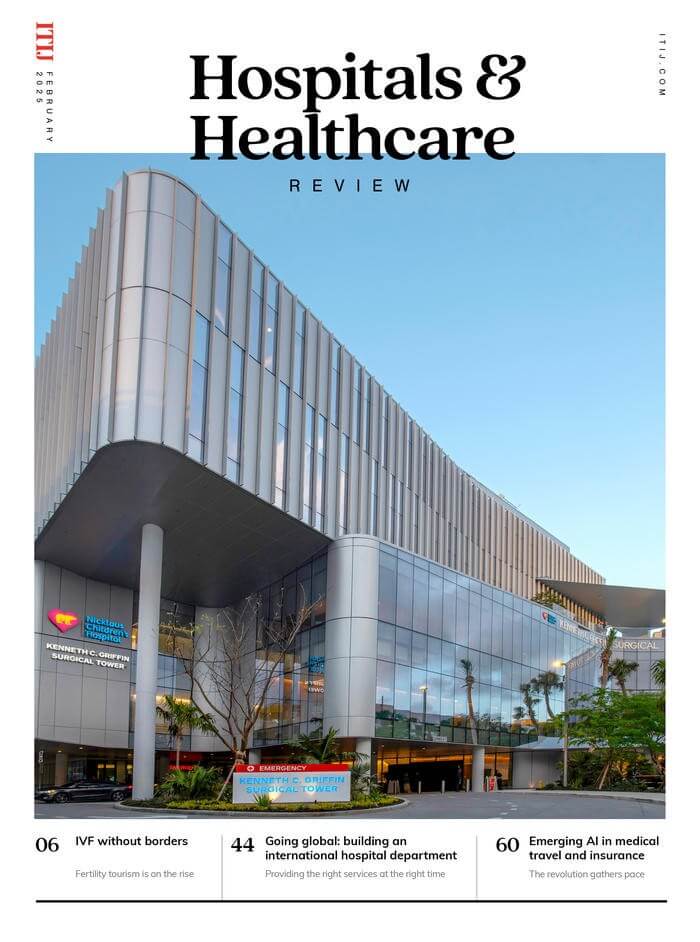
February 2025
Issue
Offering readers a deep dive into the issues facing providers and payers of healthcare services around the world. Cost containment, international patient department development, the role of AI in healthcare delivery and more.