CEPI approves funds for Ebola vaccine development

The organisation has provided funds to three candidate vaccines for Bundibugyo Ebola, to tackle the ongoing outbreak originating in the Democratic Republic of the Congo
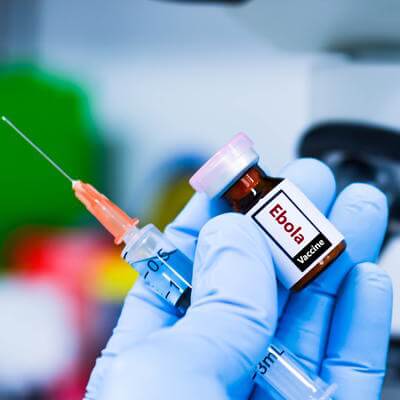
The Coalition for Epidemic Preparedness Innovations (CEPI) has advanced funding for three vaccine candidates to tackle the ongoing Bundibugyo Ebola outbreak in central Africa.
The Bundibugyo Ebola virus currently has no licensed vaccine, and until recently none in development. CEPI explained that developing a vaccine was critical to effectively curtailing the outbreak in the Democratic Republic of the Congo (DRC) and Uganda.
The three candidates receiving CEPI support are being developed by the International AIDS Vaccine Initiative (IAVI), Moderna, and the University of Oxford, with manufacturing by the Serum Institute of India.
CEPI has committed initial funding of up to US$3.2 million to the IAVI vaccine project for preparations “necessary to generate a master virus seed stock”. Up to $50 million has been committed to Moderna’s vaccine project, “for pre-clinical testing and Phase 1 clinical trials”.
Finally, CEPI has also committed initial funding of up to $8.6 million to the University of Oxford/Serum Institute of India vaccine, to fund “pre-clinical testing and other development activities … based on the University of Oxford’s ChAdOx1 platform”, as well as the creation of a master virus seed stock and manufacturing.
Every day counts
As work on the candidates continues, CEPI stated that it would continue to evaluate additional candidates to strengthen its pipeline, and expects to announce these partnerships in the near future.
“With Bundibugyo virus spreading rapidly and no licensed vaccines, every day counts in the race against this deadly disease,” said Dr Richard Hatchett, CEO of CEPI. “CEPI’s urgent funding and support for these three promising candidates aims to advance safe, effective vaccines to help control this epidemic.”
The current outbreak has been declared a public health emergency of international concern (PHEIC) and a public health emergency of continental security (PHECS) by the World Health Organization (WHO) and Africa Centres for Disease Control and Prevention (Africa CDC).
As of 1 June, the outbreak had resulted in an estimated 321 confirmed cases in the DRC, and 11 confirmed cases in Uganda. There have also been 48 confirmed deaths in the DRC, and one in Uganda, as well as 116 suspected cases in the DRC.









February 2025
Issue
Offering readers a deep dive into the issues facing providers and payers of healthcare services around the world. Cost containment, international patient department development, the role of AI in healthcare delivery and more.