China’s $259.5bn healthcare spend puts IPMI costs and access in focus

With 95% of China’s population covered by state-backed medical insurance, changes to hospital funding and treatment pathways offer key lessons for international private medical insurers
China’s basic medical insurance system paid out ¥1.75 trillion (US$260 billion) in the first nine months of 2026, underscoring the scale of the country’s healthcare expenditure and the importance of understanding local medical provision for travel insurers and assistance companies.
Data released by the National Healthcare Security Administration (NHSA) on 21 October show that the scheme, including maternity insurance, generated ¥2.30 trillion in revenue between January and September. The programme covers more than 1.33 billion people, with participation estimated at approximately 95%.
Employee medical insurance accounted for ¥1.004 trillion in expenditure, including ¥101.01 billion in maternity benefits. Spending under the urban and rural resident scheme reached ¥747.09 billion.
Wider access has been supported by cities relaxing household registration restrictions, making it easier for migrant and flexible workers to enrol where they live. Meanwhile, standardised funding for 158 common ailments across hospital tiers is intended to encourage treatment at community clinics and ease pressure on major metropolitan hospitals.
For the travel insurance sector, these developments offer important context, but extensive domestic coverage should not be mistaken for universal access to care for international visitors.
Foreign travellers can face different challenges, including language barriers, hospital payment requirements, and difficulties navigating local healthcare provision. Insurers must therefore consider not only medical costs, but also provider networks, guarantees of payment, and the availability of appropriate treatment and evacuation.
As explored in ITIJ’s coverage of Beijing’s new travel insurance product for international visitors, tailored cover and bilingual emergency assistance are becoming increasingly relevant as inbound tourism grows.
China’s healthcare spending figures provide a reminder: understanding how a healthcare system operates is just as important as understanding how much it spends.
Chloe Fox
Chloe Fox is a Junior Editor at Voyageur Group, having joined in 2024. She writes for ITIJ and AirMed&Rescue, covering a range of topics including international travel and health insurance, medical assistance provision, and air medical transportation. Chloe holds a BA (Hons) in English and an MA in English Literature from the University of Bristol.











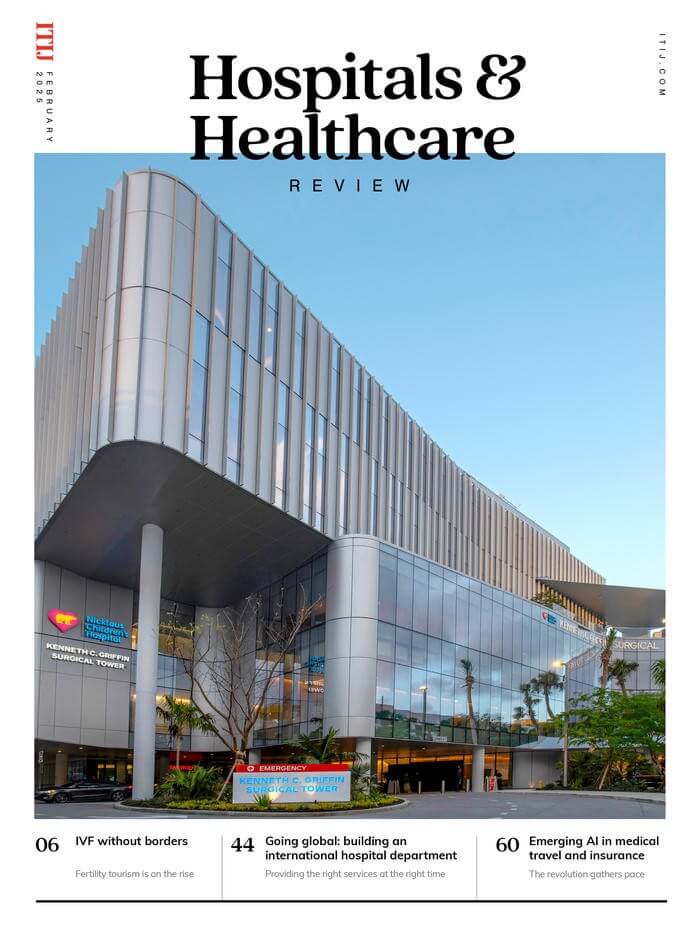
February 2025
Issue
Offering readers a deep dive into the issues facing providers and payers of healthcare services around the world. Cost containment, international patient department development, the role of AI in healthcare delivery and more.