Industry Voice: Kevin Melton, Global Head of IPMI, IMG

Kevin Melton, Global Head of IPMI at IMG, explores what insurers need to, could, or should be doing to support market development
The lifestyle of a digital nomad is one that has continued to grow in popularity in the past several years, most notably because of the Covid-19 pandemic. People can live and work from anywhere in the world more easily now than ever before, and the number of people living outside their home country continues to rise. According to the UN 2024 World Migration Report, there has been a 27% increase in the globally mobile population from 2010 to 2020. As a result, insurers need to develop policies that cater to the needs of this specific travelling demographic, as it is a market with growing potential in the international health insurance industry.
Know your customer
Understanding the digital nomad is the first step insurers need to take as they build these policies. Digital nomads have varying needs and reasons for living outside their home country, whether that be because of work, retirement, a student exchange programme, or simply wanting a different lifestyle in a new country. Just as everyone’s reasons for living abroad are different, so are their health and insurance coverage needs. International private medical insurance (IPMI) policies should be designed to cater to these varying needs.
Long-term healthcare plans are often what digital nomads are looking for when thinking about their international health insurance coverage. At IMG, we have seen an increasing number of digital nomads purchasing our long-term, annually renewable insurance plan, Global Prima Medical Insurance (Global Prima).
Long-term healthcare plans are often what digital nomads are looking for when thinking about their international health insurance coverage
The process of creating long-term policies, such as Global Prima, differs from that of short-term policies, as there are additional underwriting requirements necessary for annual renewable insurance policies.
Regarding coverage itself, digital nomads are typically looking for medical benefits like that of a traditional self-paying expatriate, but they may be looking for more flexibility when it comes to plan levels, coverage areas, and currency payment options.
Having access to a large global network of medical facilities is also crucial for digital nomads, and virtual access to medical professionals offers even greater flexibility. Including access to telehealth services, providing 24/7 virtual and telephone access to a global network of medical professionals to discuss non-emergency medical issues, is key in meeting the needs of these customers.
Another key consideration for insurers as they build bespoke policies for digital nomads is a focus on mental wellbeing. The expectations of today’s travellers have changed, as they are now just as concerned about mental wellness and general wellbeing as they are about physical health. IPMI products with dedicated mental health benefits and services, such as access to virtual counselling services, should be top of mind for insurers. Offering customers convenient access to local mental wellness resources is another way to support digital nomads while they are abroad.
While it is essential for insurers to have long-term policies that cater to digital nomads, it is just as important to develop short-term healthcare plans for digital nomads as well. These types of plans provide flexibility, irrespective of the length of their journey.

Flexibility of cover and communication
When creating policies specific to digital nomads, insurers must take into consideration that this demographic of travellers does not typically have a designated residence. Pinpointing where to call ‘home’ for these travellers can prove to be difficult, and, as a result, insurers must be flexible about covering customers who identify as digital nomads as they move between different countries while maintaining coverage. Without a portable health insurance plan, digital nomads would have to change policies whenever they changed country location, which could be frequently.
Ease of communication is something that is especially important to digital nomads when considering which international health insurance company they should work with. Having the ability to communicate with the insurer via portals, apps, and a variety of communication channels is critical for these customers. Giving them the opportunity to communicate and interact in the way that best suits their needs is incredibly important to digital nomads who are travelling often and may be limited in how they can communicate.
When considering how to best cater to the digital nomad demographic, insurers need to understand key aspects of any new location that the digital nomad chooses to travel to. Being able to advise them on location-specific information, such as suitable medical establishments in the area or country-specific information about cultural differences they may encounter, is valued.
Overall, there are many factors insurers should consider when building policies specific to digital nomads. The demand for customisable, portable, and tech-enabled international health insurance solutions for this travelling demographic is clear. By prioritising mental wellness, seamless communication, and location-specific support, insurers can not only meet the expectations of today’s digital nomads but also position themselves as trusted partners in their global journeys.
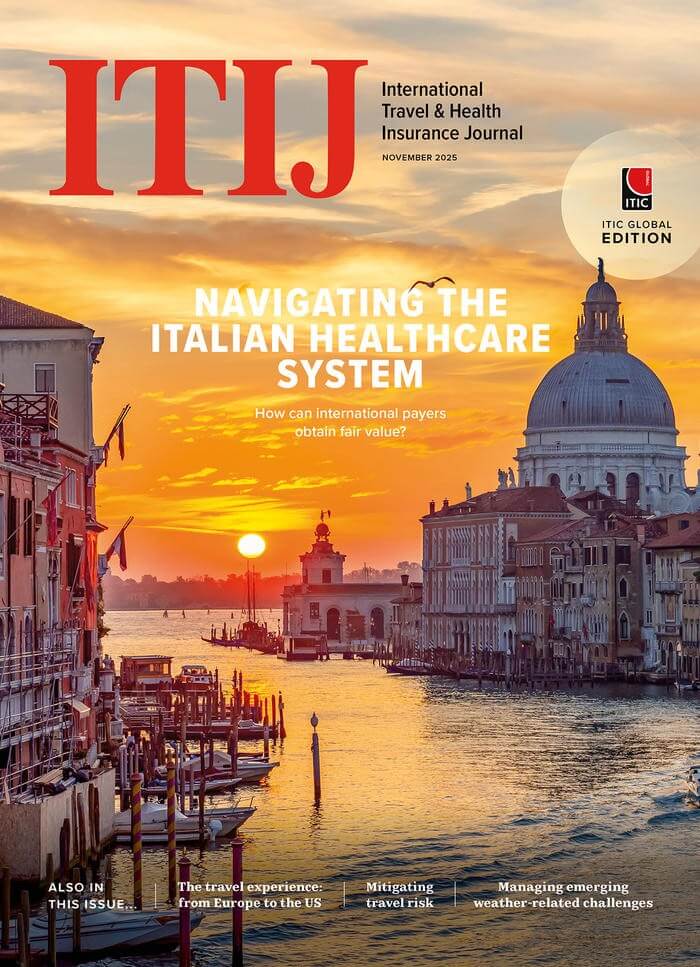
November 2025
Issue
In this issue of ITIJ we look at current travel patterns to and from the US and Europe, take a close look at the Italian healthcare system, and examine how insurers are adapting policies and coverage to manage weather-related challenges.
Kevin Melton
Kevin Melton has over 35 years of experience in the medical insurance and group markets space. For the last 20 years he has worked in the international healthcare market in a variety of senior and board-level distribution positions with a global remit. Kevin previously worked for Allianz, Vanbreda, and AXA before joining IMG in 2021. He specialises in identification and distribution of key geographic and industry-specific opportunities, sales distribution strategy, and building and maintaining key partner strategic relationships.












February 2025
Issue
Offering readers a deep dive into the issues facing providers and payers of healthcare services around the world. Cost containment, international patient department development, the role of AI in healthcare delivery and more.