Interview: Raising the bar: how JCI is advancing global healthcare standards

Andrew Rosen, Vice President of Joint Commission International, discusses the role of accreditation in quality improvement, the promise of AI, and how JCI supports providers worldwide
Could you share some details about your career and professional background, and what initially drew you to working for Joint Commission International (JCI)?
If my career has a theme, it is working with organisations and their leadership to help them improve.
Most relevant to my current role is the 15 years I spent as head of international research at the Advisory Board. In that role, I had the privilege of developing and sharing strategic and operational insights with hospital system leaders and managers around the world. One of the most fulfilling parts of that role was the work we did on quality and safety improvement, including several large-scale global studies.
When the opportunity arose to join JCI – the premier organisation in the
field – and support providers on their quality and safety journeys while
helping expand JCI’s global impact, it felt like the perfect fit.
What does your role involve in terms of overarching responsibility, as well as on a more granular, day-to-day basis?
JCI works virtually and on site with healthcare providers in more than 70 countries. We have people in the field every day, all over the world.
My overarching responsibilities are to ensure that our operations run smoothly and at the highest possible standards; that we understand and meet the evolving needs of the organisations we serve; that we are continuously improving; and that we are using our knowledge and experience to have a greater and broader impact on care.
That makes for a stimulating and varied day-to-day. I might start with a call to a health system in Africa to understand their unique context and issues, then shift to an internal meeting to design a new benchmarking enhancement for our accreditation survey. From there, I could be working on how to better monitor the safety of our staff travelling globally, reviewing feedback from a new certification programme, and then heading to the airport to speak at a conference in Hong Kong about sustainable healthcare.
People who work in healthcare are smart, committed, and deeply caring. It’s always a joy and a privilege to collaborate with them
What do you enjoy most about your current position in JCI and in the wider healthcare community?
What I enjoy most about my current position – aside from the wonderful people I get to work with on my team and across the Joint Commission – is the opportunity to engage with the wider healthcare community.
People who work in healthcare are smart, committed, and deeply caring. It’s always a joy and a privilege to collaborate with them and to support the vital work they do on behalf of all of us.
What role do you think international accreditation plays in the provision of international healthcare services?
International accreditation plays a key role in advancing healthcare quality and safety worldwide. Since JCI’s global expansion over 25 years ago, accreditation has become a trusted tool for healthcare regulators and leaders to implement evidence-based standards and drive continuous improvement.
International accreditation enhances healthcare by:
- Improving patient safety and care quality through adherence to evidence-based standards
- Building trust with patients, especially in medical tourism, by demonstrating global best practices
- Driving continuous improvement in clinical and operational performance
- Promoting transparency within healthcare organisations
- Aligning healthcare systems with international benchmarks and best practices.
In summary, international accreditation is not merely a certification; it is a catalyst for systemic improvement, helping healthcare organisations deliver safer, more effective and patient-centred care on a global scale.
How can international insurance companies use JCI accreditation as a marker of quality care?
International insurance companies can (and do) use JCI accreditation as a key indicator of healthcare quality and patient safety when evaluating
providers for their networks. JCI-accredited organisations meet rigorous, evidence-based standards that span both clinical and operational functions.
Because JCI accreditation is voluntary and not mandated by regulators, providers that pursue and achieve it demonstrate a strong commitment to patient-centred care, safety, and continuous improvement. This signals leadership dedication to maintaining high standards, allocating required resources, fostering a culture of safety, and promoting transparency.
By prioritising partnerships with JCI-accredited hospitals and clinics, insurers can:
- Ensure consistent quality of care across markets
- Reduce risk by referring patients to facilities with proven safety and governance practices
- Build member trust by offering access to providers recognised for excellence
- Support cost-effective care by minimising safety incidents, readmissions, and medical errors.

Can you tell us a bit more about the accreditation process?It would be interesting for readers considering accreditation to find out more about the cost and commitment they need to make.
Pursuing JCI accreditation is a significant organisational commitment. It requires coordinated effort across clinical, operational, and administrative teams. Preparation typically spans several months and involves aligning policies, procedures, and practices with JCI’s evidence-based standards.
The process begins with a comprehensive internal review to identify gaps and implement necessary improvements. This includes standardising protocols, training staff, and ensuring documentation and practices meet JCI requirements.
During the on-site survey, a team of JCI experts conducts interviews,
observes care delivery through operational tracers at the points where care is provided, and reviews documentation to assess how well the organisation meets the standards. The survey is rigorous and objective, while also considering local legal, cultural, and religious contexts.
While AI is not a replacement for clinical judgement, it can serve as a powerful tool to support healthcare professionals, reduce inefficiencies,
and improve the overall patient experience
While costs vary depending on the size and complexity of the organisation, the investment includes not only the survey fee but also the internal resources needed for preparation and ongoing compliance. Ultimately, the process is designed to strengthen systems, improve patient outcomes, and embed a culture of quality and safety.
The role of artificial intelligence (AI) in healthcare provision is a matter of heated and ongoing debate. Where do you think AI can help in improving efficiency in healthcare pathways?
Healthcare today is exceedingly complex – clinically, operationally, financially and even politically. The amount of information that contemporary clinicians must consider is staggering. For example, about 1,300 data points must be considered hourly for an intensive treatment patient. AI has rapidly emerged as the defining technology of the century. It has the potential to advance patient safety, quality, equity, productivity – desirable attributes for better healthcare globally.
While AI is not a replacement for clinical judgement, it can serve as a powerful tool to support healthcare professionals, reduce inefficiencies, and improve the overall patient experience when implemented responsibly. For example, in clinical settings, AI can help support faster and more timely diagnoses, risk stratification, and treatment planning through data-driven decision support. Operationally, AI can optimise scheduling, manage patient flow, and automate administrative tasks like documentation and billing, reducing the burden on healthcare staff.
Where in the world is the JCI seeing the most significant growth in terms of the number of healthcare providers seeking accreditation? Why do you think there is such growth in this region?
JCI is the leading international accrediting body, with over 1,000 accredited organisations across more than 70 countries. We anticipate continued growth across all regions we currently serve, while deepening collaboration with existing partners and supporting early-stage organisations in building quality and patient safety infrastructure – particularly in low- and middle-income countries. Our growth strategy focuses on several key areas:
- Expanding within current countries: we aim to deepen our impact within the countries we currently serve. By assisting our accredited organisations in advancing toward higher-reliability care and zero patient harm, we contribute to their success. Additionally, we support organisations that are not yet accredited, helping them enhance quality and gain international recognition
- Extending our mission: JCI is committed to extending its mission to low- and middle-income countries. We collaborate with healthcare providers in these regions to build foundational quality and patient safety infrastructure. This includes fostering safety culture, enhancing staff skills and competency, and implementing evidence-based policies aligned with international standards
- Collaborating with ministries of health: to enhance overall healthcare quality and safety, we actively engage with ministries of health and public health agencies. By working together, we can drive positive change within their communities.
JCI has staff working around the world – the ultimate remote work organisation! How do you manage to ensure that teams are cohesive and the working environment for your remote staff is inclusive and motivating?
The Joint Commission enterprise operates globally, with JCI serving member organisations across Africa, Europe, Latin America, the Middle East, and Asia Pacific. We maintain regional headquarters in the Middle East and Asia Pacific, with our corporate headquarters in North America.
As a global organisation, we rely heavily on technology and established remote work practices to stay connected and collaborative. Ensuring cohesion among geographically dispersed teams requires intentional effort. We prioritise regular communication, cross-regional collaboration, and shared goals to keep our teams aligned and engaged.
We also focus on creating an inclusive and motivating work environment
by recognising regional diversity, encouraging knowledge sharing, and supporting professional development. Our commitment to being member-centric helps unify our teams around a common purpose, regardless of location.
Andrew Rosen MBA, Vice President, Joint Commission International
Andrew is Vice President of JCI. In this role, he leads strategic development, execution, and mission development for JCI.
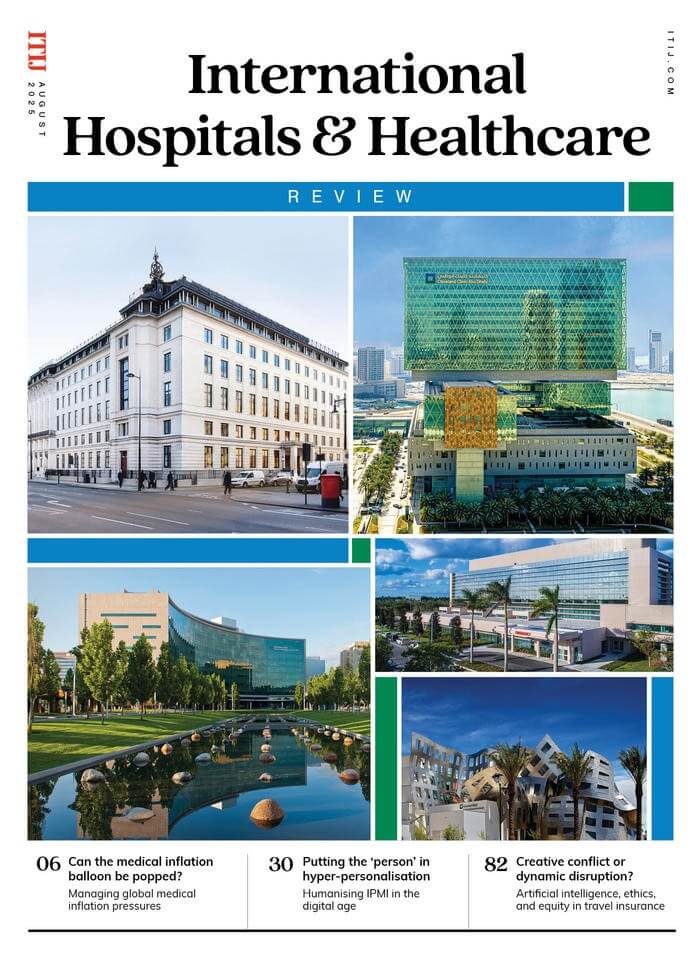
August 2025
Issue
This month we look at the rising demand for medical escorts on commercial airlines, plus ask how the latest technology can help insurance companies. In our International Hospitals and Healthcare Review we examine humanising IPMI in the digital age, and ask what makes a destination desirable for medical tourism.
Editorial Team
The Editorial Team updates the ITIJ website daily, and works on features for the print edition. With expert industry knowledge and years of experience in writing about complex travel insurance issues, the Editorial Team is ready to investigate and report on the topics that matter most to ITIJ's readers.











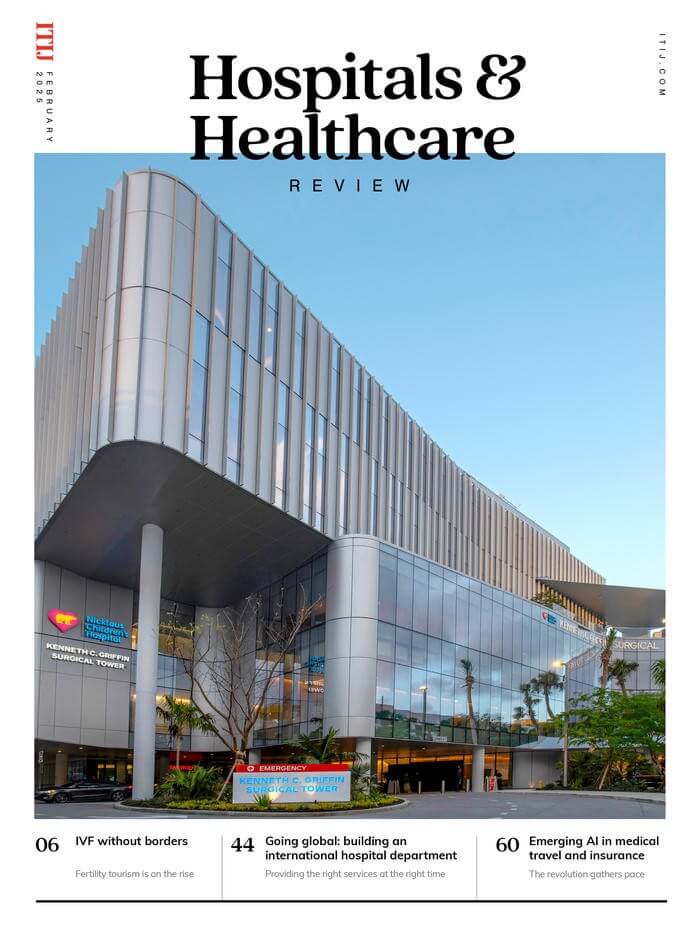
February 2025
Issue
Offering readers a deep dive into the issues facing providers and payers of healthcare services around the world. Cost containment, international patient department development, the role of AI in healthcare delivery and more.