When language becomes a clinical risk: the hidden challenge in international healthcare

Navigating international patient care means managing complexity at every step. Lexxika explains how integrating specialist medical translation turns language from a risk into a pathway for faster, safer decisions
For hospitals treating international patients, complexity is part of the daily reality – navigating different cultures, unfamiliar medication brands, varying clinical documentation standards. At the same time, patient records arrive in multiple languages and formats – scanned documents, handwritten notes, imaging reports – often with varying levels of detail, clarity, and structure.
Intake teams are tasked with piecing together a coherent clinical picture, while clinicians wait for information they can confidently act on. The challenge is not unfamiliar, but it is becoming more acute.
In fast-paced clinical environments, even small delays in understanding patient information can disproportionately impact outcomes
Where risk emerges
As cross-border care continues to grow – through significantly increased medical tourism, enhanced international insurance, and more globally mobile populations – the volume and variability of multilingual medical documentation is increasing. What was once occasional is now routine for many hospitals.
With this shift comes greater pressure on systems, workflows, and clinical teams. In this context, language is not simply a barrier, it’s a variable that directly affects the speed and confidence of clinical decision-making.
In fast-paced clinical environments, even small delays in understanding patient information can disproportionately impact outcomes. Delays in translating diagnostic reports can slow down treatment pathways.
Ambiguity in medication histories or discharge notes can introduce uncertainty at critical moments. Even with translation, inconsistent terminology or missing clinical context can slow decisions and add to clinician workload.
These are not isolated issues, but cumulative ones. And they sit within already complex operational environments, where time, clarity, and coordination are essential. Over time, this accumulation of small inefficiencies can create friction across the patient journey, impacting both care delivery and operational flow.
Moving beyond workarounds
Many hospitals have developed ad hoc solutions, relying on internal language capabilities, occasional external support, or generalist translation services. While these approaches can be effective to a degree, they can also introduce variability in quality, turnaround times, and clinical usability.
What is becoming clearer is that translation, in an international healthcare setting, functions best when it is treated as part of the clinical workflow rather than an external, reactive service. This typically means ensuring that translation is integrated early in the patient pathway, particularly at admission, so that clinicians are working with decision-ready information from the outset.
It also means prioritising specialist medical expertise, where translators understand not only the language but the clinical significance of what they are translating. This moves translation from a supporting function to a critical enabler of timely, informed clinical decisions.
Rethinking language as a clinical variable
As international patient flows continue to grow, the risk associated with unclear or delayed information is becoming harder to ignore. Hospitals that prioritise clear, decision-ready information – supported by specialist medical translation expertise – are not only improving efficiency but strengthening clinical confidence and patient safety.
Because in today’s healthcare environment, language is no longer a secondary concern – it is a core clinical variable that is increasingly being prioritised by international hospitals focused on delivering safe, efficient, and wellcoordinated care.
James Austin is Commercial Director at Lexxika, a specialist language services provider for the global insurance and assistance sectors. With a background in international business, he focuses on improving communication in high-stakes, cross-border situations, helping organisations deliver clearer, faster, and more effective support to customers worldwide.
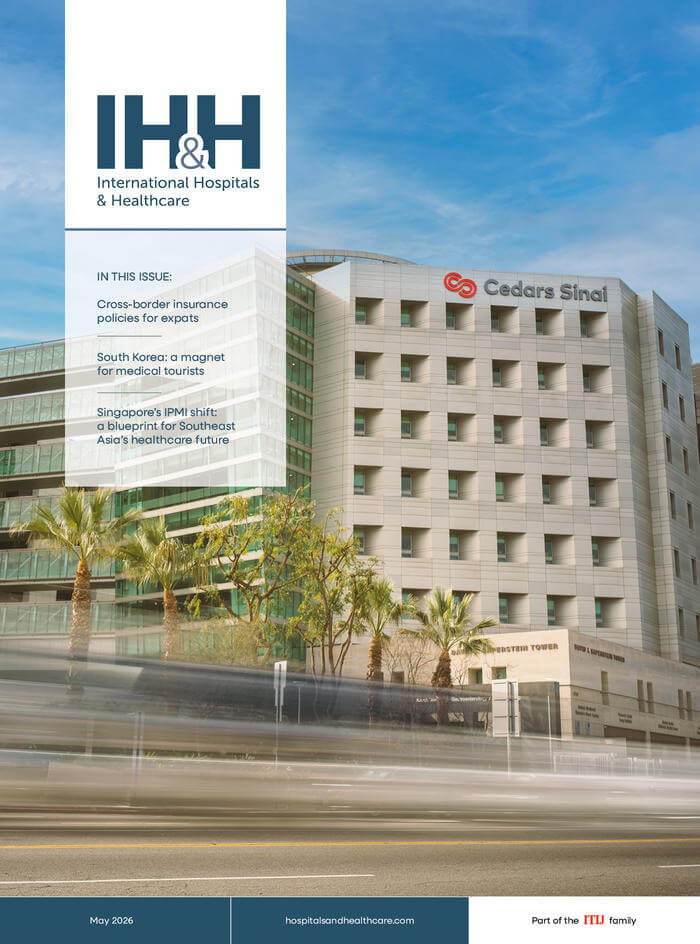
May 2026
Issue
A whirlwind tour of the top medical tourism destinations in this issue encompasses Latin America, South Korea and India – each diverse region and nation appealing to different demographics and with different specialities for those seeking specific care. In-depth analysis from industry experts highlights growth opportunities in the global healthcare sector – so dive in to the latest edition of IH&H for all the latest industry trends.
Editorial Team
The Editorial Team updates the ITIJ website daily, and works on features for the print edition. With expert industry knowledge and years of experience in writing about complex travel insurance issues, the Editorial Team is ready to investigate and report on the topics that matter most to ITIJ's readers.











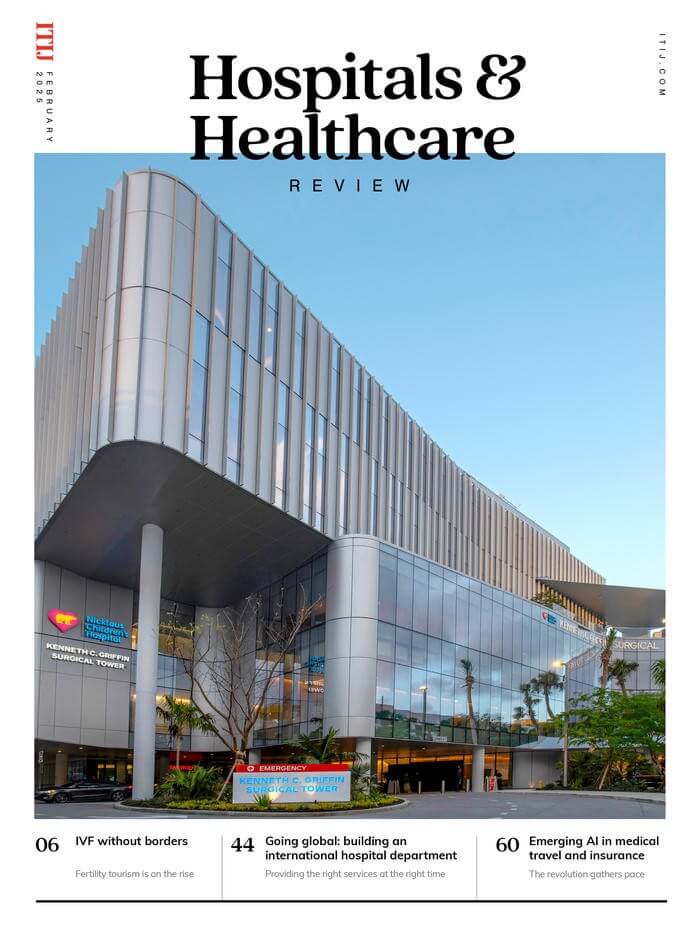
February 2025
Issue
Offering readers a deep dive into the issues facing providers and payers of healthcare services around the world. Cost containment, international patient department development, the role of AI in healthcare delivery and more.