When every minute counts: delivering outcomes that travel well

Shinyi Lin from Royal Phnom Penh Hospital describes an urgent case that required rapid response and coordinated care support for a traveller in Cambodia
A holiday in Cambodia is not expected to involve emergency care – but when it does, outcomes depend not only on clinical expertise, but also on how efficiently care is delivered and coordinated.
At Royal Phnom Penh Hospital (RPH), part of the Bangkok Dusit Medical Services (BDMS) network, care is structured around both medical outcomes and operational clarity. For international patients, this means timely intervention, clear communication, and treatment pathways aligned with both clinical needs and practical considerations.
One case began with urgency. A 62-yearold Canadian tourist, insured by CEGA Group, was struck by a motorcycle in Phnom Penh. He arrived unconscious and was diagnosed with traumatic intracerebral haemorrhage.
Within one hour, an emergency craniectomy was performed. Early intervention was critical in stabilising his condition and shaping the course of recovery.
Over the following six weeks, the patient received continuous inpatient care, including monitoring and rehabilitation. Throughout this period, regular communication ensured alignment on clinical progress and repatriation planning.
The patient recovered to full consciousness (GCS E4V5M6), regained independence, and was able to return home safely, demonstrating how rapid response and coordinated care support a controlled recovery pathway.
A second case reflects a different scenario, but the same principle.
A 62-year-old Cambodian-French female, insured by Cigna International Health Insurance, sought a second opinion after an inconclusive follow-up for endometrial thickening. While not urgent, delayed diagnosis carried potential risk.
At RPH, diagnostic clarification was prioritised. Hysteroscopy confirmed endometrial intraepithelial neoplasia (EIN), and laparoscopic surgery was completed within a single facility.
This streamlined approach avoided repeated investigations and unnecessary delays. The patient recovered well after a short hospital stay, with early intervention preventing progression to invasive cancer.
Across both cases – one emergency, one planned – a consistent approach is evident:
• Early action reduces clinical risk
• Coordinated care avoids delays and duplication
• Clear communication supports timely decisions
• Structured pathways enable safe patient transitions.
In practice, this leads to more predictable outcomes and more efficient use of resources.
As part of the BDMS network, RPH combines clinical capability with operational coordination, supported by 24/7 emergency readiness. Together with Royal Angkor International Hospital in Siem Reap, the hospital provides consistent, well coordinated care across Cambodia.
These cases show that value lies not only in the treatment itself, but in how the entire process is managed – from first contact through to safe discharge and return. In practice, this requires not only clinical capability, but also alignment across teams, systems, and partners involved in the patient journey.
Shinyi Lin is Assistant Business Development Manager at Royal Phnom Penh Hospital. She focuses on international partnerships and insurance coordination, supporting collaboration between healthcare providers and insurers. Her expertise includes business development, cross-industry partnerships, and event planning, while maintaining relationships with corporate clients and insurance partners in Cambodia.
Royal Phnom Penh Hospital is a JCIaccredited tertiary hospital in Cambodia and a member of the Bangkok Dusit Medical Services (BDMS) network, Thailand’s largest healthcare group. Together with Royal Angkor International Hospital, it provides comprehensive, internationally standardised care for local and international patients, supported by advanced technology and multidisciplinary medical teams.
+855 (0)23 991 222
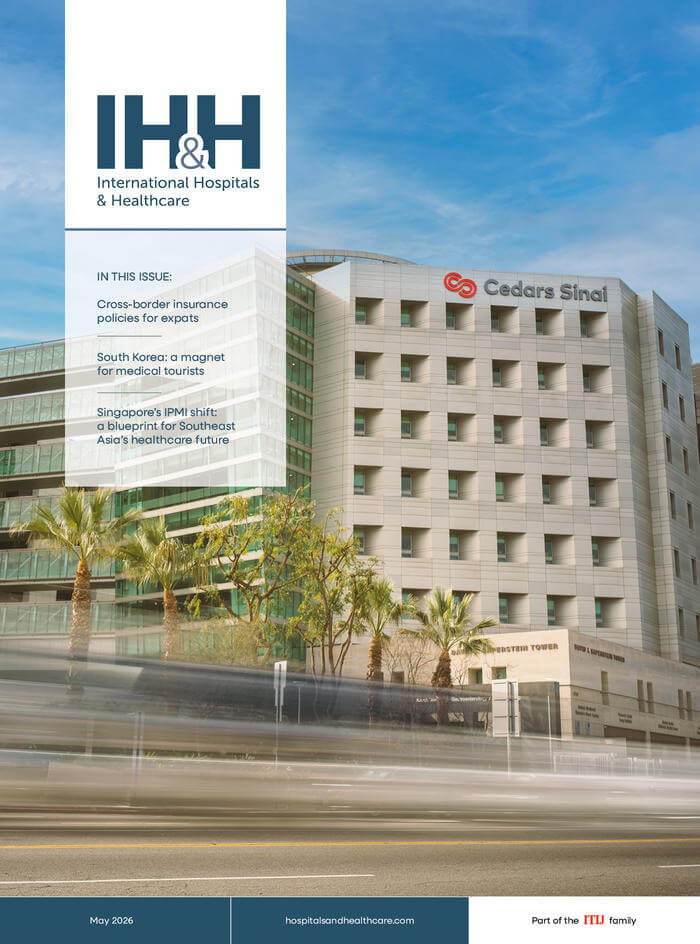
May 2026
Issue
A whirlwind tour of the top medical tourism destinations in this issue encompasses Latin America, South Korea and India – each diverse region and nation appealing to different demographics and with different specialities for those seeking specific care. In-depth analysis from industry experts highlights growth opportunities in the global healthcare sector – so dive in to the latest edition of IH&H for all the latest industry trends.
Editorial Team
The Editorial Team updates the ITIJ website daily, and works on features for the print edition. With expert industry knowledge and years of experience in writing about complex travel insurance issues, the Editorial Team is ready to investigate and report on the topics that matter most to ITIJ's readers.










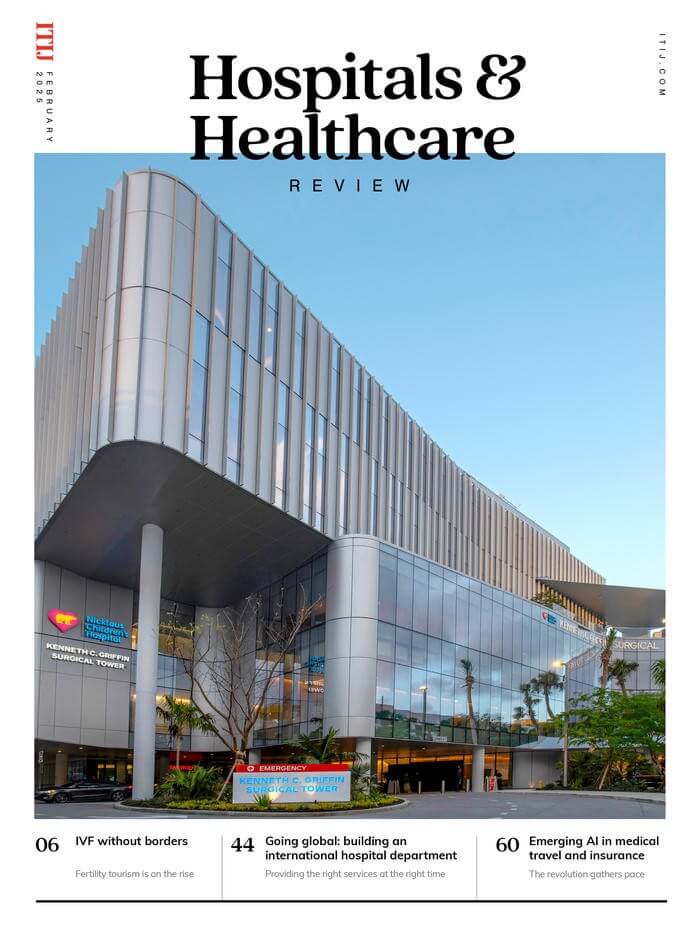
February 2025
Issue
Offering readers a deep dive into the issues facing providers and payers of healthcare services around the world. Cost containment, international patient department development, the role of AI in healthcare delivery and more.