Medical tourism in Latin America: the impact on insurance

Guillaume Corpart, Founder and CEO of Global Health Intelligence, examines how Latin America’s US$49 billion medical tourism boom is widening in scope and quality, opening fresh opportunities for insurers in cross-border health coverage
Medical tourism has been a significant industry in Mexico and other Latin American countries for decades. It’s hardly a new trend. Though medical tourism understandably dipped during the Covid-19 pandemic, recent data seem to indicate that it’s bounced back and surged past pre-pandemic levels.
What’s interesting about the Latin American medical tourism market is its evolution over the years. What started as a market for Americans seeking inexpensive medications and cosmetic procedures has grown in multiple ways. For one, medical tourism markets have expanded far beyond Mexico to Colombia, the Dominican Republic, and even as far south as Brazil and other South American countries.
Also, the offerings throughout Latin America have become more sophisticated and varied, expanding beyond plastic surgeries and medication. For example, some regions specialise in treatments such as dentistry, bariatric surgery, fertility, and more. In other areas, like Brazil, people trust the medical teams for complex procedures such as cardiac surgery and neurosurgery.
Not surprisingly, the expansion in the type and quality of offerings has led to significant growth in the market. Now, Latin American medical tourism not only appeals to Americans but also to international travellers. Here are just a few stats that show how the market has grown and will continue to grow in the years to come:
Medical tourism market at a glance
|
Size of the Latin American medical tourism market |
$12.29bn |
|
Projected size of the market in 2033 |
$49.09bn |
|
Projected compound annual growth |
18.9% |
|
Annual medical |
14m |
|
Money spent globally |
$55bn–$75bn |


A closer look at Mexico
Medical tourism has a significant impact on the global healthcare market, as well as the insurance companies that serve that market. Here’s a closer look at the different facets of the market in Latin America, and how it may impact your insurance offerings now and in the years ahead.
If you want a good microcosm of the evolution of medical tourism, Mexico is a great case study. It has a history of medical tourism from the US that dates back to at least the 1960s, with Hispanic workers crossing the border for less expensive dental care.
Since these early days, the market has exploded in scope, offerings, and quality. The most common reasons that Americans travel to Mexico are for cosmetic or dental procedures, but orthopaedic and bariatric procedures are also high on the list. Of course, many Americans still travel to Mexico for less expensive medications.
The quality and reliability of procedures in Mexico have also expanded dramatically in recent years. Some hospitals in Mexico seek to obtain Joint Commission International (JCI) certification to facilitate and accelerate insurance payments.
This has compelled many private hospitals in Mexico to acquire this accreditation, thereby ensuring that they offer the same quality of care as American hospitals. To ensure you receive the highest-quality care, you’ll want to seek out hospitals in Mexico that have obtained this accreditation.
As the quantity and quality of medical procedures in Mexico have increased, the market has followed suit. Medical tourists can now book entire vacation packages that include airfare, hotel, transport, and services in English, along with their medical procedure and care at JCI-accredited institutions. Here’s a closer look at the numbers behind Mexico’s medical tourism market:
Mexican medical tourism by
the numbers
|
Size of the Mexican medical tourism market |
$6.75bn |
|
Number of medical |
1.4m–3m |
|
Cost savings on bariatric surgery in Mexico compared with the US |
80% |
|
Cost savings on cosmetic surgery in Mexico compared with the US |
75% |
|
Cost savings on dental procedures in Mexico compared with the US |
70% |

Specialties in other areas
Of course, Mexico is not the only market in Latin America experiencing a boom in medical tourism. Some countries have followed suit by finding a niche in the medical tourism market and specialising in that. For example, Colombia has become known for excellence in cosmetic surgery, but it also offers more advanced procedures such as cardiology and oncology. Like Mexico, Colombia now offers JCI-accredited institutions and vacation packages that include airfare, hotel, and other amenities along with your medical care.
The Dominican Republic has also made major strides in becoming a medical tourism destination in recent years, with almost 270,000 medical tourists in 2022 and a goal of reaching one million medical tourists by 2043. The primary focus of the Dominican Republic is dental procedures, with more than half of its medical tourists arriving for that reason. However, they also had more than 40,000 medical tourists for plastic surgery in 2022, as well as 26,290 for other procedures.
Further to the south, of course, is Brazil, which has long been a destination for attracts American tourists, Brazil is better known for attracting tourists from other South American countries, as well as international travellers.
Brazil is well known for high-quality dental care, cosmetic surgery, and bariatric surgery, just like many of the other destinations in Latin America. But Brazil stands out in its commitment to innovation and excellence in the healthcare field. For example, it offers female health, reproductive management, and sexual realisation procedures that may not be available in other countries. This has led to substantial growth already, as well as significant projected growth in the Brazilian market.
Brazilian medical tourism by the numbers
|
Size of the Brazilian medical tourism |
$3.1bn |
|
Projected size of the market in 2033 |
$14.84bn |
|
Projected CAGR |
18.9% |
|
Average cost savings on procedures in Brazil compared to the US |
70% |
In addition to attracting wealthy international tourists with specialist procedures, Brazil has a philanthropic aspect to its medical tourism. For example, facilities like Einstein Hospital Israelita in São Paulo or Sírio Libanês in São Paulo and Brasilia are focused on attracting medical tourists from nearby countries where infrastructure and technology are not as robust, such as Bolivia, Peru, Paraguay, and Uruguay. This means that Brazil can attract not only tourists for high-end procedures, including robot-assisted surgery, but also regular folks in need of an annual checkup.

Key takeaways for insurance companies
It’s no surprise that as medical tourism continues to grow in Latin America and worldwide, the demand for specialist insurance products covering overseas medical treatments is also increasing. Standard travel insurance may cover some basic treatments, but it often excludes desired treatments and procedures for these trips, such as dental work, cosmetic surgery, or fertility treatments.
Insurance providers have an opportunity to fill this gap by offering flexible products for tourists who are travelling specifically for these procedures. For example, medical tourists are looking for insurance to cover procedure complications, travel disruptions, and post-treatment care.
Providers well suited to cover the needs of medical tourists have the chance to enter an untapped market expected to grow exponentially in the years ahead. By being innovative and nimble in your travel and health insurance product offerings, you have the potential to reach millions of new clients seeking care in the southern region, as prices continue to climb in the US and other developed countries.
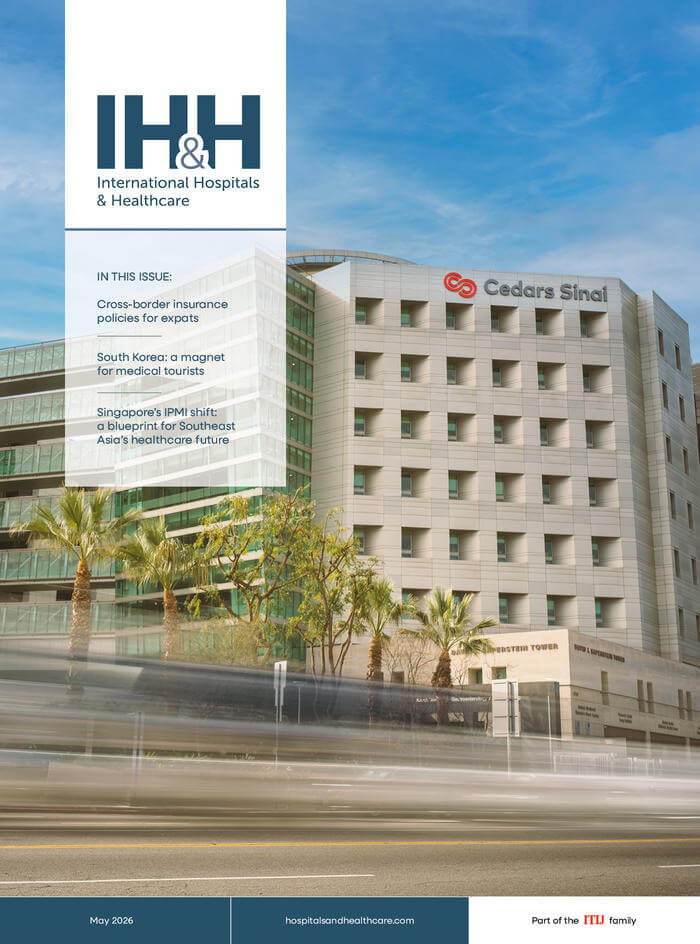
May 2026
Issue
A whirlwind tour of the top medical tourism destinations in this issue encompasses Latin America, South Korea and India – each diverse region and nation appealing to different demographics and with different specialities for those seeking specific care. In-depth analysis from industry experts highlights growth opportunities in the global healthcare sector – so dive in to the latest edition of IH&H for all the latest industry trends.
Guillaume Corpart
Guillaume is the Founder and CEO of Global Health Intelligence, a provider of market intelligence solutions for the global healthcare industry. With over 25 years of experience in business consulting, Guillaume has become a recognised expert in helping healthcare and life sciences companies accelerate their growth strategies in emerging markets.











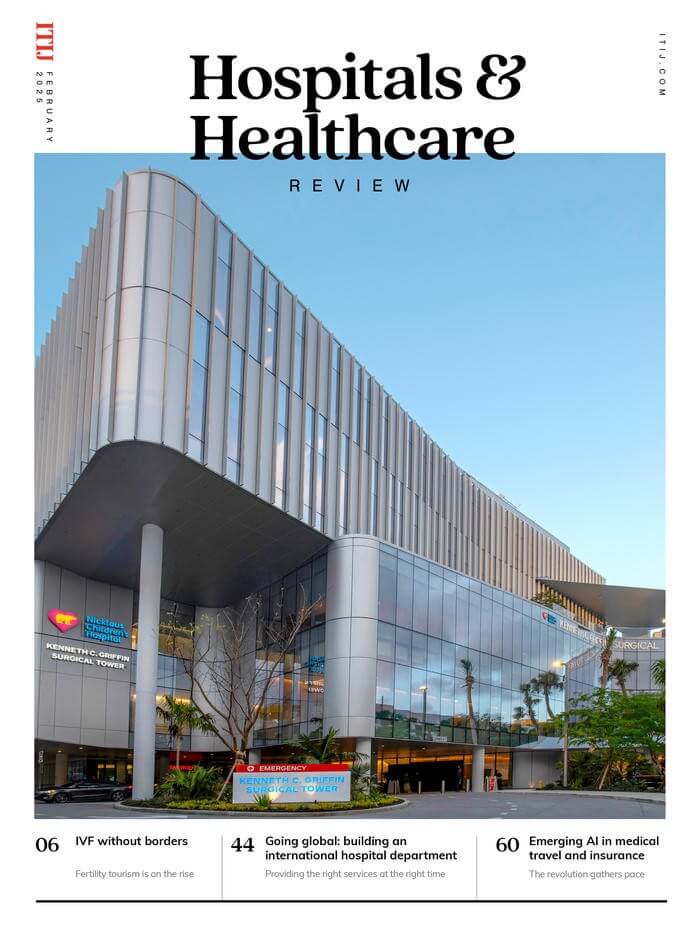
February 2025
Issue
Offering readers a deep dive into the issues facing providers and payers of healthcare services around the world. Cost containment, international patient department development, the role of AI in healthcare delivery and more.