The benefits of remote patient monitoring technologies

Hospitals & Healthcare investigates remote patient monitoring (RPM) technologies, how these are influencing the development of healthcare so that it is increasingly centred around the patient experience, and how payers and providers can benefit from this.
Acording to Dr Sneh Khemka, Vice-President of Population Health, Aetna International, ‘around 60 per cent of primary healthcare is about disease management’ – a figure that quickly becomes conceivable once you start to look into things:
- Globally, approximately one in three adults suffer from multiple chronic conditions[1].
- In the US, the Centers for Disease Control and Prevention (CDC) states that chronic diseases are the leading causes of death and disability in the country, and are also the leading drivers of the nation’s US$3.5 trillion in annual healthcare costs[2].
- The World Health Organization (WHO) details that noncommunicable diseases (NCDs) – including heart disease, stroke, cancer, diabetes and chronic lung disease – are collectively responsible for almost 70 per cent of all deaths worldwide (about 41 million people each year)[3].
As detailed by Aliyah Farouk, Medical Devices Analyst at data analytics and consulting company GlobalData, those who suffer from chronic diseases often need their health to be closely monitored, but keeping these patients in hospital or providing them with in-home monitoring personnel is an uneconomical solution. Remote patient monitoring (RPM), however, presents a practical and cost-effective resolution.
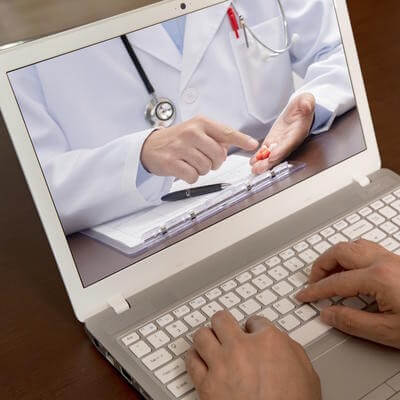
As part of the broader concept of telehealth, RPM allows clinicians to interact with patients at their homes through the use of specific technologies - wherever they may be in the world. These include patient self-interaction technologies (such as mHealth technologies, including wearable devices and mobile health apps) and clinician-to-patient technologies (such as condition-monitoring devices and platforms).
RPM is already utilised by a number of international health assistance providers. Aetna International, for example, is able to help members in India with regular blood glucose measurements through its vHealth Sugar platform, which allows individuals with diabetes to track their biometrics and share this information with their doctors.
Very recently, Aetna also partnered with Wysa to provide enhanced mental health support to its international members during the Covid-19 pandemic. As an AI chatbot that gives members access to mental wellbeing support, Wysa provides members with a self-interaction RPM technology, allowing them to manage feelings of anxiety, stress and more by engaging in self-care meditation and wellness sessions. And the learnings from these interactions help shape the path and recommendations within the app; for example, it might lead to human coaching sessions to focus in on specific goals, fears and anxieties, or escalations to onward support from Aetna through employee assistance programme (EAP) counselling, vHealth primary care, or referrals into treatment.
Allianz Care, as another example, uses and promotes RPM technologies with a particular focus on preventative care for illnesses like diabetes, cardiovascular diseases, and the detection of skin cancer, as well as for chronic conditions such as back pain, Thomas Duvernoy, Head of Health & Protection Services – International Health at Allianz Partners, told Hospitals & Healthcare.
RPM isn’t exactly a new solution in the international health insurance sphere, but its uptake has certainly increased in recent years. Looking at some of the more recent events, the emergence of RPM as a popular telehealth solution should come as no surprise: when asked what was driving this uptake, analysts at both GlobalData and KLAS Research (a healthcare IT data and insights company) were quick to cite Covid-19 as a key driving factor. “The fear of contracting coronavirus has discouraged many people from visiting hospitals for non-Covid-19 health concerns,” said Farouk, referring to GlobalData’s recent survey results[4].
Furthermore, the use of RPM to manage the surge of hospitalised patients has been increasing, Farouk says. “The FDA [US Food and Drug Administration] has published guidance allowing companies to expand the distribution of hospital devices for use in patients’ homes,” Farouk said – an initiative that many companies have been taking advantage of. And Farouk also notes that the US Government has recently passed several bills to support RPM (with the Centers for Medicare and Medicaid Services implementing plans to reimburse healthcare providers for certain RPM services).

Swivelling the focus away from Covid-19 though, Adam Cherrington, Research Director/ Patient Engagement and Telehealth at KLAS Research, reasoned that even before the pandemic, ‘the age of consumerism was alive and well’. Thanks to the establishment of a successful customer-centric model in the world of finance, travel and dining, there is now an expectation that healthcare follows the same path, he says. And it has.
Dr Khemka explains that compared to five years ago, when RPM was seen as a ‘purely clinical’ solution, RPM has moved into regular everyday consumer behaviour, driven primarily by the fitness industry. “In turn, this has accelerated the pace of development for healthcare companies, who can tap into existing widespread infrastructure such as wearable devices, with measurements collected on your mobile phone to support patient health management,” he told Hospitals & Healthcare.
Cherrington also explains that the ‘New Age of RPM’ is now more focused on patient engagement and empowerment – including the development of tools designed to enhance patient/provider interaction. He cited one of KLAS’ recent reports[5], which revealed that patients wish to see ‘consolidated’ and ‘comprehensive’ patient engagement technologies going forward.
“Another driving force,” said Dr Khemka, concurring with Cherrington’s point, “is that people increasingly want access to their own up-to-date record on biometrics, as well as visibility of their medical history.” Aetna has responded to this demand by providing secure, encrypted records that allow people to view and contribute to their doctors’ notes. “More data around health can often encourage people to take more of an active involvement in managing and improving it,” Duvernoy reasoned.
Thanks to smart devices, including phones, watches and other consumer-centric health tech, healthcare is now centred around the patient. The modern consumer can access and engage with their healthcare at their ease and convenience, wherever, whenever and however they like – and providers are guaranteed to get the best return on investment through this increased patient engagement during the healthcare journey. RPM also provides a viable means for patients in remote locations to access the healthcare support they need, reasoned Farouk. She noted that for those who have reduced mobility and require additional healthcare support, such as the elderly population, RPM allows these individuals to take charge of their healthcare journey. “In this day and age, we are all inundated with choice when it comes to devices, apps and accounts available to us. With RPM, we can adapt the approach based on the customer’s individual lifestyle, in order to deliver highly tailored services to the customer,” said Duvernoy.
According to WHO, the major causes of chronic diseases are known, and if these risk factors were eliminated (an unhealthy diet, physical inactivity and tobacco use), 80 per cent of premature heart disease, stroke and diabetes could be prevented[6]. That’s a crucial piece of intelligence, and one that can easily be leveraged when implementing efficient RPM solutions.
Aetna, for example, is striving to move from a paradigm of ‘sick care’ to ‘well care’: “It’s a bigger perspective change than you might initially think,” said Dr Khemka. “However, with technologies such as RPM so readily available in the market, as doctors, we’re now able to think completely differently about keeping patients in optimum health.” Duvernoy says the same, explaining that RPM technologies are helping Allianz Care to design targeted and accurate preventative programmes.
Taking into account the growing mental health crisis that is frequently being reported, Aetna also understands the importance of adopting RPM solutions that provide preventive treatment for issues centred around mental wellbeing. Aetna explained to Hospitals & Healthcare that the goal of its Wysa mental wellbeing support solution is: “To support people with everyday mental wellbeing from a preventive point of view through early intervention, and also to engage a workforce proactively in taking steps to be their best for improved energy, happiness and positivity at home and work. It’s part of a wider refresh of Aetna’s wellbeing proposition providing self-care and professional support resources across mind, body and the unique challenges of living and working abroad.”

And what of the less empowered consumers? Not everyone wants daily reminders that they are living with a chronic disease or managing an ongoing condition. And, as Duvernoy highlights, not all customers are open to and interested in this kind of technology.
Hence, Duvernoy explains that as an insurer, it’s important to find ways to attract all customers, especially those who are unlikely to ever download or enrol in that kind of programme. Non-invasive RPM technologies seem to be a viable solution to these issues.
Projecting five to 10 years into the future, according to Plextek’s 2016 report, The Future of Connected Home Health, one-third of all smart homes will be equipped with elements of health-related tech, and in 10 years’ time, they will have health carefully built into the everyday home routine. The report notes that this includes everything from beds that monitor conditions and symptoms to showers that are able to perform a non-invasive health check when the patient steps inside[7]. That’s right. The future truly is a spectacular place. Alas, we’re not there quite yet.
For now, as Farouk highlights, RPM home devices are increasingly easy to use, and non-invasive technologies are now commonly being integrated with RPM technology, where a hospital can be alerted if any abnormalities are detected. “This is a huge step forward in the quality of care that these devices can provide,” she said.
Allianz is taking a holistic approach in terms of combining digital assets and tangible actions in the workplace, working closely with the employer and medical professionals. Duvernoy insists that RPM will ultimately enhance the important relationship between a physician and the patient.
Drawing on Cherrington’s ‘three pillars of effective patient engagement’[8] (see Fig. 1), Cherrington explained: “Without effective access, technologies fall flat. Improved access means improved benefits from technology, clinical expertise, and medication. Effective telehealth programmes, including RPM technologies, potentially will positively impact all three pillars. Each can contribute to improved engagement and the patient experience.”
Going back to that early statistic, which revealed that chronic diseases are the leading drivers of the US’ $3.5 trillion in annual healthcare costs, it’s clear that RPM technologies are also important when it comes to helping payers and providers improve operational efficiency and decrease costs.
KLAS’ Cherrington explained that of providers using RPM solutions, some of the key outcomes included reduced hospital admissions (38 per cent), improved patient satisfaction, reduced re-admissions and reduced ER visits (all at 25 per cent) – and quantified cost reductions (17 per cent). What’s more, as Farouk highlights, RPM also has the ability to prevent physician burnout – a problem that is drawing more attention from healthcare providers. “As the workload and data management requirements of doctors continue to increase, the use of RPM devices can help to streamline much of the tedium these doctors experience,” said Farouk. In addition, Farouk noted that, especially in markets that provide universal healthcare, providers can take advantage of their patients’ continuous data stream in order to make more informed decisions regarding ordering tests and procedures. “In markets that mainly use private healthcare,” she added, “patients can use RPM to understand aspects of their health and seek out specific care, which, in return, will reduce medical fees.”
Aetna’s Dr Khemka reasons that in some instances, monitoring heart or breathing patterns can be done in a remote setting, and at much lower costs. “As the technology evolves and becomes more effective, it will also be quicker and more cost efficient than solely relying on traditional face-to-face approaches. That’s not to say that a human touch won’t always be important – it will,” he said. “But it also makes sense to incorporate more accessible, cheaper, lighter models of delivery into the traditional system.”

Arguably one of the biggest setbacks of RPM, and to be frank, nearly all digital transformations, is cybersecurity vulnerability. Aetna, Allianz, and Global Data all cited concerns around breaches to patient data as being one of the topmost issues when integrating RPM technologies, and as such, very robust protocols around patient data and confidentiality, as identified by Dr Khemka, are essential. “This is paramount to credibility and trust in the technology,” he said.
Of course, RPM is also still evolving, and the improved access it provides to both patients and providers is unequivocal. While issues around data protection regulations and cybersecurity will likely hinder the adoption of RPM technologies on a mass scale for some time, it’s worth noting that adapting to meet the preferences of the consumer will ensure long-term success. Nothing worth having was ever easy, after all.
Looking ahead, Dr Khemka reasons that there is also space for the detailed, accurate measures that clinicians would like to develop. “RPM can open all sorts of doors for holistic, connected, personalised and patient-centric healthcare, which is exactly what we want,” he told Hospitals & Healthcare.
A paradigm shift
There’s no denying that Covid-19 has played a large role in the uptake of telehealth solutions, including RPM technologies – Farouk explains that thanks to companies attempting to restart normal business operations, there has been an increased awareness of RPM products, and at-home usage is expected to increase in kind.
“GlobalData forecasts the market for RPM devices to be $193 million in 2020, growing at a compound annual growth rate of 2.9 per cent,” Farouk added. “It is likely that demands for RPM will continue, creating a paradigm shift in how primary healthcare is delivered.”
As we emerge beyond the Covid-19 pandemic (whatever that may look like), the prerequisite for remote healthcare may diminish to become less of an imperative factor. However, RPM, as a branch of telehealth, has proven to be an innovative solution to some of the more pressing issues that have been facing the global healthcare industry for some time – including an ageing global population[9], a need to address the variable quality of and access to healthcare in different locations and for different groups of people, and the need to manage and prevent an increasing number of chronic conditions.
Encouraging patient empowerment through increased engagement with healthcare and developing pioneering healthcare technologies that seamlessly blend patient monitoring into the everyday are an effective way to counter all of these issues. And, all in all, RPM techonolgies, as part of the IoHT, feeds into the wider healthcare ecosystem of streamlined, non-invasive, preventive care, which will help payers decrease costs and improve operational efficiency.
References
- www.ncbi.nlm.nih.gov/pmc/articles/PMC6214883/
- www.cdc.gov/chronicdisease/about/index.htm#:~:text=Chronic%20diseases%2….
- www.who.int/health-topics/noncommunicable-diseases#tab=tab_1
- GlobalData’s recent survey, which assessed the reluctance to visit the doctor for appointments due to Covid-19, uncovered that 79 per cent of 426 participants have avoided the doctor at all costs despite having a medical complaint. Additionally, 36 per cent of the participants only contacted the doctor by phone or email. www.globaldata.com/direct-to-consumer-at-home-covid-19-tests-to-shift-d…
- www.klasresearch.com/report/patient-perspectives-on-patient-engagement-…
- www.who.int/chp/chronic_disease_report/part1/en/index11.html
- www.plextek.com/wp-content/uploads/2016/07/The-future-of-connected-home…
- www.klasresearch.com/report/remote-patient-monitoring-2019/1532
- www.population.un.org/wpp/
August 2020
Issue
In the International Hospitals & Healthcare Review, exploring remote patient monitoring technologies sheds light on the benefits of placing the healthcare journey into patients’ hands; we investigate how payers and providers have adapted their cost containment and case management operations in the challenging climate; and Eric de Roodenbeke, CEO of the International Hospital Federation (IHF), relays how digitisation has been critical to the healthcare industry’s Covid-19 response. The issue’s Destination Spotlight assesses the provision of healthcare for international patients in the State of Qatar and the Kingdom of Bahrain.
Robyn Bainbridge
Robyn Bainbridge edits the International Hospitals & Healthcare Review and is a writer and copy-editor for both ITIJ and AirMed&Rescue. Six years a freelance writer, she enjoys injecting a fresh take on a tired topic and is a keen advocate of sustainable tourism. She also has over 15 species of plants in her living room.
More from this issue

Cost containment in the time of coronavirus

Interview: The International Hospital Federation

Destination Spotlight: Qatar and Bahrain









February 2025
Issue
Offering readers a deep dive into the issues facing providers and payers of healthcare services around the world. Cost containment, international patient department development, the role of AI in healthcare delivery and more.