
Interview: The International Hospital Federation

Eric de Roodenbeke, CEO of the International Hospital Federation (IHF), spoke to Hospitals & Healthcare about the impact of Covid-19 on global healthcare, the potential impacts of the crisis as health systems recover, and what the IHF has been doing to support the worldwide industry
How has Covid-19 impacted operations for global members of the IHF? Has the impact varied geographically or between private and public healthcare systems?
It is the first time for decades that all hospitals around the world are facing a major health threat of the same nature. The difference between countries, but also within countries, is significant, because the magnitude of the crisis varies, as well as the risk factors associated with the population.
But considering the high level of uncertainty on the evolution of this pandemic, all hospitals around the world had to prepare to face an influx of Covid patients, including severe cases requiring ICU support. In all countries that have faced Covid-19 with a significant number of cases and population lockdown, we have witnessed the same scenario: hospitals had to increase spending so as to be prepared to face these cases, and at the same time had a drastic reduction of activity, generating a major fall in their revenues.
In a nutshell, we can say that all around the world, hospitals have done their job and responded to the challenge of the pandemic. But all of them are now under major financial strain, which requires very special support from the funders.
How has the pandemic impacted the IHF’s operations?
The IHF has worked in two stages. At the early stage of the outbreak, while it was not yet declared as a global pandemic, we monitored the situation closely, but we did not want to add a voice to a situation that was still unclear, and for which it was important for hospitals to comply with national global recommendations from WHO and national instructions from the public health authorities.
Once the pandemic had hit several countries and others had moved into preparedness mode, we developed a programme of activities that were in line with the role of IHF as a global knowledge convener for health service providers.
We have worked on three tracks: supporting engagement between health service providers for mutual support in difficult times by creating specific initiatives like collaborative groups and so on; knowledge dissemination relying on a dedicated web platform for Covid-19 resources relevant for healthcare executives, a dedicated newsletter on most relevant initiatives, and webinars to share experiences on response to Covid-19; and putting together a task force to look for the best way to harness lessons from Covid-19 from the perspective of transforming health services in the long term.
During this period, the IHF has been very busy and fully mobilised, and will continue to be dedicated to the support of health service providers by accelerating the transfer of knowledge and practices in a critical moment where we need to bring added value to health service providers that are under a lot of stress with the response to the pandemic.

While the World Health Organization has touched upon an imminent global shortage of nurses and many organisations have cited an increase in mental health problems, what do you think are the biggest issues that have arisen/will arise from the Covid-19 pandemic?
In all crisis situations, existing issues become more visible and acute. The shortage of qualified and well-distributed health professionals is a chronic situation that has been ongoing for more than 15 years, and for which all initiatives taken so far have not produced satisfactory results. With the Covid-19 crisis and the strain of the response for health workers that have been fully mobilised in regions facing major influxes of patients, the situation calls for a high level of attention to support existing health workers.
Our role is not to act directly at the level of countries, but to support our members to better negotiate with their respective authorities and funders to operate in the best possible conditions for the benefit of the population
In terms of a global perspective, while a very intense situation may have only existed for selected destinations, it can globally reduce the willingness for youth to enter these professions if they are not dedicated to the noble but very demanding mission that is to care for others. There may also be an impact on attrition for existing health workers, especially when those that have been at the forefront of the Covid fight may have not received all the support they should have, in terms of protection but also wellbeing support. From the feedback that we have received from health service providers having faced the Covid wave, a primary concern for the executives is that they do the best they can to support the people that work in hospitals.

In your opinion, what are some of the key lessons that the global healthcare industry can learn from the pandemic?
There are several lessons regarding the nature of health systems. However, in all cases, the number one lesson is the need for hospitals to be agile. Because, while this crisis is not over, we know that we will have to face another crisis – but the next one will not be a repeat of this one. Preparedness will not be about being ready for another pandemic, but being ready to face all kinds of situations, including major natural man-made disasters, as well as instability related to war or unrest.
The other key lesson is that during a crisis, all the components of hospitals can work together beyond specific short-term interest, or the tendency to only focus on individual concerns or fields of action. It will be important to build on this multi-sectoral approach as this has been an obstacle for the much-needed transformation of health services to move toward integrated and people-centred healthcare.
Our role is not to act directly at the level of countries, but to support our members to better negotiate with their respective authorities and funders to operate in the best possible conditions for the benefit of the population
Another important lesson is related to funding mechanisms that are not appropriate for hospitals to face and recover from the crisis – in most countries they have been underfunded and have often postponed necessary investments. This does not mean that it is not important to fight against waste that is also existing in healthcare, but we need a full paradigm shift in how we fund hospitals, considering that they are not just either a public service or a commercial service. Regardless of ownership and health coverage systems, hospitals are valuable and funding should better consider this dimension.

What do you think the long-term impact of the increase in digital health initiatives and solutions will be for the global healthcare industry?
Digitalisation was already a strong trend in the healthcare industry. The crisis has not provided new approaches but has been an opportunity for both accelerating adoptions of digital practices and scaling up services relying on digital support. It is too early to assess how some of this movement will be sustained because we are still in the pandemic crisis, and while hospitals are recovering from the pandemic wave and preparing for a possible second one, others are just starting to face the first wave.
However, telehealth solutions that have been adopted during the crisis will likely continue to be offered and further developed along with adoption by the patients.
It is also expected that homecare will be further developed where housing conditions permit it, because from both a social and health perspective, it is better to maintain people at home if this does not compromise (or even improve) the health status.

What are some of the strategies that the IHF has put in place to advance the recovery of the healthcare industry?
Our role is not to act directly at the level of countries, but to support our members to better negotiate with their respective authorities and funders to operate in the best possible conditions for the benefit of the population. In this role, we have worked closely with WHO to support their initiatives for hospitals, whether it is by proposing situation assessments or guidance and tool kits.
We will also develop guidelines and recommendations for harnessing the innovative practices adopted in response to Covid that will help health service providers to enhance their performance, and we expect these to be available by the end of the year.
Last but not least, we believe that the hospitals have done a job that has been in many countries beyond the call of duty, and for this we will launch an international recognition programme for hospitals to share their stories on how they have proactively faced the Covid-19 situation (see boxout for further info).

Looking towards the IHF’s 44th World Hospital Congress, what kind of conversations and topics can we expect in the forums?
Unfortunately, the World Hospital Congress has been a collateral victim of the pandemic and we have decided to postpone it for one year because we believe that we cannot offer, even with the most advanced virtual platform, the same experience as a physical conference. Rather than offering a downgraded version of our event, we prefer to postpone it.
However, instead of the Congress, we are preparing a dedicated event that will be virtual and will be focusing on Covid-19 in the same mindset as the task force we have in place: how to best harness innovations adopted to face the crisis to accelerate the transformation of hospitals. ■
IHF | Beyond the Call of Duty Covid-19 Programme
The IHF is launching the Beyond the Call for Duty for Covid-19 Recognition Programme. Led by IHF Chief Executive Officer Dr Eric de Roodenbeke and Programme Committee Chair Dr Lawrence Lai, the programme acknowledges and honours healthcare organisations and service providers, particularly hospitals, for exceptional contribution and dedication in going beyond their call of duty in fighting the Covid-19 pandemic.
“IHF’s mission is to support hospital performance improvement,” said de Roodenbeke. “We launched this recognition programme to highlight the responses or action taken by health leaders to put their hospitals in capacity to face the pandemic, to recognise the altruism and dedication of healthcare workers around the world and to provide an opportunity for healthcare organisations to celebrate with their respective teams and/or external stakeholders involved in their Covid-19 response.”
Each healthcare organisation or hospital is eligible to submit one entry, which will be reviewed by the Programme Committee composed of international experts in healthcare leadership and management. Recipients of the recognition will be those that pass the eligibility criteria – they will be given a certificate and be featured in an extensive international media campaign.
For inquiries, please contact [email protected]
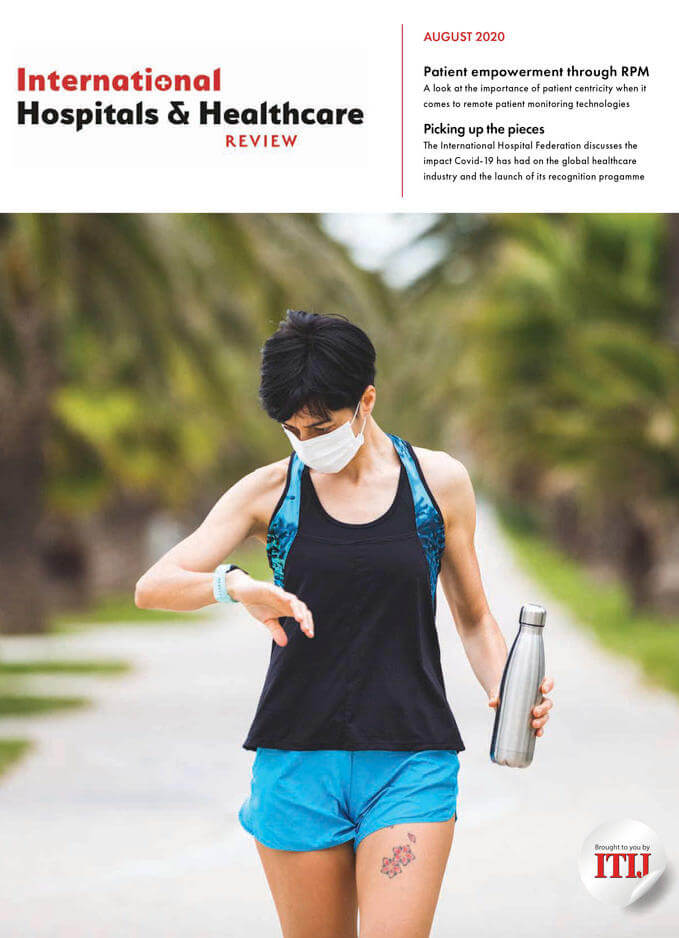
August 2020
Issue
In the International Hospitals & Healthcare Review, exploring remote patient monitoring technologies sheds light on the benefits of placing the healthcare journey into patients’ hands; we investigate how payers and providers have adapted their cost containment and case management operations in the challenging climate; and Eric de Roodenbeke, CEO of the International Hospital Federation (IHF), relays how digitisation has been critical to the healthcare industry’s Covid-19 response. The issue’s Destination Spotlight assesses the provision of healthcare for international patients in the State of Qatar and the Kingdom of Bahrain.
Editorial Team
The Editorial Team updates the ITIJ website daily, and works on features for the print edition. With expert industry knowledge and years of experience in writing about complex travel insurance issues, the Editorial Team is ready to investigate and report on the topics that matter most to ITIJ's readers.
More from Hospitals & Healthcare

Cost containment in the time of coronavirus

The benefits of remote patient monitoring technologies

Destination Spotlight: Qatar and Bahrain











February 2025
Issue
Offering readers a deep dive into the issues facing providers and payers of healthcare services around the world. Cost containment, international patient department development, the role of AI in healthcare delivery and more.