
Interview: Renée-Marie Stephano, CEO of Global Healthcare Accreditation (GHA)

Renée-Marie Stephano, CEO of Global Healthcare Accreditation (GHA), spoke to ITIJ’s Hospitals & Healthcare team about GHA’s focus on medical travel and how accreditation helps both patients and healthcare providers
What are some common challenges hospitals face in obtaining accreditation for their medical travel programmes, and how can they overcome these?
In my experience working with hospitals worldwide, I’ve observed several recurring challenges in accrediting medical travel programmes. However, these challenges often present opportunities for meaningful growth and transformation when approached strategically.
One of the most significant hurdles is gaining full support from hospital leadership. Without top-level buy-in, international departments can struggle to secure the necessary resources and implement critical changes. Engaging leadership early by presenting the tangible benefits of accreditation – such as enhanced patient outcomes, improved global reputation, and potential revenue growth – is essential. For example, demonstrating how accreditation can directly increase international patient volume and revenue through a clear return on investment (ROI) analysis can be compelling.
Another common issue is the lack of a clear and well-defined medical travel business strategy. Surprisingly, some healthcare organisations enter the medical travel market without a comprehensive plan.
Finally, healthcare organisations often overlook the need for robust policies and procedures tailored to medical travel patients. Without standardised processes, it’s difficult to deliver consistent, high-quality care that meets accreditation requirements. GHA works closely with organisations to develop comprehensive standard operating procedures (SOPs) that address the unique needs of international patients. These include areas like language services, cultural competence, and international billing, ensuring a seamless patient experience from start to finish.
Engaging leadership early by presenting the tangible benefits of accreditation – such as enhanced patient outcomes, improved global reputation, and potential revenue growth – is essential
What do you see as the primary benefits of accreditation to healthcare providers?
Accreditation is an external validation of an organisation’s commitment to quality. It demonstrates a hospital or clinic’s willingness to have an external third party conduct an on-site review of their compliance with recognised best practice standards. Therefore, accreditation builds trust and enhances the reputation for organisations, while strengthening the confidence of patients. Additionally, accreditation can provide access or grant eligibility for participation in networks, insurance, or payer schemes, so patients may have better access to reimbursement.
All the touch points a patient encounters need to be seamless. This means if an organisation contracts with a third party for transportation or hospitality, for example, it needs to set expectations for the service provided and ensure they are monitored for compliance. Prior to patient travel, does the hospital or clinic have standard operating procedures as to how and when patients are educated regarding their planned care and the care process at the destination? If not, you are putting your patients at risk. Best practices need to be standardised and monitored.
GHA standards and the survey process focus on areas such as marketing, IT and finance that have a clear impact on business performance. For example, the user experience on a website may vary from culture to culture. A US hospital website may be easy to navigate for US consumers, but Arabic-speaking patients from Jordan may find the same website very difficult to use. Ensuring the website content is aligned with target market groups – including appropriate language and cultural considerations such as colours, images, and symbols – has an impact on the user/patient experience and certainly may influence where they choose to travel for care.
Upon accreditation, organisations gain access to post-accreditation marketing initiatives designed to enhance visibility and attract more international patients through a variety of traditional digital media and innovative social media strategies.
Ultimately, GHA accreditation provides assurance to payers that GHA-accredited organisations are focused on transparency and meet or exceed international best practices in medical travel


How does being accredited by GHA allow healthcare providers to appeal not just to patients, but to international health insurers as well?
International health insurers are seeking to partner with healthcare providers that have the capability to deliver care that is high quality, easy to access, and affordable, with few readmissions and/or complications, while fully engaging the patient across the care continuum. They are also prioritising organisations with happy, satisfied employees or enrollees. GHA standards focus on areas of real concern to payers, such as:
- Outcomes-based metrics by procedure
- Informed decision-making and consent
- Confidentiality and privacy of records
- Continuity of care throughout the entire medical travel patient journey
- Medical accountability/legal liability
- Transparency of risk and price
- Sensitivity to patient cultural and/or religious needs
- Low risk and transmission of infections
- High patient engagement and satisfaction
- Real data.
Additionally, GHA is working with insurers and global payers to recognise GHA-accredited hospitals as a mitigating risk strategy towards enhancing the patient experience along the entire care continuum. Ultimately, GHA accreditation provides assurance to payers that GHA-accredited organisations are focused on transparency and meet or exceed international best practices in medical travel.
What specific accreditation standards or guidelines are most relevant when setting up a department to cater to international patients?
When setting up a department to cater to international patients, it’s essential to recognise that travelling patients face unique risks and vulnerabilities. These include challenges such as access to timely and transparent information about care options, navigating potential cultural and language barriers, exposure to infectious disease risks, and the physical challenges associated with travel itself. Coordinating medical appointments alongside travel requirements, such as visa and entry regulations, adds another layer of complexity to their journey. If these challenges are not carefully managed, they can compromise both the safety and overall experience of the patient.
GHA standards emphasise effective communication, such as ensuring that all information about care, treatment, and recovery is easily accessible and delivered in a language the patient understands. The medical travel programme, for instance, should provide education to prospective patients about the increased risks that may arise from combining travel with surgical or diagnostic procedures. This includes practical guidance on how to mitigate these risks, helping patients make informed decisions. Additionally, the programme should offer vital information about the destination region, covering anticipated safety or security concerns, allowing patients to prepare thoroughly for their journey.
Our accreditation process holds leadership accountable for developing and executing sound business strategies
While patient safety and communication are crucial, the long-term success of any medical travel programme also hinges on a strong and effective business strategy.
Our accreditation process holds leadership accountable for developing and executing sound business strategies. This includes:
- Strategic and operational planning: leaders must set clear goals and objectives for the medical travel programme, aligning them with the organisation’s overall mission and vision
- Financial management: GHA standards guide organisations in establishing sound financial practices, ensuring the programme’s sustainability and growth
- Performance monitoring: this encompasses not only clinical services but also the performance of contracted vendors such as transportation, hospitality, and translation services.

Do you consider local healthcare accreditation standards when considering applications from different countries?
We do consider local healthcare accreditation and other international accreditations for patient safety and quality when considering client applications. One of GHA’s eligibility requirements for accreditation is that the organisation already possesses a national (local) or international clinical accreditation, and we prioritise clients with International Society for Quality in Health Care (ISQua) accredited accreditation programmes in place.
While these programmes traditionally focus on the clinical aspects of care for the entire organisation, GHA conducts a deep review of the international or global patient services programme, or the entity within an organisation that serves the medical travel patient. As it relates to the survey process, our surveyors are always mindful of cultural nuances and the local regulatory environment when interpreting the GHA standards and will always defer to the former if there is a conflict between the two.
How transparent is your accreditation process? Can healthcare providers view the process and requirements before they start the process?
Transparency with our clients – in our communication, processes, and standards development – is foundational to GHA. Our GHA Standards 5.0, which guide the accreditation process, have been accredited by the International Society for Quality in Health Care External Evaluation Association (ISQua EEA), often referred to as the “accreditor of accreditors”. ISQua EEA sets the gold standard in the industry.
Through meetings, calls, and materials, we provide potential clients with a detailed view of the entire accreditation process, including eligibility requirements and pre-survey activities. We want to ensure healthcare providers fully understand the process, pricing, and benefits before deciding whether to proceed with accreditation. For example, one eligibility requirement for GHA accreditation is that the organisation maintains a formal medical travel programme, such as an international patient services office.
Being upfront with these requirements from the outset ensures organisations can make informed decisions and allows us to direct them toward services that best align with their needs.

What sets GHA apart from other accreditation or consulting organisations in the medical travel space, particularly in terms of the depth of services you provide across the entire patient journey?
The pandemic, and its dramatic and lasting impact on organisations across the globe, inspired GHA to evolve its services to better meet the needs of organisations for safety, health, and wellbeing as they navigate a rapidly evolving landscape to this new normal that includes flexibility and adaptability of offerings and delivery of services.
GHA offers training, advisory, certification, and accreditation programmes that address every touch point of the medical travel care continuum. To improve accessibility and efficiency, we’ve expanded beyond traditional on-site engagements, incorporating robust virtual service models (excluding site surveys).
Renée-Marie Stephano JD, CEO, Global Healthcare Accreditation
Renée-Marie is the Chief Executive Officer of Global Healthcare Accreditation, where she brings 20 years of international experience in strategy, service development, and business development expertise to GHA’s expanding global client base. Her innovative spirit has led her to spearhead a comprehensive suite of professional training and certification programmes. These programmes are meticulously designed for diverse sectors, including workplace wellbeing, healthcare, hospital management, and tourism, specifically addressing the niche needs of medical and wellness travel.
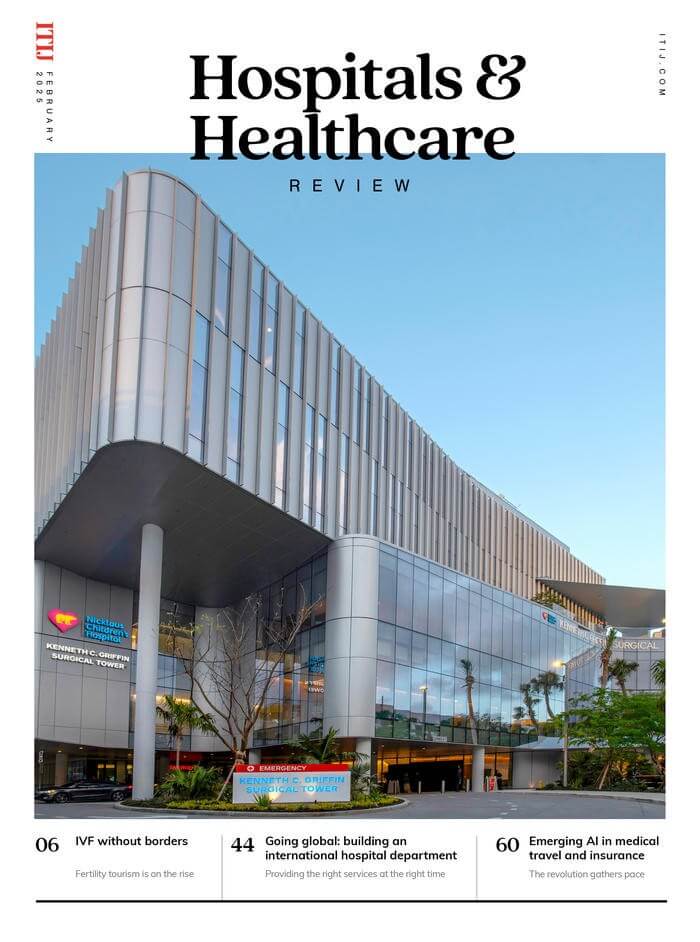
February 2025
Issue
Offering readers a deep dive into the issues facing providers and payers of healthcare services around the world. Cost containment, international patient department development, the role of AI in healthcare delivery and more.
Editorial Team
The Editorial Team updates the ITIJ website daily, and works on features for the print edition. With expert industry knowledge and years of experience in writing about complex travel insurance issues, the Editorial Team is ready to investigate and report on the topics that matter most to ITIJ's readers.












February 2025
Issue
Offering readers a deep dive into the issues facing providers and payers of healthcare services around the world. Cost containment, international patient department development, the role of AI in healthcare delivery and more.