Interview: Julie Munro, founder and president of MTQUA

Julie Munro shares some of the personal and professional experiences the Medical Travel Quality Alliance was born from, and stresses the importance of best practices in medical travel to ensure quality of care
I started one of the first medical tourism facilitator companies in 2003, Cosmetic Surgery Travel. Two years later, the American CBS television network broadcast a special feature on medical tourism. Overnight, we were swamped with 300 to 500 inquiries a day for more than a week. We didn’t sleep for three days, processing emails.
The focus, from day one, has always been on quality of care and outcomes for our patients.
If you can’t get the best possible outcome that’s within your budget, what’s the point of travelling for treatment?
My standard was straightforward. If it’s not good enough for my mother, it’s not good enough for my clients. In other words, am I confident that the doctor and the institution will deliver on their promises to me? If so, my clients, my patients, can trust me to deliver on my promises to them.
Eventually, this became: If you can’t get the best possible outcome that’s within your budget, what’s the point of travelling for treatment?
I’ve been an expat since the 1980s. Every time we moved to a new country, it was up to me to find doctors, hospitals and treatments that our family needed. No internet, no local gossip or support networks, and few medical facilities of the sort I’d had back home. In almost 40 years, my family and I had more than 20 separate episodes of medical care in half a dozen developing countries that included several surgeries, lithotripsy, fertility treatments and physical therapy.

I remember feeling so very relieved once when I needed a biopsy in Hong Kong to learn that my doctor was a visiting specialist from MD Anderson, which I knew to be a top cancer hospital. He knew the limitations of the Hong Kong hospital he was working in. He explained to me he didn’t do surgery on a Thursday or Friday because the nursing care on the weekend was not up to par.
I can’t count the number of times, as recently as a few months ago in top hospitals in Canada and in Thailand, I’ve asked nurses to sanitise their hands before touching one of my family members.
As a facilitator, I drew on these direct experiences to establish protocols, processes, and documentation for creating a common set of standards for international patient care management. We trained local teams who never left the patient’s side, even in the doctor’s consultation, and who kept detailed daily logs.
We refused to accept commissions, insisting on proper contracts with providers, and transparently charged patients a fee for services. In this way, we acknowledged that we were accountable, that we were taking responsibility to make sure our clients received the best care management available.
The focus, from day one, has always been on quality of care and outcomes for our patients
We explained our methods and our reasons for them to the doctors we worked with. Some didn’t get it. Many let us know our patients were well-prepared, had realistic expectations, and were a joy to treat.
My work as a facilitator was a natural springboard to developing and formalizing best practices and standards in medical tourism, and I created a home for these, the Medical Travel Quality Alliance (MTQUA).
There is generally still a great deal of confusion as to what this industry is. I’m not confused. Medical travelers require different and more care management than do local patients. Medical tourism stands on three legs. One leg is care management. The other legs are trust and communications. If any one of these is off kilter with the others, the provider’s medical tourism program is not sustainable. I’ve seen this in Thailand, in Mexico, in Turkey and many other places.

Which brings us to MTQUA certification, which is to help hospitals, clinics, specialty treatment centers and facilitators build medical tourism programs for the long term. We assess their operations and processes in 12 areas, focused on one purpose, to make sure the patient reaches home safe and sound, having been treated with dignity and respect, medically and emotionally. Our reference is the MTQUA Medical Travelers Bill of Rights.
We review the marketing that a hospital, clinic or agent does, the websites they put up, how they communicate and correspond with the potential patient during the planning and preparation stage, and through to how they follow a patient’s progress long after they have returned home.
We evaluate a provider’s external network, especially their relationship with outside agents. We study the internal support system of coordinators, interpreters, and customer service reps.
I also created the annual list of the Top 10 World’s Best Hospitals for Medical Tourists, facilities that reflected the MTQUA approach to international patient care management. Let’s have good clinical outcomes, but let’s also have honest marketing and transparency of costs. Let’s recognise the pressures that medical travellers have that they don’t have at home – time and money restrictions, loneliness, no family support, cultural and language difficulties, different medical attitudes and approaches, and just a whole lot of strange.
In 2010, we published our first Top 10 list, to a great deal of skepticism I must admit. Most people had not heard of the hospitals on this list, hospitals like Fortis (Wockhart at the time), Gleneagles, or Clemenceau. Today, of course, these hospitals are among the leading stars of medical tourism.
We travel to these facilities to review quality, risk, infection, medication, care management, governance, marketing and training issues, and much more. Hospitals benefits from the exposure, of course, and I’ve been told that the doctors themselves feel proud to be recognised internationally for the good work they do for medical tourists and international patients.
The World’s Best Hospitals list was created before MTQUA certification. They are both rooted in the same philosophy, but the difference is that hospitals applying for certification must be prepared to make changes and meet our standards. MTQUA certification applies to clinics, specialty treatment centers and facilitators or agencies. It’s an institutional certification, not one that you can pass in an online or weekend test.

For certification, required changes may take many months to implement, especially if this involves a change of culture in the institution. A few hospitals make the mistake of applying for certification because they see it as a marketing tool. They’re the ones that fall out of the certification process and don’t complete it.
Medical travel is making a difference to many people around the world, rich or poor people, living in rich or poor countries. I probably know too much about the abuses in this industry and this motivates me to find ways to make a difference in how medical travellers are treated, individually in individual hospitals, and universally. This is why MTQUA published its Medical Travel Advisory, to warn people against traveling to places like the Dominican Republic for medical treatment. MTQUA is not a policeman or regulator for the industry, but we do listen to the US Centers for Disease Control, government regulators in the UK, Australia, Switzerland and other countries, and major healthcare systems that report on serious and life-threatening events that medical travellers experience after returning home.
A few hospitals make the mistake of applying for certification because they see it as a marketing tool. They’re the ones that fall out of the certification process and don’t complete it
I have many stories of patients for whom I’ve made a difference. I don’t work one-on-one with patients any longer. But former clients will occasionally call and insist that I personally help them find treatment and take care of them, that they trust no one else to do this right. That makes me proud.
I’m excited when I see hospitals use the MTQUA quality symbols – the certification seal and the World’s Best Hospitals logo – inside their hospitals, at exhibitions, and in their publications. This is a global industry, so I still get a thrill when I see original articles written about MTQUA in major French, Chinese, and Spanish newspapers and magazines, not just translations from English-language press releases.
Looking ahead, I’m actively looking for partners who can help us continue to build the MTQUA certification programme and to expand the World’s Best Hospitals lists to cover specialty hospitals and clinics.
Munro’s top tips for medical travellers
- Find an experienced facilitator or independent healthcare professional who you can trust to guide you through your international hospital experience. Be willing to pay this person a fee – don’t accept someone who offers you a service for ‘free’. No one works for free – who’s paying them, and how much?
- Don’t cut corners. If your preferred dentist in Budapest is too expensive, find one just as good in Riga where your money goes further. If you need 12 days for surgery and recovery, take all 12 days. This is medical travel. It’s not tourism, it’s healthcare.
- If you are treated at a clinic instead of a hospital, check to see how close the nearest hospital emergency department is, what transportation is available to take you there, and how long the trip is during rush hour. Clinics are rarely regulated to the same infection control or medical standards as hospitals.
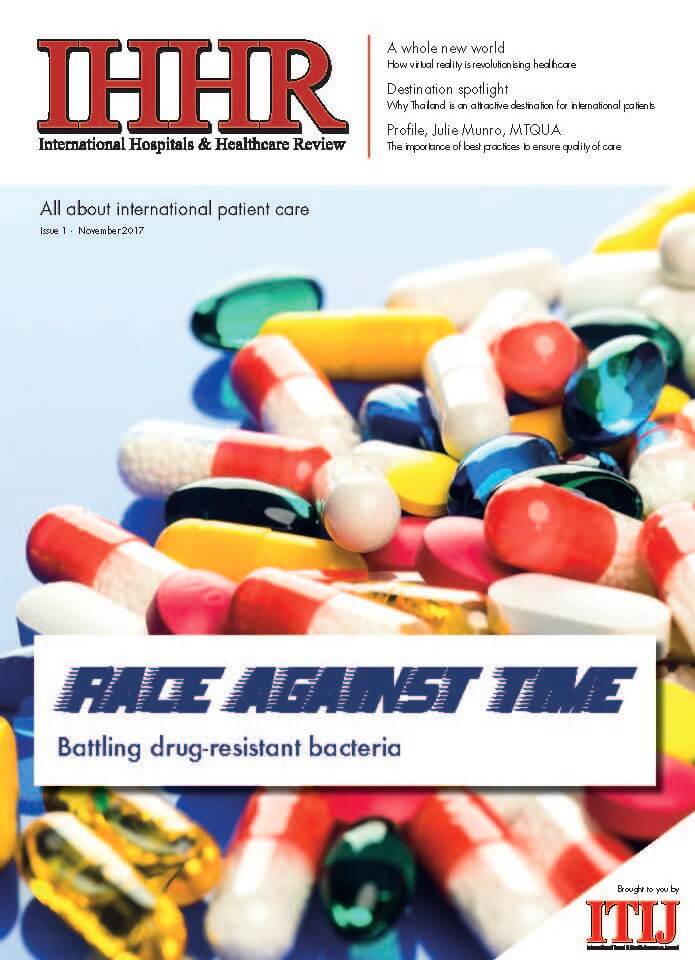
November 2017
Issue
In this issue:
Destination spotlight: Thailand
Tech corner: Prime Medical’s surgical scrubs
3D printing – how it has and is progressing?
How virtual reality is revolutionising medicine and healthcare
Superbug: Drug-resistant bacteria are here – the issue, cases, health challenges, how hospitals and health authorities are tackling this problem.
Canadian healthcare system changes
The value of hospital accreditation
Editorial Team
The Editorial Team updates the ITIJ website daily, and works on features for the print edition. With expert industry knowledge and years of experience in writing about complex travel insurance issues, the Editorial Team is ready to investigate and report on the topics that matter most to ITIJ's readers.












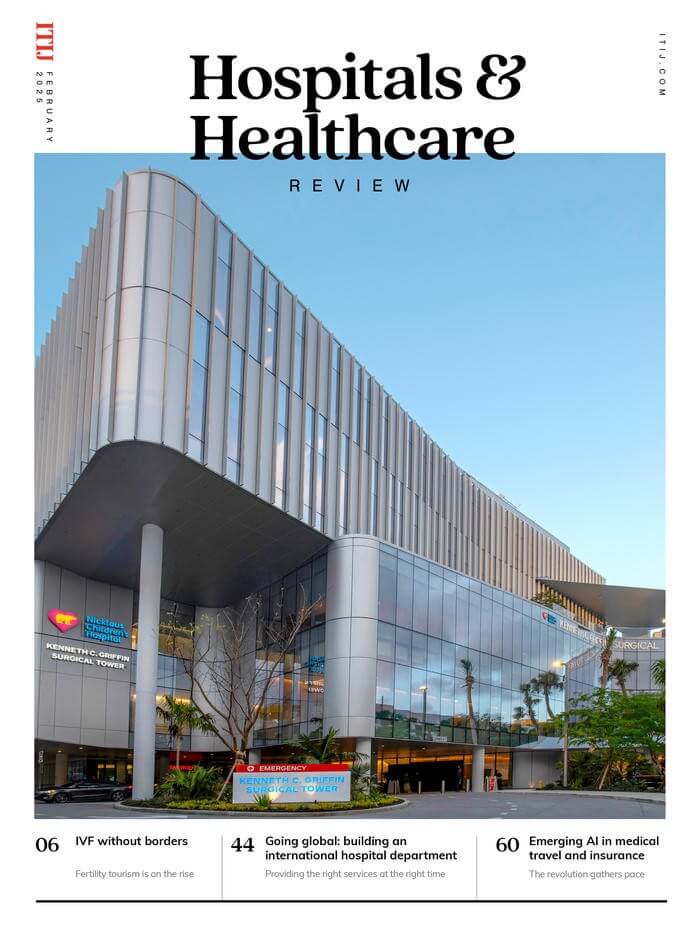
February 2025
Issue
Offering readers a deep dive into the issues facing providers and payers of healthcare services around the world. Cost containment, international patient department development, the role of AI in healthcare delivery and more.