Interview: Jason Sadler, President, International Health at Cigna Healthcare

Jason Sadler, President, International Health at Cigna Healthcare, speaks to Chloe Fox about Cigna’s new health initiative and the value of supporting employee wellbeing
You’ve worked in the business for 14 years. What first attracted you to Cigna Healthcare?
I’ve always admired Cigna’s proactive approach to improving health and wellbeing and was absolutely thrilled when I was offered the chance to head up Cigna’s global operations. Cigna’s global reach continues to astound me, as I see examples of the difference we make in people’s lives every day – often in remote corners of the world. I’m a true believer in our mission to safeguard people’s health and empower them to make the best choices for enhancing their vitality.
As President of International Health at Cigna, what are some of your key responsibilities?
It’s my job to realise our global mission: helping improve the health and vitality of people around the world. I oversee our operations in more than 30 markets and jurisdictions, serving individual customers and employer groups. This covers a total of 1.6 million customer relationships, including locals and globally mobile individuals.
Fortunately, I can count on over 13,000 incredibly talented colleagues to achieve our goals, as well as our 1.7 million global relationships with healthcare providers, clinics, and facilities. A key part of my job is to ensure that we continue to develop our talent pool and nurture this extensive network of provider partners.
Cigna recently launched a new wellbeing initiative called Your Health Plan, Your Growth Plan. With burnout on the rise, how will this help to support employee wellbeing?
This campaign aims to raise awareness about the close connection between people’s health and business growth. The truth is very simple: healthier and happier employees perform better at work. Our research shows that employees with high vitality perform up to 60% better, and that the human cost of poor health directly impacts business productivity. This is also borne out by World Health Organization (WHO) data showing the massive business cost of poor health.
Our insights can help employers understand the need to invest in their people’s health and the benefits of doing so. To make that vision a reality, our campaign provides practical support to shape and develop health plans that complement the employer’s overall business strategy.
Recent research from Cigna suggests that health plans are critical to culture and talent but too few employees use the benefits. How can employers ensure that they provide benefits plans that meet the needs of their workforce?
It’s essential that these kinds of benefits match employee needs, and that they’re communicated clearly and regularly to the whole organisation. Uptake is a measure of staff engagement, not just with their organisation’s health and wellbeing plan, but with their health in general.
Our research shows that employees with high vitality perform up to 60% better, and that the human cost of poor health directly impacts business productivity
We are continually advising clients on ways to broadcast the benefits they offer to their people. Organisations need to see this as a key employee value proposition – a vital part of attracting and retaining talent. Ultimately, the health plan needs to be embedded as an essential element of a healthy corporate culture.

Having led Cigna’s market entry in India and Turkey, would you say there are any challenges to working across an international client base and, if so, how do you approach them?
There are all manner of challenges in entering new markets and cultures, but fundamental human needs are the same everywhere. People need access to reliable healthcare, and they need to enjoy a healthy way of life for themselves and their families. That’s what we provide to our clients and customers in markets around the world.
The major differences are usually to do with local networks and regulations, which is why we operate through joint ventures in China and India, for example (Cigna & CMB in China, ManipalCigna in India), and work closely with partners who have deep local knowledge in Africa and the Middle East. It’s important to gain a full understanding of each new market and to demonstrate the unique capabilities that Cigna Healthcare can offer.
With healthcare demand on the rise, how does Cigna ensure that it continues to provide high-quality care to its international customers?
Increased healthcare demand is an inevitable consequence of several factors, including ageing populations, new healthcare technologies, and growing health awareness. In fact, these are positive developments for all of us: we’re living longer, we have better healthcare options, and we’re taking more proactive steps to improve our wellbeing. At Cigna Healthcare, we celebrate these improvements in our lives and are committed to furthering their impact. We’re continually striving to improve the global conversation around health, so that organisations and individuals can be healthier and more productive.
We emphasise prevention and early intervention. To drive this approach, we have an extensive network of healthcare providers, a suite of virtual health platforms, and a team of in-house medical professionals who act as case managers. This essential care network ensures that our customers have immediate access to the healthcare services they need, thus preventing health issues from escalating and, where possible, avoiding more complicated and costly treatments. With the help of data and analytics, we can even identify customers who are at risk of certain conditions and support them in taking preventive measures.
Last year, Cigna launched a new digital hub for expats, Inside Expat Health. Can you tell us how the platform will support overseas workers?
This is a dedicated site for expats and those who are weighing up the idea of living overseas, offering answers to many of the big questions people are likely to have when moving abroad. We have over 100 years of experience in providing healthcare coverage for the globally mobile, and this initiative distils our key advice for overseas professionals into clear, accessible guidance. The site provides a fully immersive experience, from advice on how to navigate new healthcare systems around the world, to wellbeing resources for individuals and families, to firsthand advice from experienced expats.

What’s next for Cigna Healthcare?
As macroeconomic and industry trends such as ageing populations and healthcare inflation continue to drive demand for private healthcare, our focus is on developing our capabilities as a leading global health insurer while investing in health services, with the aim of expanding healthcare access, enhancing affordability, and improving health outcomes. I’m confident that the major investments we’re making in new technologies, talent, and new markets will pay off – ensuring the best possible care for our customers, no matter where they are in the world.
Increased healthcare demand is an inevitable consequence of several factors, including ageing populations, new healthcare technologies, and growing health awareness
In terms of new opportunities, I’d point to our growing footprint in the Middle East and Africa. Last year we became the first international healthcare provider to establish a presence in Saudi Arabia, and our involvement in the region continues to grow from strength to strength.
We are also investing in new digital platforms and tools which enable people to better understand their health and then proactively improve it. One area we are focusing on is the growing problem of poor musculoskeletal health, which affects more than 1.7 billion people worldwide, according to the WHO.
Jason Sadler President, International Health, Cigna Healthcare
Jason leads Cigna Healthcare’s International Health (IH) business, which employs over 13,000 people and has a strong global track record of success in serving individual customers and employer groups, including governments, intergovernmental organisations (IGOs), and non-governmental organisations (NGOs). Under his leadership, Cigna IH has broadened its reach and capabilities through successful market entries and exciting new partnerships and joint ventures. Jason graduated from Swansea University with a degree in Business Studies (BSc) and has more than 30 years’ experience in the insurance industry, serving in senior roles in Europe, East Asia, North America, and South America.
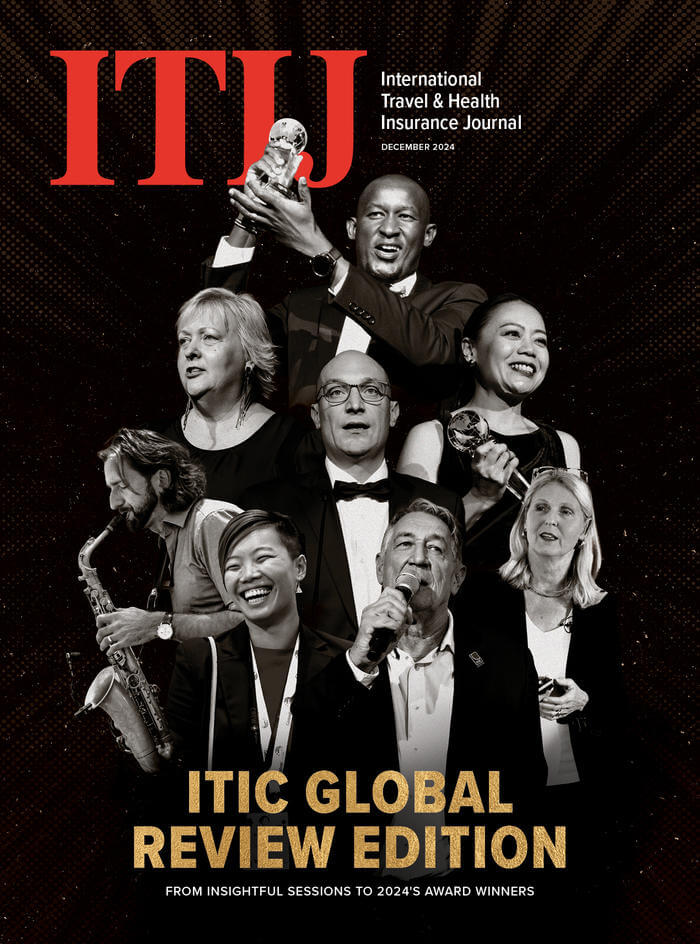
December 2024
Issue
In the December issue we explore the changing landscape of the insurance industry as it rebounds post-pandemic; we examine policies for pregnant women, and ask if more can be done; we report from the sessions at ITIC Global, and announce the winners of the ITIJ Awards.












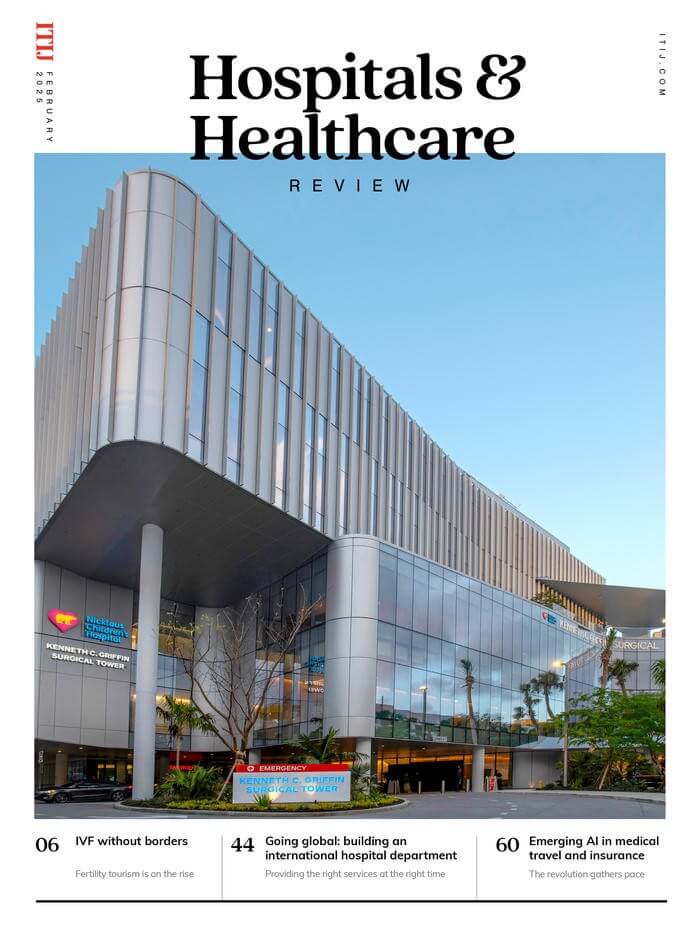
February 2025
Issue
Offering readers a deep dive into the issues facing providers and payers of healthcare services around the world. Cost containment, international patient department development, the role of AI in healthcare delivery and more.