Industry Voice: The transformation of healthcare

Wendy Sherry, CEO, Global Health Benefits, International Health, at Cigna Healthcare, goes beyond healthcare for ITIJ, sharing the approaches to whole-person health
The global healthcare landscape is undergoing a profound transformation. The pandemic accelerated trends already in motion, causing the industry to rethink traditional healthcare models and approaches to employee wellbeing. We have now moved away from a reactive ‘sick care’ system towards a proactive approach that embraces whole-person health. At the same time, the global workforce is increasingly now looking to their employers to be there for them at the moments that matter, providing robust, inclusive healthcare coverage and holistic wellbeing programmes.
This landscape presents opportunities and marks a positive turning point. We believe true innovation in healthcare requires a fundamental shift in mindset – one that views employee wellbeing as an investment, not an expense. It also means recognising that health and wellbeing are multidimensional, encompassing everything that impacts our ability to pursue life – health and everything else that enriches each one of us and gives us strength, such as our career, intellectual pursuits, and financial factors. All of this together is what we call ‘vitality’.
Putting people first
At the heart of this approach is a deep commitment to putting people first. We believe that healthy, thriving employees are the foundation and driver of successful organisations. This requires creativity and innovation, not just in the services and solutions we provide, but in how we fundamentally think about healthcare. The goal is not just to treat illness when it arises, but to empower individuals to stay well, including a greater focus on preventative care.
This people-centric approach can positively impact an employer’s bottom line. It’s critically important that businesses invest in their people – their most valuable asset. Employees with high vitality are more engaged, more productive, and bring energy and enthusiasm to their work. This translates into tangible business results: improved performance, reduced absenteeism, and a positive impact on profitability.
Our research shows that high vitality is intrinsically linked to better physical health, driven by healthier habits and proactive health engagement. Employees with high levels of vitality take fewer sick days and are less likely to develop chronic conditions, leading to lower healthcare costs for everyone.
Fostering a culture of vitality and wellbeing requires more than offering wellbeing programmes. Employers must create an environment where employees feel genuinely supported, valued, and empowered to prioritise their health. This means:
- Recognising interconnectedness: acknowledging that physical, mental, and social health are associated and impact overall wellbeing and vitality
- Fostering social connection: creating opportunities for connection and collaboration, especially as we navigate the evolving world of work. Our Global Vitality Study revealed that those individuals who work in person or in hybrid environments report higher job satisfaction and vitality than those working remotely. It’s a finding that highlights the positive power of social interaction
- Building psychological safety and focusing on diverse population needs: cultivating a workplace where everyone feels safe, respected, and valued for who they are. This includes normalising conversations around often-stigmatised topics like women’s health, mental health, fertility and family building.
Our recent Global Vitality study revealed a stark reality: women across the globe experience less desirable health outcomes than men across multiple areas, particularly in terms of mental health, fertility, and family building. They are significantly more likely to suffer from stress, burnout, and poor mental health – often citing a lack of energy and positive spirit – and report lower overall vitality levels.
Conversations about women’s health issues still largely remain shrouded in stigma. Nearly half of all women feel compelled to hide or downplay their menopause symptoms, fearing the impact on their careers, according to research by Shakespeare Martineau. To change this, it is paramount that employers recognise that women face unique pressures and challenges that impact their health and wellbeing. They can then offer innovative and comprehensive health and wellbeing programmes that address their specific needs, including mental health support, fertility and family-building resources, and menopause education and care.
A focus on whole-person health
The move to whole-person health requires a fundamental shift in how employers approach wellbeing, moving from standalone wellness programme offerings to a culture in which wellbeing is embedded. This demands an innovative approach that reimagines the workplace as a driver of vitality, not just productivity. This means fostering a culture that supports work-life balance, psychological safety, and social connection. It requires offering a diverse range of benefits and resources tailored to the evolving needs of individuals – from robust mental health support and financial wellbeing programmes to flexible work arrangements and family-friendly policies.
We believe true innovation in healthcare requires a fundamental shift in mindset – one that views employee wellbeing as an investment, not an expense
When an employer partners with a healthcare provider that not only offers the latest technological innovations, but also finds novel ways of supporting its employees, both benefit.
Cigna Healthcare is at the forefront of pioneering a new era of ‘well care’, moving beyond traditional healthcare models to deliver innovative solutions that empower individuals to thrive in all aspects of their lives.
Our commitment to this holistic approach was evident recently when a client with civilian employees working at a military base in Cuba had access to their only source of healthcare threatened. With the local military hospital indicating that non-emergency medical care would be denied to non-active duty military personnel, we needed to move quickly. The restriction of telehealth services in Cuba due to their standing on certain sanctions lists added complexity and made remote medical consultations challenging. However, because these employees were residing on US military bases, we identified an opportunity for a workaround.
We collaborated with our telehealth provider and legal and compliance colleagues to devise a solution for all individuals located on US military bases in restricted locations. By routing telehealth care through the US, we enabled continuity of care. And we are participating in a pilot to facilitate prescription delivery to US military bases, providing an added layer of medical support.
This rapid response demonstrated the power of an innovative approach to whole-person care.
Harnessing the power of technology
Technology is revolutionising healthcare delivery, offering unprecedented opportunities to personalise care, improve access, and enhance efficiency. From telehealth and virtual care to artificial intelligence (AI)-powered diagnostics and data analytics, the possibilities are vast.
Cigna Healthcare is committed to being at the forefront of this digital transformation, developing and deploying innovative solutions that improve health outcomes and enhance wellbeing. For example, we devised a new patent-pending claim intake solution that leverages AI to improve efficiencies and detect and prevent fraud. We are now processing claims more efficiently and accurately, freeing up valuable resources that can be redirected towards patient care. The solution also enhances the overall healthcare experience by enabling more personalised care and streamlining administrative processes. The success of this solution has prompted plans forits expansion across the globe, with a European launch anticipated in 2025.
As AI and digital health solutions continue to evolve, so too will our commitment to delivering innovative, customer-centric solutions. We will leverage AI capabilities to empower our people to help those we serve live healthier, more fulfilling lives.

The path forward
The future of employee wellbeing requires a fundamental shift in mindset and approach. By embracing whole-person health and fostering a culture of vitality, employers can create a workplace where all employees thrive and feel supported at moments that matter. It’s a strategic investment in the long-term health and success of any organisation.
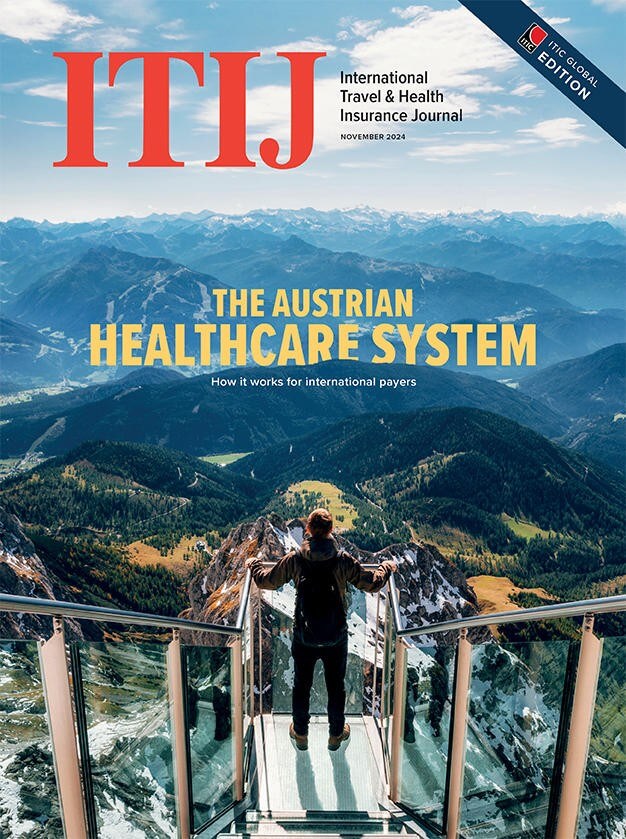
November 2024
Issue
This month we look at affinity partnerships and ask if online travel agencies are the perfect partners for insurers; we cover the trends around cruising in the Mediterranean; we delve into the specifics of the Austrian healthcare system; plus we examine international healthcare and technology, asking how far can technology go.
Wendy Sherry
Wendy Sherry is Chief Executive Officer for the Global Health Benefits business within International Health, Cigna Healthcare. She previously served as Senior Vice President, US Commercial Markets, where she spearheaded work to improve the medical cost ratio for Cigna’s US commercial markets.











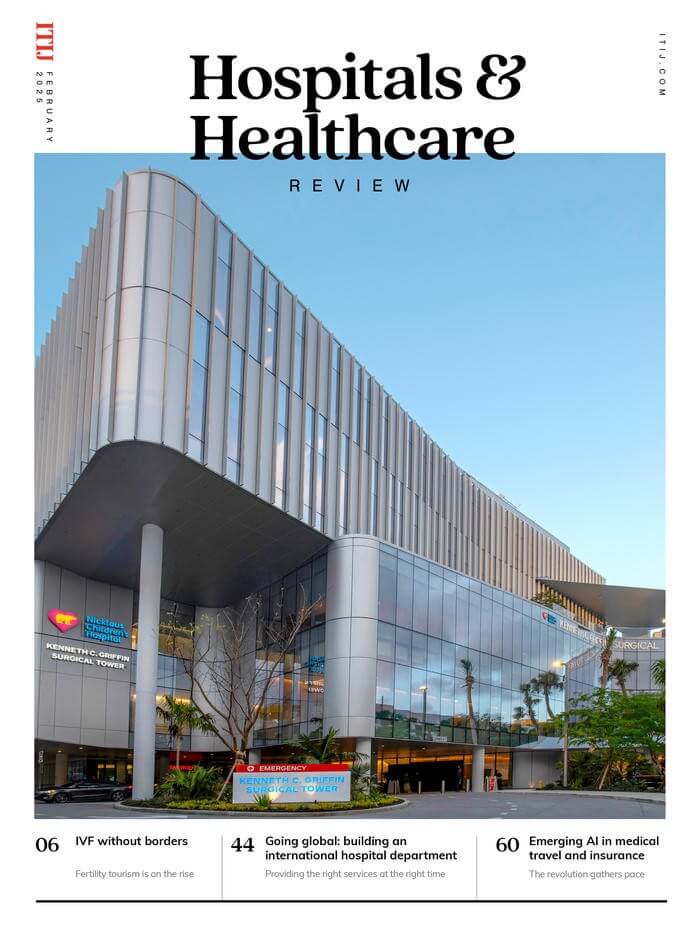
February 2025
Issue
Offering readers a deep dive into the issues facing providers and payers of healthcare services around the world. Cost containment, international patient department development, the role of AI in healthcare delivery and more.