Interview: Dr Maan Fares, Chair of Global Patient Services at Cleveland Clinic

The ITIJ team speaks to Dr Maan Fares from the Cleveland Clinic about eliminating barriers for international patients and the value of a multidisciplinary approach to care
Having worked at the Cleveland Clinic for over a decade now, what first drew you to the company?
I was drawn to the Cleveland Clinic from the time I was a medical student in Syria. I had heard about its exceptional reputation for innovation in cardiovascular care and for providing the best atmosphere for training in medicine and cardiology.
I was especially attracted to the multidisciplinary approach that the Cleveland Clinic employs in caring for our patients.
As Chair of Global Patient Services, what are your key responsibilities?
Our team is dedicated to assisting international patients in their journey to the Cleveland Clinic. We work to eliminate barriers for these patients by managing their registration and coordinating with their referring physicians and entities, whether they are government-sponsored or insured.
We support internationally insured patients, as well as those reaching out individually or through our colleagues, ensuring they receive the necessary care from the various teams at Cleveland Clinic. This involves confirming that they have the appropriate medical records and are registered in our electronic medical system. We also work with their insurance or sponsors to make sure that the financial burdens are taken care of.
Additionally, we facilitate communication with the specific specialists who will provide their care. By reviewing patients’ files in advance, we can plan for a more efficient and streamlined experience for them.
What has been your biggest achievement while working to support global growth at the Cleveland Clinic? Have there been any challenging aspects of the role?
My team’s biggest achievement has been eliminating the differences between international and domestic patients. We developed a digital process that accurately replicates any referral from any state to any of our campuses in any of our locations, such as Ohio, Florida, London, and Abu Dhabi. Each patient receives an electronic medical record, and we request that all external medical records be sent ahead of time for our experts to review. We triage the patients and schedule them with the appropriate physicians and medical teams.
This has been a significant achievement because it eliminates delays and mis-triaging for international patients who place their trust and faith in us. By having all the necessary information beforehand, we know who the patients are and exactly what they need by the time they arrive. This familiarity helps ease the concerns and fears of those coming from abroad.
We have also focused on building strong relationships with external referring colleagues, such as the ministries of health in various countries. This allows them to contact us whenever they need to send a patient abroad, and we can assist them. Our goal is not just to bring patients to us; we also help them create and build local service lines so that they have less need to send patients this way. They only refer those who absolutely must travel.
Why is it important to build a culture that encourages physicians to collaborate across disciplines?
One unique aspect of working at an organisation like the Cleveland Clinic is that we operate as a collective rather than as individuals. I believe the sum of one plus two equals 10. Patient care is not determined by a single person; instead, it involves a multidisciplinary team approach. This team model allows us to review all facets of a patient’s journey, ensuring that many perspectives are considered. By doing so, we make the best decisions for the long-term success of each patient’s healthcare experience.
What is Cleveland Clinic doing to create new educational opportunities and training programmes for future clinicians and hospital leaders?
The Cleveland Clinic has a tripartite mission: to care for life, educate, and conduct research for health. Our educational efforts extend beyond medical students, residents, and healthcare trainees to include all healthcare caregivers and leaders throughout our health system.
AI is being utilised for remote patient monitoring, allowing physicians to oversee patients from a central hub, even if those patients are in different intensive care units
We have a dedicated group called the Global Leadership & Learning Institute (GLLI), alongside another institute focused on education. Together, we create programmes that benefit not only visiting students and physicians but also visiting nurses and administrators. We welcome future leaders of hospitals to observe and learn from our practices, allowing them to meet with our leaders and experience our operations firsthand.
Located in Cleveland, Ohio, we have a medical school on our main campus, which was the first in the country to offer free tuition. Additionally, we collaborate with Case Western Reserve University, hosting their medical students, as well as students from nursing and dental schools. These future physicians, nurses, and trainees actively participate in our campus community.
How does Cleveland Clinic plan to achieve its goal of becoming the most artificial intelligence (AI) and machine learning literate medical institution in the world?
Cleveland Clinic takes AI very seriously and recognises its pivotal role in the future of healthcare. One of our primary focuses is applying machine learning in research, which encompasses multiple aspects of our work. To demonstrate our commitment to digitisation, we have established the position of Chief Digital Officer.
We are making significant strides in research involving machine learning and quantum computing. In fact, we have the only quantum computer in the world dedicated to healthcare located on our main campus, which has attracted various external companies and research organisations interested in collaborating with us.
Additionally, we have recently launched a scribe program for our caregivers. This program utilises AI to enhance the interaction between physicians and patients during appointments. The main benefit is that physicians can focus more on their patients rather than the administrative tasks related to the visit. The scribe program will help generate clinical notes, saving time and allowing physicians to concentrate on patient care.
Furthermore, we are actively working on using AI to improve patient triaging and scheduling, aiming to enhance access to care.
What key areas of healthcare development do you anticipate AI will contribute to most?
AI is expected to make significant contributions in several key areas, including research, administrative triaging, and improving administrative tasks. These advancements will enhance efficiency, reduce waste, and enable physicians to focus more on patient care. Additionally, AI is being utilised for remote patient monitoring, allowing physicians to oversee patients from a central hub, even if those patients are in different intensive care units (ICUs).

What future challenges do you anticipate for the industry and what strategies does the Cleveland Clinic have in place to tackle them?
One of the biggest challenges we face is the delivery of care, particularly the rising costs associated with it. This increase is largely due to workforce shortages and access issues, which complicate things for both domestic and international patients seeking care at the Cleveland Clinic.
The best strategy that the Cleveland Clinic has implemented – years or even decades ago – is to reach out and meet patients where they are. We’ve made significant strides in this area by expanding our presence in Florida, as well as in the Middle East and London. Our goal is to break down barriers and facilitate access to care at the Cleveland Clinic.
Additionally, we keep educating patients, making it easier for them to return to their home countries while still receiving the high level of care they experienced at the Cleveland Clinic.
Dr Maan Fares, Chair of Global Patient Services, Cleveland Clinic
Dr Fares is Chair of Global Patient Services at the Cleveland Clinic. He has held the position from 2021, having served as Vice Chairman since 2015. He has been a board-certified clinical cardiologist at Cleveland Clinic since 2013. Dr Fares speaks English, French, and Arabic, and he earned his medical degree from the University of Damascus School of Medicine, Syria.
April 2025
Issue
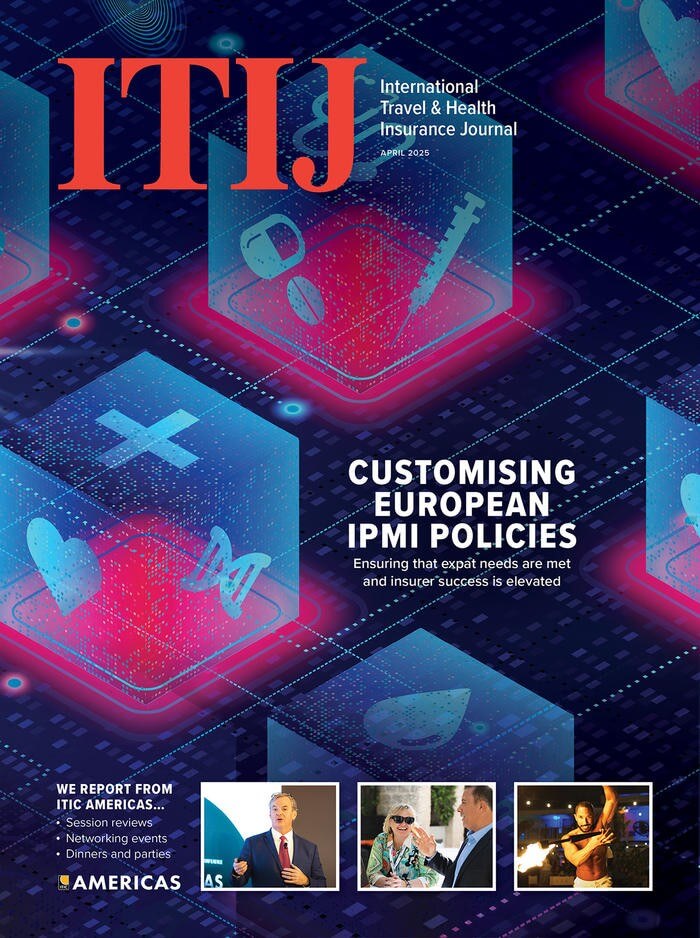
In this month’s ITIJ we look at UK financial services and the regulatory burden. We also publish the second in our three-part series on IPMI policies, this time concentrating on Europe. Plus ITIC Americas took place in March, and we bring you all the insightful session summaries.
Editorial Team
The Editorial Team updates the ITIJ website daily, and works on features for the print edition. With expert industry knowledge and years of experience in writing about complex travel insurance issues, the Editorial Team is ready to investigate and report on the topics that matter most to ITIJ's readers.








February 2025
Issue
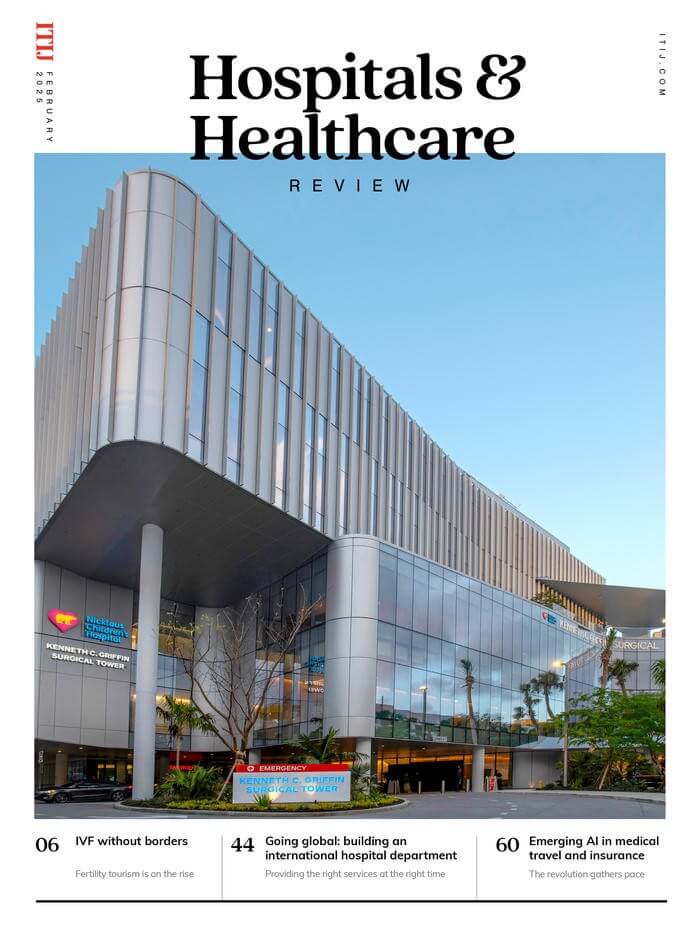
Offering readers a deep dive into the issues facing providers and payers of healthcare services around the world. Cost containment, international patient department development, the role of AI in healthcare delivery and more.