Interview: Dr Amr Abbass, CEO of HealthCare International Group

Dr Amr Abbass, CEO of HealthCare International Group (HCI Group), discusses international expansion and meeting the needs of an evolving client base
Having worked in healthcare for over 20 years, can you describe your career path within the industry?
Over the past two decades, my career in healthcare has been a journey of growth and discovery, deeply rooted in a passion for improving patient outcomes and healthcare systems. I began my career as a healthcare practitioner, which gave me invaluable insights into the day-to-day challenges faced by both patients and providers. This experience inspired me to shift towards healthcare management, where I could influence broader systemic changes. Throughout the years I’ve held various leadership roles across different segments of the industry, from hospital administration to travel medical care and health insurance. These roles allowed me to understand the intricate dynamics of healthcare delivery, financial management, and policymaking. Eventually, this path led me to HCI Group, where I now serve as CEO. In this role, I focus on expanding our international footprint while ensuring we continue to meet the evolving needs of our diverse customers.
As CEO of HCI Group, can you outline your key responsibilities?
As the CEO of HCI Group, my primary responsibility is to steer the company towards its strategic goals, particularly in the areas of international growth and innovation. I oversee the development and implementation of business strategies that align with our mission to provide high-quality, accessible healthcare solutions to our global customers, including expats, travellers (Eastern and Western), students, and maritime workers. Additionally, I am responsible for building and maintaining relationships with our partners and stakeholders across different regions, ensuring that we are constantly adapting to the local needs and regulatory environments. I also focus on leading our team to foster a culture of excellence and continuous improvement, which is crucial in the fast-paced healthcare industry.
How does HCI Group maintain pace with the ever-changing needs of its broad client base?
Maintaining pace with the evolving needs of such a diverse client base requires a multifaceted approach. At HCI Group, we invest heavily in market research and data analytics to continuously monitor trends and emerging needs within each segment we serve. This allows us to tailor our products and services to meet the specific demands of our clients, whether they are expats in a new country, students facing unique healthcare challenges abroad, or digital nomads seeking flexibility and accessibility in their healthcare plans. Moreover, we maintain close communication with our clients, gathering feedback and insights that inform our product development.
Over the past two decades, my career in healthcare has been a journey of growth and discovery, deeply rooted in a passion for improving patient outcomes and healthcare systems
This customer-centric approach ensures that we remain agile and responsive, adapting our offerings to provide the best possible care and coverage.
How do you balance international expansion at HCI Group with ensuring that patients are still receiving the highest-quality care?
Balancing international expansion with high-quality care is indeed a challenge, but it’s one that we address through strategic planning and partnerships. At HCI Group, we believe that expansion should never come at the cost of patient care. To achieve this balance, we focus on establishing strong relationships with local healthcare providers in each new market we enter. These partnerships allow us to ensure that our clients have access to top-notch medical services, no matter where they are in the world. We also invest in technology to streamline our operations and improve the patient experience. This includes telemedicine services, which enable us to provide immediate care and consultations, ensuring that our clients receive timely and effective treatment.
You are also CEO of Cairo’s 24/7 Clinics. Can you tell us
more about how the clinics are leveraging healthcare in Egypt’s touristic destinations?
As CEO of Cairo’s 24/7 Clinics, my focus has been on extending our services to Egypt’s key touristic destinations. We recognise that tourists and expatriates often require healthcare services that are both reliable and easily accessible, especially in remote or high-traffic areas. To address this, we have strategically placed our clinics in locations that respond to the needs of travellers, providing round-the-clock medical care that ranges from emergency services to routine check-ups. Our clinics are staffed with multilingual medical professionals who understand the unique challenges of treating international patients. Additionally, we have integrated advanced healthcare technologies to facilitate smooth and efficient care delivery, ensuring that patients receive the highest standards of medical attention, regardless of their location.
What trends are you seeing with regard to insurance and medical care in the Middle East and North Africa (MENA) region?
The MENA region is witnessing significant shifts in both insurance and medical care, driven by a growing emphasis on digitalisation and preventive healthcare. One of the key trends is the increasing adoption of telemedicine and digital health platforms, which have been accelerated by the Covid-19 pandemic. These technologies are transforming how healthcare services are delivered, making them more accessible and efficient. Another trend is the expansion of health insurance coverage, particularly as governments in the region implement policies aimed at achieving universal healthcare. There is also a growing demand for more personalised and flexible insurance plans, as individuals seek coverage that aligns with their specific needs and lifestyles.
Can you tell us about your work with US-based urgent care services provider One Medical Center?
Our collaboration with One Medical Center is centred around enhancing urgent care services and bringing best practices from the US healthcare system to our operations. We have worked closely with One Medical Center to standardise protocols, improve patient flow, and introduce innovative healthcare solutions that cater to the needs of our international clients. Through this partnership, we have been able to offer our clients access to a network of high-quality urgent care services, ensuring that they receive prompt and effective treatment, whether they are in the US or abroad. This collaboration also allows us to stay at the forefront of healthcare innovation, continuously improving the services we provide.
Do you predict any major changes within the healthcare industry over the next decade?
I anticipate several transformative changes in the healthcare industry over the next 10 years. One of the most significant will be the continued integration of artificial intelligence and machine learning into healthcare delivery. These technologies have the potential to revolutionise diagnostics, treatment planning, and patient care by providing more accurate and personalised solutions. Additionally, I expect to see a greater emphasis on preventive care and wellness, driven by both consumer demand and policy changes. As healthcare costs continue to rise, there will be a shift towards models that prioritise keeping people healthy, rather than just treating illness.
The MENA region is witnessing significant shifts in both insurance and medical care, driven by a growing emphasis on digitalisation and preventive healthcare
Finally, the global healthcare landscape will likely become even more interconnected, with cross-border collaborations and telehealth services playing a pivotal role in providing care to underserved populations and managing global health crises. The focus will be on creating a more sustainable and resilient healthcare system that can adapt to the challenges of the future.
Dr Amr Abbass, CEO, HealthCare International Group (HCI Group)
As the Founder and CEO of HealthCare International Group, Dr Abbass has successfully established a leading presence in Egypt, providing comprehensive healthcare solutions. His commitment to advancing healthcare extends beyond his organisation. He is the Founder and CEO of the Urgent Care Association Egypt and MENA Chapter, where he plays a pivotal role in shaping the future of urgent care services in the region. Recognised for his expertise in orthopaedics and sports medicine, Dr Abbass serves as an Orthopaedics and Sports Medicine Consultant for the International Olympic Committee in Lausanne, Switzerland. His contributions to the field have been instrumental in enhancing athlete performance and care.
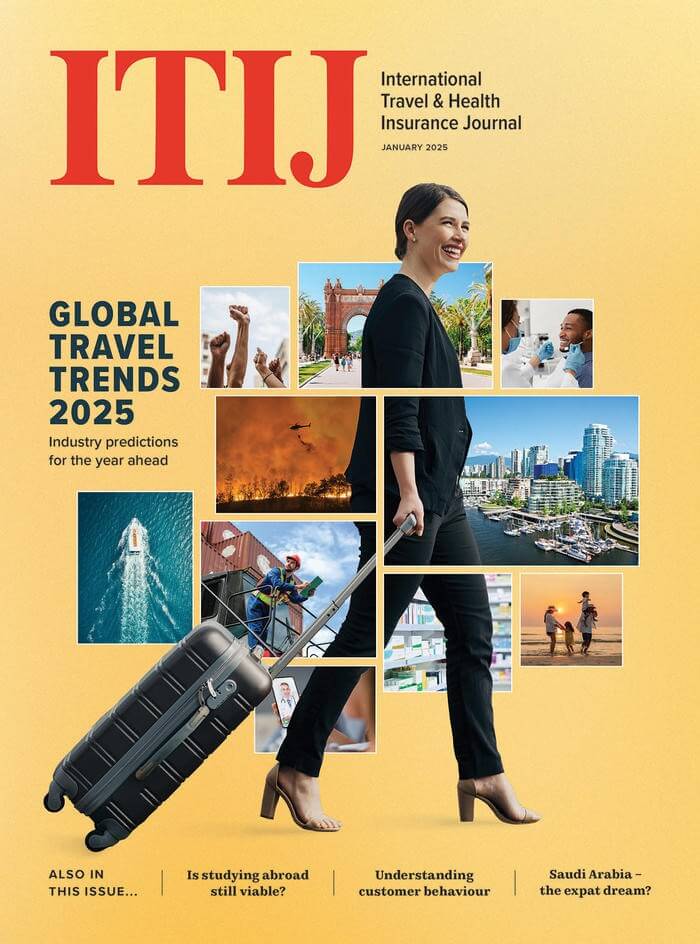
January 2025
Issue
In this issue we look at worldwide travel trends for the year ahead; speak to insurance experts about how they go about understanding their customers; examine the pros and cons of living and working in Saudi Arabia; and look at the shift in the international student community.
Chloe Fox
Chloe Fox is a Junior Editor at Voyageur Group, having joined in 2024. She writes for ITIJ and AirMed&Rescue, covering a range of topics including international travel and health insurance, medical assistance provision, and air medical transportation. Chloe holds a BA (Hons) in English and an MA in English Literature from the University of Bristol.












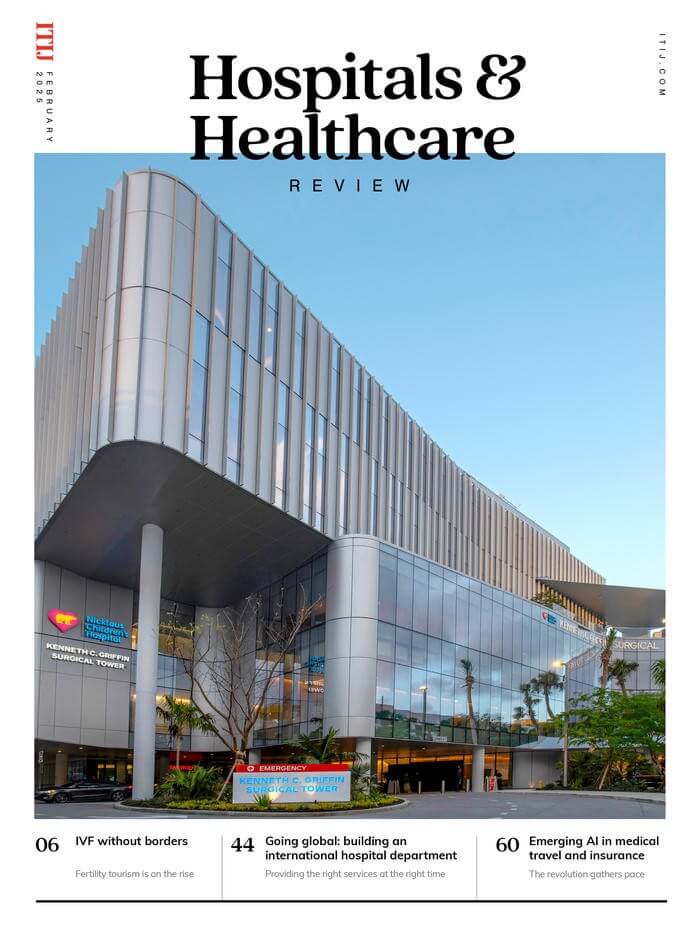
February 2025
Issue
Offering readers a deep dive into the issues facing providers and payers of healthcare services around the world. Cost containment, international patient department development, the role of AI in healthcare delivery and more.