
Industry Voice: New opportunities in China’s growing market: digital shifts, rising expectations, and global impact

As the appetite for travel continues to increase, so too has the demand for comprehensive global medical insurance. In tandem, rising incomes and growing healthcare expectations in China are beginning to transform the domestic insurance landscape. Angel Wang, Head of Distribution at AXA Global Healthcare China, discusses how China’s medical insurance sector is adapting to meet these new demands
As incomes rise, more Chinese citizens are willing to pay higher premiums for medical insurance that offers broader coverage. This has sparked a growing interest in proactive healthcare and wellness packages and prompted new demands for telemedicine and online consultations. Innovative products such as wearable devices and remote monitoring apps allow individuals to monitor their health on the go, but they also provide insurers with valuable data and insight.
Challenges remain in smaller cities and rural areas, where systems are less regulated
Having access to this data also allows insurers to tailor their services to suit the needs of their customer, which is vital for keeping up with the demands of the consumer as they change. Those paying higher premiums look for a lifetime medical insurance partner that offers reliable advice and tangible services, not just a package that merely provides ad hoc relief from medical costs.
Utilising telehealth services
Telehealth services are increasingly being adopted across the board by insurers in China to make care more accessible and affordable. Many insurers are now covering telehealth consultations as part of their policies, reducing the need for in-person visits and lowering the cost for patients. For example, AXA Global Healthcare China cooperates with leading clinical provider UMP Healthcare Holdings to provide online family doctors and medical delivery services to its customers in China. This has a particular benefit for routine check-ups for chronic disease management and minor illnesses, as these are the instances where time can be streamlined most.
There is also support for this shift from the Chinese government, with policies promoting ‘Internet Plus Healthcare’ to encourage insurers as they expand their telehealth coverage.
Many of the top-tier hospitals in major cities such as Shanghai and Beijing offer international departments with English-speaking staff and have direct billing with some international insurers
China’s hospitals tested by insurance collaboration and billing transparency
China’s hospitals are becoming increasingly open to collaborating with the insurance industry to ensure transparent and efficient billing processes. Major hospitals, particularly in tier-one cities, have put standardised electronic billing systems in place that align with the requirements of insurers, which helps to reduce discrepancies and delays.
However, challenges remain in smaller cities and rural areas, where systems are less regulated. Efforts are underway to streamline processes, two good examples being work on real-time claim verification and digital reimbursement systems. The government’s push for unified healthcare IT systems should also help achieve better transparency and great efficiency.

Simplifying care access for international patients
Access to care for international patients, such as expats and business travellers, has improved significantly in China over the last few years. Many of the top-tier hospitals in major cities such as Shanghai and Beijing offer international departments with English-speaking staff and have direct billing with some international insurers. However, reimbursement processes can still require upfront payment and manual claims submissions. In response, AXA Global Healthcare is working to help simplify and streamline customer experience through innovative solutions such as its healthcare payment card. Customers can add our virtual payment card to their digital wallet and use it to pay for treatment at any healthcare provider worldwide that offers a contactless Visa payment method.
As China’s healthcare system becomes more sophisticated – with better digital health records, insurer-provider integrations, and cross-border insurance partnerships – access for international patients is bound to become even smoother. Initiatives like the Healthy China 2030 plan aim to further modernise healthcare services, and international users will also benefit from this.


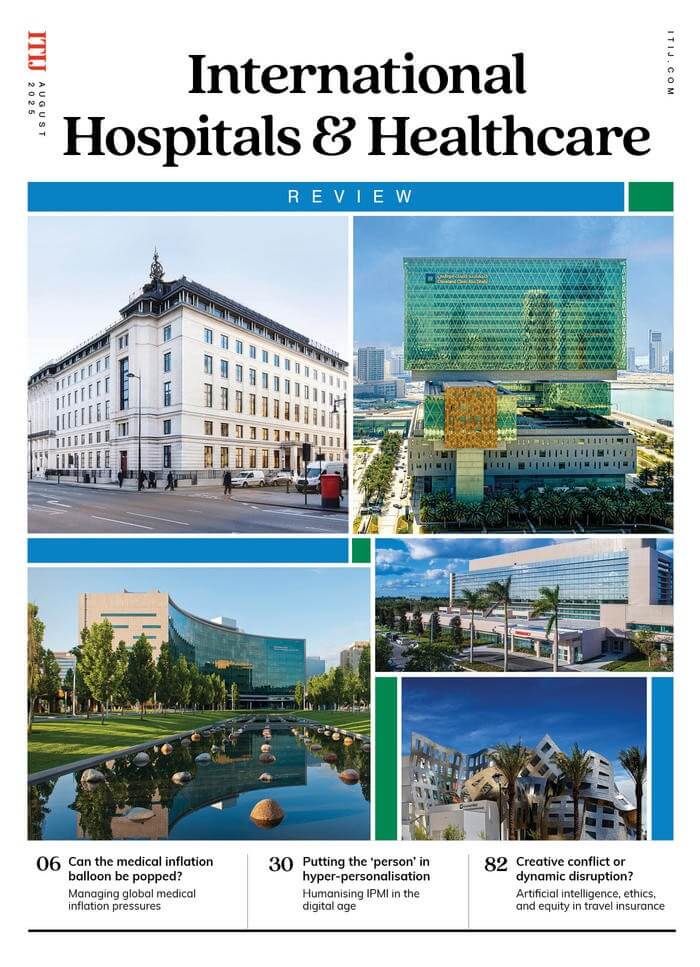
August 2025
Issue
This month we look at the rising demand for medical escorts on commercial airlines, plus ask how the latest technology can help insurance companies. In our International Hospitals and Healthcare Review we examine humanising IPMI in the digital age, and ask what makes a destination desirable for medical tourism.
Angel Wang
Angel has been with AXA for nine years. She is one of the original team members of AXA who introduced AXA’s signature international private medical insurance (IPMI) product, SmartCare Exclusive, in the China market. Under the leadership of Angel, AXA IPMI products continue to grow and reached a gross written premium of more than ¥200 million in 2024. Angel is certified FMLI. She holds a bachelor’s degree in French Language and Linguistics in Shanghai and a master’s degree in marketing in France.












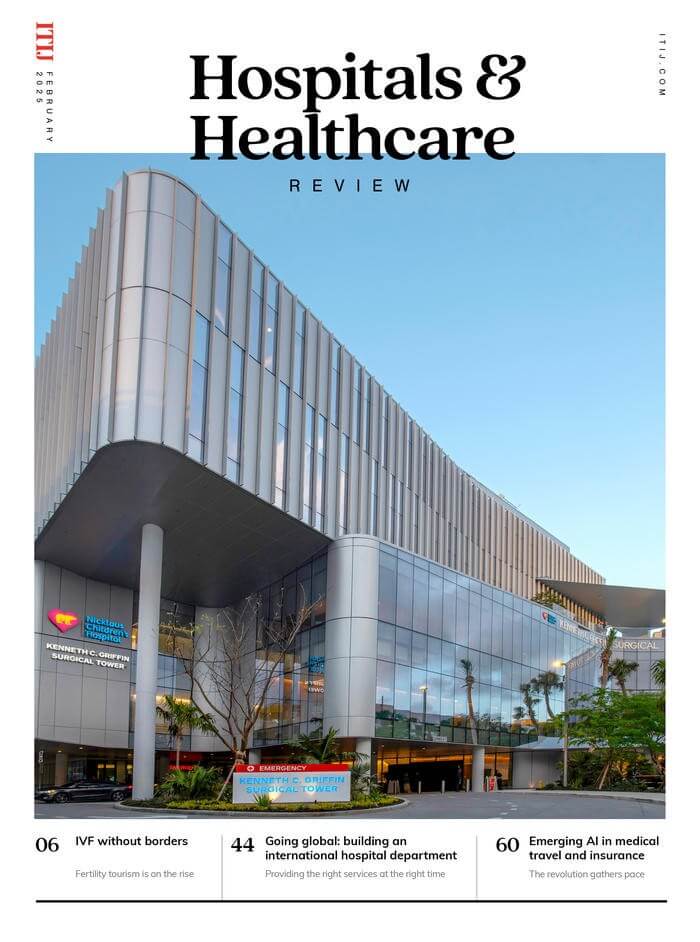
February 2025
Issue
Offering readers a deep dive into the issues facing providers and payers of healthcare services around the world. Cost containment, international patient department development, the role of AI in healthcare delivery and more.