

Industry Voice: Is a holistic approach the answer to the retention crisis

Dr Megan Seibel, Director of the Center for Cooperative Problem Solving at Virginia Tech and KAI practitioner, shares her thoughts on addressing healthcare staff turnover
According to the 2024 NSI National Healthcare Retention & RN Staffing Report, the staff turnover rate in US hospitals in 2024 was at 20.7%, while the registered nurse (RN) turnover rate was at 18.4%. Although these figures may appear high on the surface, it’s not until you compare these rates against the national average of 3.5%, across all industries, that you realise just how big a staffing crisis there is in the healthcare sector. Furthermore, over the past five years hospitals have turned over approximately 106.6% of staff; of those, 95.4% have left voluntarily. The report says that career advancement, working conditions, and workload/staffing ratios are among the top reasons for people moving on.
Modern healthcare, especially in the wake of a global pandemic, is technical, demanding, and expensive in ways that strain both delivery systems and personnel
The responsibility to meet patient demands falls to recruitment, which has its own issues to resolve. According to the NSI report, it takes approximately three months to hire an experienced RN, with hospitals citing a lack of experience as an ongoing issue with many applicants.
From voluntary resignation to labour shortages to burnout, the cycle continues with fewer and fewer professionals able to fill vacancies. The result? Aside from an increasing strain on staff and patients, it is estimated that the ongoing issue of turnover in the healthcare industry is costing the average hospital between US$3.9 and $5.8 million per year. Without a magic wand to wave, employers are left searching for other more holistic ways to address the turnover challenge.
The challenge
Healthcare, like many other fields, is dependent on finding, and hopefully retaining, skilled and dedicated personnel. When it comes to delivering patient care, that means a combination of both people and technical skills, and the ability to learn quickly and apply that learning in environments that are not static. The capacity to do the job well, to address and solve the ever-present problems that exist in healthcare environments, isn’t the entire equation, however. Employers and workplaces don’t often take time to unpack the ways in which people prefer to solve the problems they face or acknowledge what motivates them to execute on these solutions.
Modern healthcare, especially in the wake of a global pandemic, is technical, demanding, and expensive in ways that strain both delivery systems and personnel. High patient acuity levels on inpatient units, changing technologies and interventions, and new-to-market treatments compete for the attention and energy of already strained staff. A registered nurse at an urban children’s hospital recently shared that, in addition to juggling high-acuity and high patient-to-nurse care ratios, they frequently deal with law enforcement on the inpatient floor due to combative or substance-influenced family members that detract from care and increase stress in an already overloaded environment.
It’s not enough, then, to call on healthcare personnel to harness the goodness within themselves to follow a noble vocational calling. While this intrinsic motive may be a primary reason people stay even when work environments require a great deal of coping, effective management strategies include creating space for trust and rapport to flourish. When emergencies arise and staff need to pull together to save a life or cover a shift, it is essential that they understand and trust one another to be working toward the same good cause – delivering effective care for patients and families.
Addressing change
All healthcare settings, regardless of size, scale, or scope, face complex challenges in identifying and solving problems. The change amid these complexities is a constant variable that is ripe for interpretation. Getting acceptance of a change by those that need to implement it, for example administrative or policy changes, new treatments or procedures, or even shift and worktime requirements, takes time. Agreement that change is necessary, especially if implementation requires skill and compliance, is an important step in managing change that is sometimes taken for granted. In any complex task, a diversity in experience, skill, position, ability, and even problem-solving style, is required. Effectively managing aspects of personnel diversity is worth the effort if it is to be well deployed in working effectively together.
Effectively managing aspects of personnel diversity is worth the effort if it is to be well deployed in working effectively together


The breadth of areas of expertise and types of delivery environments allow for some flexibility in how and where care personnel find the right fit. While staff are often good at describing why they prefer certain spaces over others, or paediatrics to gerontology, emergency to long-term care, inpatient to outpatient, surgery to rehab, travel to permanent, or land to sea, managers aren’t always equipped to unpack what it is about the problem-solving aspects of those settings that appeals to personnel. Are ideas readily shared and listened to, are policies and expectations more delineated or flexible in ways that appeal to different styles? How are rules and group norms identified and valued? These aspects of each environment, situated against the innate preferences of those in them, are what contribute to how well co-workers communicate, work together, and trust one another. While knowledge, insight, and experience help us to better address the complexities of a given problem, the way in which we approach it, either more adaptively or innovatively, is often a source of misunderstanding and tension.
A holistic approach
The problem-solving style of individuals is not often assessed, addressed, or fully understood and leveraged in the workplace. We know from decades of research by Dr MJ Kirton and a network of global practitioners using Adaption-Innovation Theory (KAI) that individuals have innate preferences for the ways in which they generate ideas, utilise structures to implement ideas for change, and respond to rules and group norms.
When there is synergy between the way a person prefers to be, either more adaptive or more innovative, there is less stress in completing tasks and working with others.
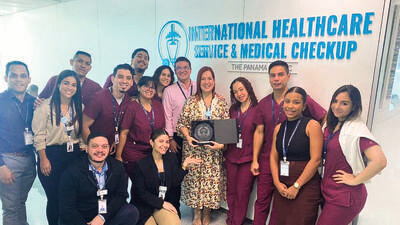
With healthcare, we may see some of these preferences emerge where certain situations cause excitement or tension. For example, complying with detailed procedures and protocols may be comfortable for one person and feel overly constraining for another. Those same two individuals may find working through the ambiguity of an unknown illness either exciting or terrifying. In complex situations, we need a diversity of problem-solving styles to identify solutions. However, that only comes after the problem has been identified and agreed upon. Sometimes, there doesn’t seem to be time to sort all of that out, or we simply may not take the time. Understanding the adaptive and innovative preferences of our personnel teams is a big step in being able to leverage cognitive style in ways that enhance skill, experience, and role more effectively.
Understanding the adaptive and innovative preferences of our personnel teams is a big step in being able to leverage cognitive style in ways that enhance skill, experience, and role more effectively
Is understanding cognitive style a holistic approach? Perhaps. Valuing cognitive diversity in any workplace setting can be broadly leveraged as a strategy. It requires care and concern in personnel management in an environment that is bettered by empowered and impassioned personnel. Yet, while holistic in approach, the ultimate success is in the individualised way embracing cognitive style allows healthcare personnel to be the change agents they are called to be.

February 2025
Issue
Offering readers a deep dive into the issues facing providers and payers of healthcare services around the world. Cost containment, international patient department development, the role of AI in healthcare delivery and more.
Dr Megan Seibel
Director of the Center for Cooperative Problem Solving at Virginia Tech and a KAI practitioner, Dr Seibel is also a Registered Nurse. She has authored and co-authored numerous research articles on facilitated leadership and has significant expertise in helping organisations to identify ways to solve problems through adaptation and innovation.











February 2025
Issue
Offering readers a deep dive into the issues facing providers and payers of healthcare services around the world. Cost containment, international patient department development, the role of AI in healthcare delivery and more.