Why your aorta matters: silent risks and surgical solutions

Baptist Health Heart & Vascular Care experts tell ITIJ why awareness can be lifesaving
The aorta is the body’s largest artery, carrying oxygen-rich blood from the heart to every organ. When it’s damaged, the consequences can be fatal. A weak spot can bulge and rupture, or a tear in the aortic wall can cause sudden death. In the US, for example, the Centers for Disease Control and Prevention (CDC) reports that millions of Americans live with heart valve disease, including silent aneurysms and valve disorders. Each year, tens of thousands are diagnosed with aortic aneurysms or suffer an aortic dissection.
What is aortic disease?
Experts with Baptist Health Heart & Vascular Care explain that aortic disease includes:
• Aneurysms: weak or bulging areas that can rupture
• Dissections: tears in the layers of the aortic wall
• Aortic Valve Disease: malfunctions that disrupt blood flow from the heart.
Why early detection is critical
Tom Nguyen, M.D., FACS, FAC, Chief Medical Executive of Baptist Health Heart & Vascular Care, Director of Minimally Invasive Surgery, and Barry T. Katzen Endowed Chair at Miami Cardiac & Vascular Institute, and Professor and Chair of the Department of Cardiovascular Sciences at Florida International University Herbert Wertheim College of Medicine, is an internationally recognised cardiac surgeon and global leader in minimally invasive valve surgery.
Dr Nguyen stressed that these conditions often develop silently. “The greatest danger with aortic disease is often what you don’t feel. Silent progression can occur for years before symptoms suddenly appear,” he said. Early detection – often through unrelated imaging or proactive screening – is key to preventing tragic outcomes.
Baptist Health physicians use advanced imaging and genetic testing to detect problems before they become emergencies, caring for patients from around the world.
Today, Baptist Health Heart & Vascular Care leads a new era of minimally invasive treatment
Who is at risk?
Bradley S. Taylor, M.D., MPH, Chief of Cardiac Surgery for the North Region and Chief of Quality and Outcomes at Baptist Health Heart & Vascular Care, noted five major risk factors:
• Age, especially over 65
• Family history of aortic disease
• Smoking
• High blood pressure or cholesterol
• Genetic conditions such as Marfan or Loeys Dietz syndromes.
Symptoms to watch for
While many cases remain silent, Dr Taylor warned that sudden chest or back pain, shortness of breath, difficulty swallowing, hoarseness, fainting, or near-fainting require immediate medical care. “Minutes matter in these situations,” he said.
Innovations in treatment
Historically, open-heart surgery was the only option for aortic repair. Today, Baptist Health Heart & Vascular Care leads a new era of minimally invasive treatment. Dr Nguyen and his team tailor therapies to each patient, often using endovascular stent grafts or transcatheter valve procedures that shorten recovery and reduce complications.
“Our Center for Aortic Care is dedicated to providing patients the highest level of expertise and innovative treatments for aortic conditions,” said Dr Nguyen. Many Baptist Health physicians have pioneered new devices, techniques, and first-in-man procedures, not just in the US, but worldwide.
Protecting your aortic health
Dr Nguyen emphasises that awareness is lifesaving. Many patients don’t realise their genetic or lifestyle risks until they undergo screening. He recommends five steps for a healthy aorta:
1. Get screened: especially if over 50 or with family history
2. Control blood pressure and cholesterol
3. Quit smoking
4. Maintain a healthy lifestyle: balanced diet, exercise, healthy weight
5. Know the signs: act quickly if symptoms appear.
“Staying on top of your risk factors and getting regular check-ups are powerful tools for prevention,” Dr Nguyen said. “Our goal at Baptist Health Heart & Vascular Care is to help you avoid emergencies by catching issues early.”
About Baptist Health
For more information, visit BaptistHealth. net/International, email us at International@ baptistHealth.net, or call 786-596-2373 to schedule an appointment.
November 2025
Issue
In this issue of ITIJ we look at current travel patterns to and from the US and Europe, take a close look at the Italian healthcare system, and examine how insurers are adapting policies and coverage to manage weather-related challenges.
Editorial Team
The Editorial Team updates the ITIJ website daily, and works on features for the print edition. With expert industry knowledge and years of experience in writing about complex travel insurance issues, the Editorial Team is ready to investigate and report on the topics that matter most to ITIJ's readers.








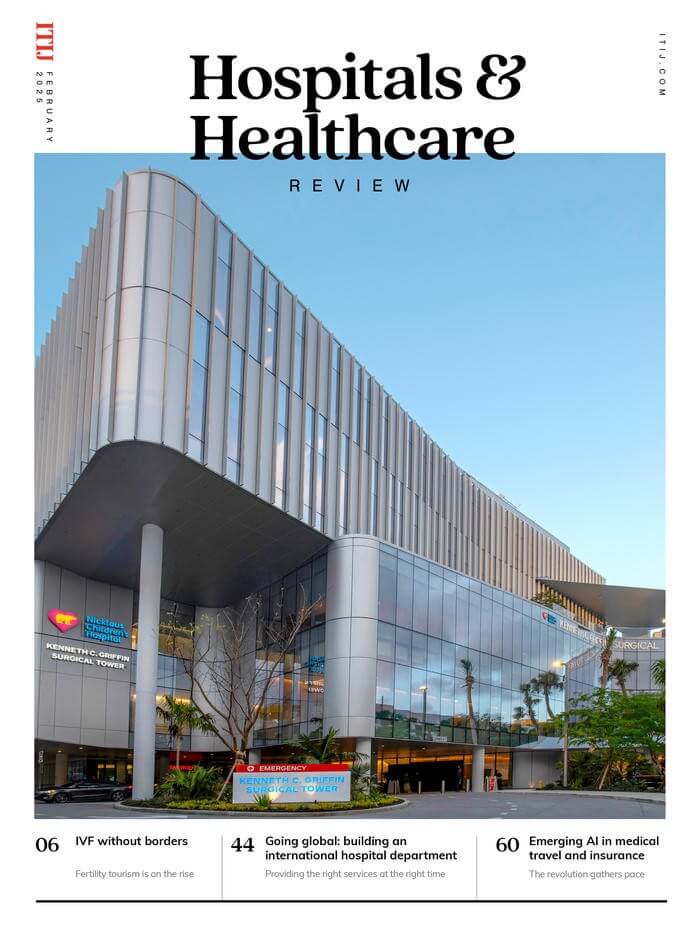
February 2025
Issue
Offering readers a deep dive into the issues facing providers and payers of healthcare services around the world. Cost containment, international patient department development, the role of AI in healthcare delivery and more.