Interview: Kevin Newman, Head of Health and Benefits Europe at WTW

Chloe Fox speaks to Kevin Newman, Head of Health and Benefits Europe at WTW, about turning employee benefits into strategic tools that drive engagement, wellbeing, and businesss outcomes
What first drew you into the health and benefits field, and what has kept you engaged for more than 25 years?
Proximity! After leaving university, a leading healthcare carrier was situated just a few miles from home, so I gave it a try and I’m still in the industry all these years later. After a few years I realised that I wanted more direct client contact and a better understanding of how benefit provision impacted corporate outcomes. A move to what was then Towers Perrin allowed me to explore this to the full.
What has kept me engaged is how the field continues to evolve. Over the last decade in particular, I’ve seen benefits move from a largely transactional function to a strategic lever for workforce sustainability and productivity. Whether supporting organisations through periods of medical inflation, demographic change, or growing demand for mental health support, the challenge has remained the same: how to deliver value for employees while remaining financially responsible. That constant balancing act, combined with the human impact of the work, is what continues to motivate me. Working with organisations operating across very different healthcare systems shows how benefits are not abstract policies – they shape access to care, financial security, and resilience at moments that matter most.
Which experiences have most shaped the way you advise organisations on benefits strategy today?
I’ll never forget visiting a client after an onsite accident that resulted in the tragic death of one of the employees. This community-focused employer was very intentional about giving employees and their families robust financial protection through their benefit package, and the conversations that I had that day continue to shape an element of the advice I still give today. Similarly, I will never forget the work that our teams did during the pandemic to ensure our clients’ employees and their families had access to high-quality, timely healthcare at a time when national healthcare systems were at breaking point.
These experiences are the real metrics. It’s not just about cost optimisation – it’s about making a difference. That’s what drives engagement, retention, and business outcomes.
Working with multinational employers across Europe has also been particularly influential. I’ve seen firsthand how organisations struggle to reconcile global consistency with local relevance – especially when operating across very different statutory healthcare systems. In practice, this often means helping leadership teams move away from fragmented, country-by-country decisions toward clearer strategic frameworks that still allow local flexibility.
How has your leadership approach evolved as employee benefits have become more strategic?
As benefits have become more strategic, leadership has increasingly been about influence rather than technical detail. Earlier in my career, success often meant designing technically robust programmes. Today, it’s about helping senior leaders understand how benefits link to broader business risks – such as workforce resilience, attraction, and long-term productivity.
In practice, this often involves reframing conversations. For example, when discussing rising healthcare costs with executive teams, the most productive discussions are those that connect cost trends to absence, engagement, and retention data. Research consistently shows that organisations with strong governance and senior-level sponsorship are better positioned to manage both cost and employee value. My leadership approach now focuses on enabling those conversations and helping organisations move from reactive decision-making to more deliberate, evidence-based strategy. The depth of research we have at WTW supports these conversations and evidencing the actions that high-performing companies are taking.
Where do you see the biggest gap between what employers think they offer and what employees truly value?
There can often be a gap between what employees value and what employers deem relevant when it comes to benefits.
Employees consistently value choice, flexible work arrangements, financial wellbeing, and life stage needs. Yet many organisations still invest heavily in benefits that are poorly understood or underused. Our deep research where we compare the employee perspective (Global Benefits Attitudes Survey) versus that of the corporate (Benefits Trends Survey) shows that while employees want more flexibility, very few multinationals have the governance frameworks needed to deliver personalisation at scale. Closing this gap requires not more spend, but better alignment – using data and employee insight to redirect investment toward what people genuinely value.
Which strategies are proving most effective in managing rising healthcare and benefits costs without reducing quality?
Across Europe, the most effective strategies I see focus on value rather than blunt cost-cutting. Employers that succeed tend to take a more targeted approach – working closely with vendors, improving transparency, and focusing on high cost conditions such as mental health, cancer, and cardiometabolic disease. In many cases, employers initially look for short-term cost containment, only to realise that reducing benefits often erodes trust and engagement. Those experiences reinforce the importance of focusing on smarter spend – improving vendor performance, targeting high cost conditions through timely access to good-quality care, and using data to inform decisions – rather than defaulting to benefit reductions.
Benefits are not abstract policies – they shape access to care, financial security, and resilience
In practice, this often means shifting the conversation from “How do we spend less?” to “How do we spend better?” Organisations that use analytics to understand risk and claims variability are better positioned to intervene earlier and design more sustainable programmes. Importantly, when cost management is positioned as part of a broader wellbeing and prevention strategy, employers are more likely to maintain employee trust while navigating sustained medical inflation.
How do you encourage senior leaders to view benefits as a strategic investment rather than a cost line?
The key is to anchor the discussion in business risk and outcomes. When leaders see how healthcare costs, absence, and disengagement interact, benefits stop being viewed in isolation. Presenting leaders with clear evidence, such as trend data, employee sentiment, and outcome metrics, helps move the conversation beyond anecdote.
I’ve often seen a shift when leaders recognise that benefits influence attraction and retention just as much as reward or career development. Research shows that organisations with senior-level endorsement of benefits strategy are far more likely to achieve consistency and value. Our role is to help leaders make those connections and to frame benefits as an investment in workforce resilience, not simply an operational expense.
What are the main barriers preventing employers from delivering personalised benefits, and how can they move past them?
The most common barriers are governance complexity, cost pressure, and fragmented data. Even where there is strong intent to benefits, many multinational organisations lack the structures needed to deliver flexibility at scale. Rising medical inflation often reinforces risk averse behaviour, making employers hesitant to redesign programmes. From what I’ve seen, progress usually starts with clearer decision-making frameworks and better use of technology. Centralised platforms and improved analytics allow employers to offer choice without losing control. Crucially, personalisation doesn’t mean offering everything – it means reallocating spend toward benefits that deliver the greatest value for different employee groups, while maintaining equity and affordability.
Personalisation doesn’t mean offering everything – it means reallocating spend toward benefits that deliver the greatest value
How do you see the definition of workplace health evolving over the next five to 10 years?
Workplace health is broadening rapidly. Over the next decade, I expect the focus to move further upstream – from treatment to prevention and resilience. This is already visible in the growing emphasis on mental health, financial wellbeing, and support across different life stages, particularly as workforces age.
Technology and data will play a bigger role in enabling earlier intervention and more personalised support. Ultimately, workplace health will be defined less by individual benefits and more by how effectively organisations help employees stay well, productive, and engaged over the long term. Our role will continue to evolve to leverage predictive analytics to provide clients with actionable insights in key areas like cost management and changes in programme design and delivery. The organisations that succeed will be those that use data and technology to turn benefits into insight and insight into better health outcomes.
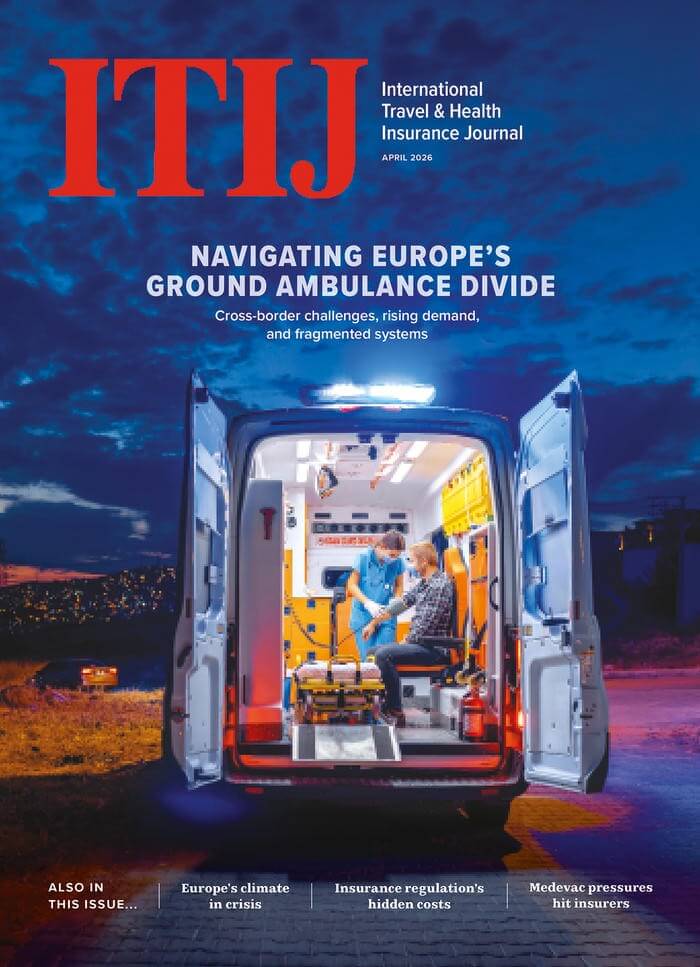
April 2026
Issue
Across Europe, demand for ground ambulance services is rising, while capacity, workforce availability, regulatory limits and inflationary cost pressures intensify. We look at the evolving landscape, highlight major market stress points, and assess how stakeholders are responding. We also have anassessment of the latest regulations in different jurisdictions that are hindering insurance development and growth. We cover the most important regulatory frictions across major and emerging jurisdictions, explain how they impede growth, and propose actionable mitigations for industry stakeholders.
Kevin Newman
Kevin is Head of Health and Benefits Europe at Willis Towers Watson (WTW), where he advises multinational organisations on the design and governance of health and wellbeing strategies across diverse European markets. With more than 25 years’ experience in employee benefits, he works closely with senior leaders to balance rising healthcare costs, boost long-term workforce resilience, and modernise benefit provision to align with wider corporate objectives.













February 2025
Issue
Offering readers a deep dive into the issues facing providers and payers of healthcare services around the world. Cost containment, international patient department development, the role of AI in healthcare delivery and more.