Healthcare ready on patient safety and preparing for disease outbreaks

US-based organisation Healthcare Ready works to ensure patients have access to medicine and healthcare during disease outbreaks. Dr Nicolette Louissaint, Executive Director, discusses the key issues facing public health and explains how Healthcare Ready safeguards patient health
What led you to the role of Executive Director of Healthcare Ready?
Healthcare Ready is a special organisation because it was created by a group of leading trade associations in healthcare who believed that they could each play a stronger role in emergency response. I was drawn to the organisation because of the mission – to ensure patients have access to medicine and healthcare during a disaster or disease outbreak, and found the work (and partnerships) that the organisation sustains, to be fascinating.
What aspects of your role do you find most rewarding?
we are very concerned about the next pandemic. This threat is truly a matter of ‘not if, but when’, and it can be difficult to keep threats like disease outbreaks and even pandemics on policymakers’ radar
The most rewarding part of my role is witnessing the formation of partnerships and recent changes in healthcare and public health preparedness and response that are based on our work. We have seen a rather active two-year period with respect to disasters and disease outbreaks, which has stretched and grown the organisation in ways that we could not have imagined or anticipated. The ability to mobilise our team to respond to disasters and disease outbreaks at a moment’s notice is without doubt the most rewarding part of my role.
How does Healthcare Ready safeguard patient health?
Healthcare Ready works to safeguard patient health by functioning as a public-private partnership between private sector healthcare and public sector health and emergency management. During disasters, we work with our partners in both sectors as well as patient groups to determine patient needs during events, and we then mobilise our partners to support these patients. We work particularly closely with components of the supply chain to ensure the timely delivery critically needed medicines and medical products during and after an emergency.


What do you see as the key issues facing public health, and which potential disasters would you say pose the biggest threat to healthcare?
While there are many issues facing public health, from the current threat landscape to global surveillance and response capacity, one of the biggest threats is the ability of patients to obtain their regular and necessary medications during disasters. Based on our recent survey findings, as many as nine per cent of those in the countries polled anticipate that they would experience serious effects after just one day of going without their regular medications or medical equipment. And while the majority of respondents are satisfied with their ability to obtain medications on a ‘blue-sky’ day, they report much lower confidence in their ability to obtain life-sustaining medication during a disaster or disease outbreak.
Most of those surveyed reported they were most concerned about either political/civil unrest or natural disasters such as a hurricane or earthquake. Both types of disasters pose significant threats to the integrity of the supply chain and the ability of both local and international actors to respond to a crisis.
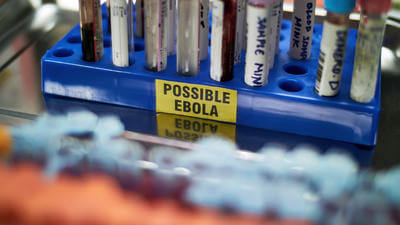
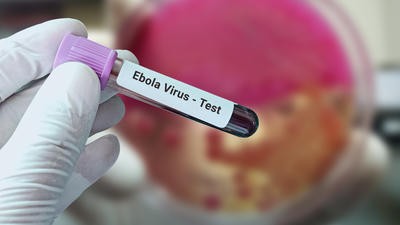
Like many of our partners in the field, we are very concerned about the next pandemic. This threat is truly a matter of ‘not if, but when’, and it can be difficult to keep threats like disease outbreaks and even pandemics on policymakers’ radars when there are often more immediate threats. This is one of the reasons we included a set of questions in our poll asking patients what they would do in the event of a pandemic – because while it is important to know the capabilities of hospitals and healthcare facilities that would respond and care for patients during a pandemic, it’s just as important to have an idea of the actions patients would take, to ensure they align with healthcare capabilities.
Based on the results of this survey, do you believe respondents are right to have confidence in their government when it comes to responding to disasters and providing access to medications?
it is my hope that partnerships and cross sector
co-ordination become the norm in public health and health policy
I believe that it is appropriate for citizens to expect their governments to be able to protect and support them during a catastrophic event, both local/state and national. However, individual and community response capacity is important as well, especially because infrastructure damage may prevent emergency managers and first responders from reaching communities immediately. Governments also have to ensure that preparedness and response remains a priority, and that they are continuing to invest in the infrastructure required to support their citizens during a disaster. A common saying in the field is that ‘all disasters are local’. This points to the notion that no matter national capabilities, local communities and local governments will always be the first to respond. Following this logic, it is imperative that local communities and governments are resourced.
It is important to note that governments are increasingly investing in emergency preparedness measures, such as strategic medical stockpiles, surveillance capabilities, and institutional capacity. The work of the international community in pushing for improved health security capacity is clear in the voluntary participation of many countries in the Joint External Evaluations under the Global Health Security Agenda. There is clearly still room for improvement, but the international community is certainly taking the issues of preparedness and response seriously.
Do you think government responses to disease outbreaks are improving?
There is a cycle of response and complacency well known in the entire disaster field, which is also true as it pertains to responses to disease outbreaks. The fatigue experienced is often framed as ‘donor fatigue’ or ‘response fatigue’. When a serious outbreak hits, there is an immediate surge in funding and research that lasts for a while, and then slowly subsides as no new outbreaks occur. Eventually, another outbreak strikes, and the cycle starts over again.
Generally, there is a global recognition that government response must improve, and we have seen some countries begin to invest more in improving their ability to prevent, detect, and respond to crises, including through the Global Health Security Agenda. The World Health Organization (WHO) has also invested more in its pandemic response capacity; capabilities that will prove vital during a large-scale disease outbreak. While there is a long way to go, we have seen some recent improvement in preparedness efforts.
In terms of responding to outbreaks, we are currently seeing a decrease in funding from the US Government, but at the same time we’re hearing encouraging discussions to increase public health preparedness and response funding (and broader infrastructure). Ultimately, time will tell in our next response to an outbreak if we have improved our response capabilities and procedures since the last pandemic.
I believe that it is appropriate for citizens to expect their governments to be able to protect and support them during a catastrophic event
Why is it that patient perspectives on obtaining medication and care, preparedness, and health security tend to be unmeasured and overlooked, and what are the repercussions of this?
This is a function of how we have viewed preparedness and response for many years. Much of the preparedness and response infrastructure has been housed within government, and in some countries, the private sector and NGO community have been able to contribute to supporting health security and disaster response initiatives (there has been an incredible body of work in this space over the past 10 years). So, in many ways, the focus has been on the systems that are expected to support patients, without much emphasis on the patient perspectives. In addition, systems-level inputs have often been used to determine the readiness posture, which is critical and requires inputs from health systems and emergency management infrastructure in country. These approaches are not bad or problematic, but the opportunity to also incorporate the voice of the patient can help to gain additional insights into anticipated impacts from a disaster.
Every patient perceives their risk and preparedness for disaster with their own calculus of exposure and perceptions of preparedness, which may or may not be the same as the calculus used by researchers and governments studying systems-level data. If we accept that a person’s calculus of risk will, at least in part, determine their response to a threat, then we are missing the information we need to understand how the system will be utilised by those who need it during a disaster. However, it can be difficult to poll the high number of people needed to obtain a clear picture of the public’s risk perception and confidence in their abilities to obtain medications or treatment during a disaster or outbreak.
This is part of the reason we were motivated to do this work. Even as an organisation that has worked on a wide range of responses, we were surprised by the reported answers that patients are satisfied with their ability to access healthcare during normal times but anticipate experiencing serious vulnerabilities during a crisis. Another important aspect of this work, collecting patient perspectives provides a timeframe. Based on the survey results, patients would begin to experience negative health impacts much sooner than anticipated, so time is truly of the essence during a crisis.


Which of Healthcare Ready’s achievements are you proudest of?
I am incredibly proud of Healthcare Ready’s response to the catastrophic 2017 hurricane season. We were activated for 81 consecutive days, which was far more expansive than our previous responses. We found our organisation focused on disaster response in three distinct geographical areas across the US and Caribbean, which brought unique challenges. While our focus is to ensure that patients are connected to healthcare, we accomplish this by supporting the healthcare supply chain in resuming operations. The 2017 hurricane season activation demonstrated the importance of the work that we do, especially as we facilitated transport of product and conveyed status information that made the difference in the lives of many patients. During this time, we responded to 1,000 patient pleas, facility needs, supply chain demands and pharmacy status inquiries, and worked with more than 30 NGOs, private sector partners and government agencies during the four different hurricanes across eight states and territories.
Generally, there is a global recognition that government response must improve, and we have seen some countries begin to invest more in improving their ability to prevent, detect, and respond to crises
Looking ahead to the next five to 10 years, what are your professional goals and future hopes for public health and health policy?
As far as professional goals – who knows! This is an ever-changing field and I just hope to continue to contribute to it in meaningful ways. Ultimately, I hope that the healthcare and public health infrastructure is so strong that groups like ours are no longer needed, but I think we are quite far from that. The field has become more collaborative, which is important, and it is my hope that partnerships and cross-sector co-ordination become the norm in public health and health policy. I am also hopeful that the investments from today will build a strong global health security infrastructure, as we know that there will be future disasters which require it.
As a country and as an international community, we must continue prioritising disaster preparedness and response so communities across the globe can become more resilient in the face of disaster. Because we know that it’s ‘not if, but when’ until the next disaster strikes. ■
August 2018
Issue
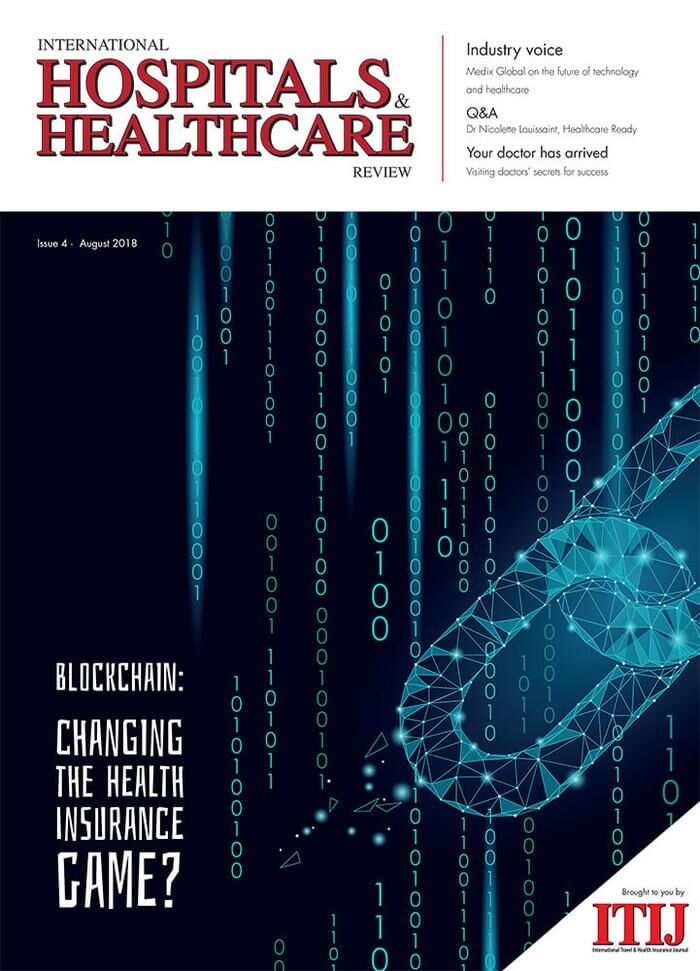
In the International Hospitals & Healthcare Review,
Blockchain disrupting health insurance
Visiting doctor services' popularity
Q&A wtih Dr Nicolette Louissaint, Healthcare Ready
Industry voice: Sigal Atzmon, CEO at Medix Global, on the future of healthcare.
Editorial Team
The Editorial Team updates the ITIJ website daily, and works on features for the print edition. With expert industry knowledge and years of experience in writing about complex travel insurance issues, the Editorial Team is ready to investigate and report on the topics that matter most to ITIJ's readers.






February 2025
Issue
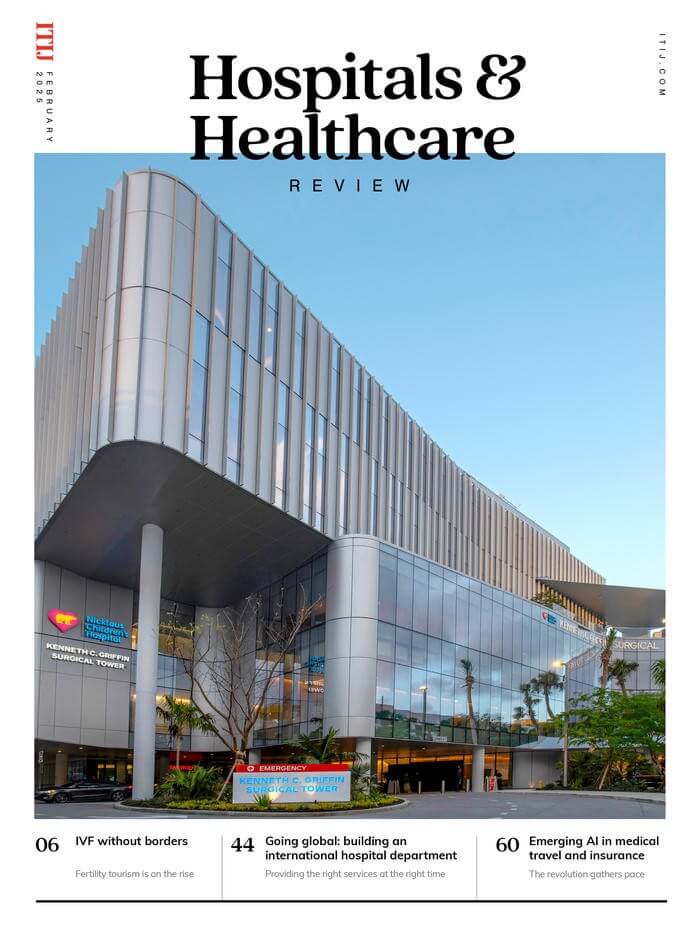
Offering readers a deep dive into the issues facing providers and payers of healthcare services around the world. Cost containment, international patient department development, the role of AI in healthcare delivery and more.