Bridging borders: how Hospital San Antonio is redefining global patient care

Salvador Gonzalez, Owner/ CEO at Hospital San Antonio, shares how innovations like teleconsultations, mobile health apps, and cross-border care coordination are improving efficiency, accessibility, and outcomes
How has the integration of digital health platforms (such as electronic health records, teleconsultations, remote patient monitoring, or mobile apps) improved efficiency, accessibility, and quality of care at your facility?
The integration of digital health platforms has significantly enhanced our operations. Our electronic health records (EHR) and electronic billing system allow for seamless documentation, reducing administrative burdens and enabling more accurate, realtime decision-making. Teleconsultations have become especially valuable for follow-ups and international patients, improving access to care regardless of geographic location. Our mobile health app (Travel Buddy) has empowered care management and improved experience for the patient. Collectively, these tools have helped us reduce wait times, improve diagnostic accuracy, and deliver more personalised, efficient care.
In what ways does your hospital partner with global assistance or insurance firms (like international health insurers, repatriation services, or embassies) to streamline patient access, billing, and cross-border care coordination?
We actively collaborate with international health insurers, repatriation services, and embassies to ensure that our patients receive coordinated and financially accessible care. Our billing department is trained in handling international claims, pre-authorisations, and direct invoicing to global insurers. We also maintain active communication with assistance firms for medical evacuations and repatriations. This network allows patients – expats, tourists and elective travellers from all parts of the world – to navigate the unique geographical healthcare system with ease and confidence, from admission to discharge.
Language barriers and inconsistent data formats can delay care coordination
Can you share any recent data or case studies that highlight how your digital tools or international collaborations have positively impacted patient outcomes – such as treatment times, post-discharge follow-up, or complication rates?
Recently, a US-based patient was diagnosed with cardiac issues during a vacation. Our remote EHR access and real-time imaging sharing with their cardiologist enabled a swift, collaborative treatment plan. The patient received urgent care locally, with continuity ensured post-discharge through consultations and data sharing. Additionally, our collaboration with their insurer allowed for direct billing, eliminating stress during recovery. This case demonstrated faster treatment initiation (by 36%) and a smoother transition to long-term care without complications.
What are the biggest challenges to plans for expanding your digital infrastructure or international cooperation – such as artificial intelligence (AI) diagnostics, multilingual remote care, or global patient portals – and how do you plan to overcome current barriers?
One key challenge is ensuring interoperability between global health systems and digital platforms. Language barriers and inconsistent data formats can delay care coordination. To address this, we’re investing in AI-supported systems with cross-border compatibility, and a secure patient portal tailored for international access. Our vision is to create a seamless digital experience for global patients – from pre-arrival consultations to post-care follow-ups – regardless of their home country. Overcoming regulatory differences and aligning with international data and pricing standards will be crucial to this transformation.
Salvador Gonzalez
Owner/CEO, Hospital San Antonio
Salvador is a CPA with a master’s degree in finance and a strong background in outsourcing and financial operations across Latin America. Combining his financial expertise with a passion for service, he founded Hospital San Antonio in Chapala, Mexico, with the mission of delivering highquality, accessible healthcare to tourists and expatriates.
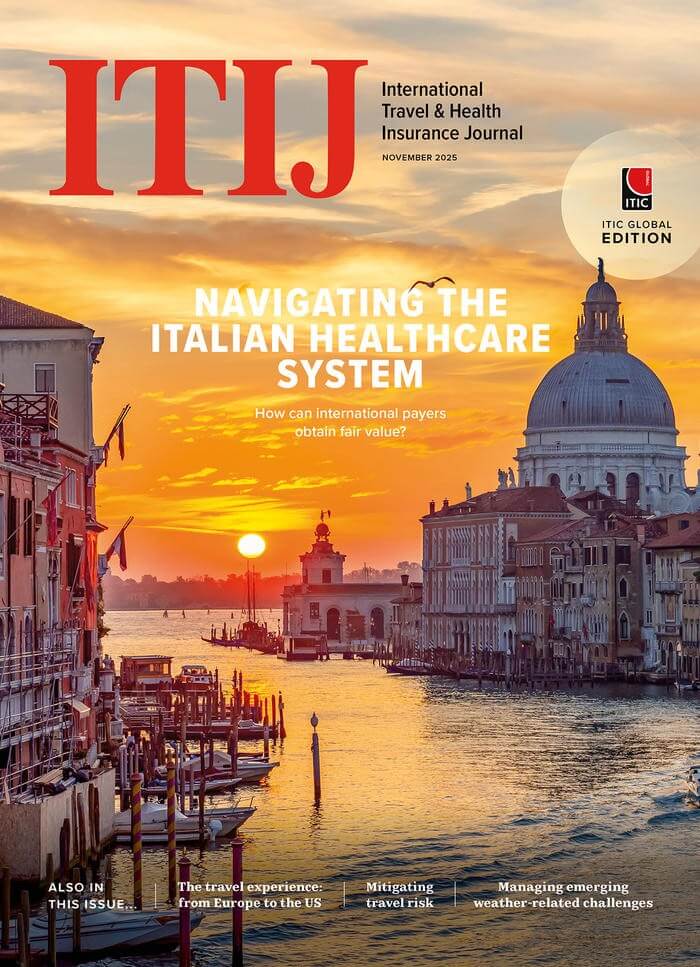
November 2025
Issue
In this issue of ITIJ we look at current travel patterns to and from the US and Europe, take a close look at the Italian healthcare system, and examine how insurers are adapting policies and coverage to manage weather-related challenges.
Editorial Team
The Editorial Team updates the ITIJ website daily, and works on features for the print edition. With expert industry knowledge and years of experience in writing about complex travel insurance issues, the Editorial Team is ready to investigate and report on the topics that matter most to ITIJ's readers.













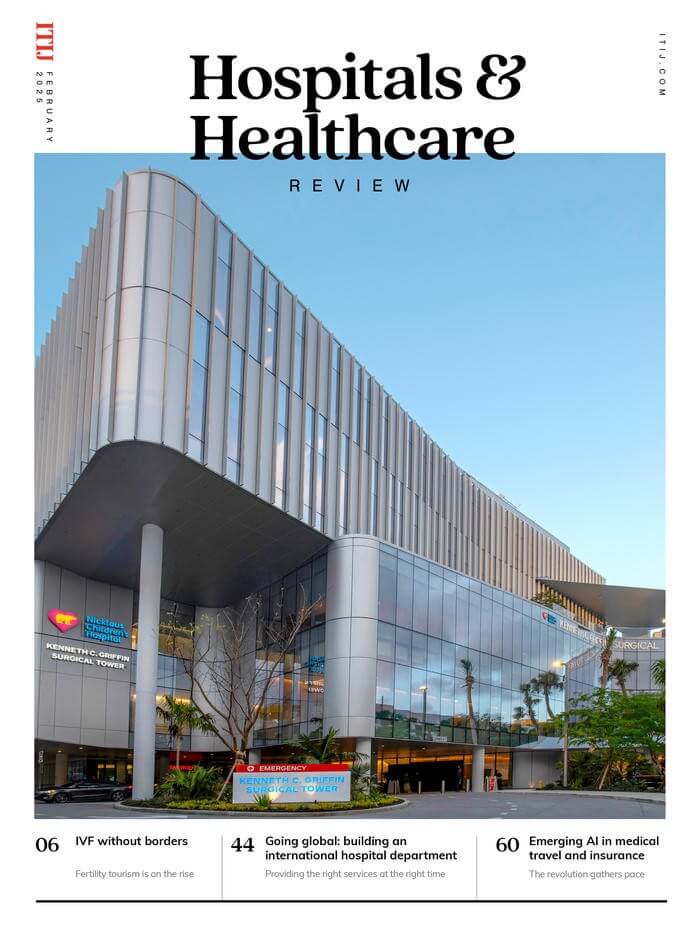
February 2025
Issue
Offering readers a deep dive into the issues facing providers and payers of healthcare services around the world. Cost containment, international patient department development, the role of AI in healthcare delivery and more.