
On the ground response: Afghanistan evacuations for NGO staff

David G from Healix International describes what happened in Kabul, Afghanistan, when the US military pulled out, and what it meant for NGO employees in the country
When the Taliban retook control of Kabul in August, it prompted shambolic scenes at Kabul Airport, which shocked many around the world as we watched a humanitarian crisis unfold. Whilst the need for aid and support on the ground became even more critical, the high degree of misinformation and confusion over the situation added a further challenge for those attempting to leave the country.
Dealing with this fast-moving situation required flexibility and a constant reassessment of the risk to adapt evacuation plans quickly and appropriately. Working with non-governmental organisations (NGOs) on the ground, the main goal remained to protect and support as many people as possible whether expats, locals or nationals seeking refugee status.
The Taliban’s ability to take control of Kabul had been widely underestimated by all sources of intelligence from the start, leaving very little room for a strategic withdrawal. Given so many factors were out of everyone’s control, those who managed to get to the airport, often did so by chance.
Bottlenecks of civilians at the gates and a frustrating backdrop of government bureaucracy and red tape often led evacuation efforts to dead ends. Regardless of whether a more organised and efficient structure could have helped more people be evacuated, the huge demand outweighed supply, and this, combined with the urgency of the situation, meant that realistically, it was unlikely that everyone would be evacuated successfully.
The situation worsened on the day of the Islamic State attack at Kabul Airport. The airport was a clear terrorist target due to the vulnerability of evacuees, coupled with the presence of Western soldiers. The fact that the potential for an attack was being closely monitored, with US and Western embassies issuing several warnings, did not make it any easier to avoid. The challenge here was to communicate this threat effectively, and in an appropriate tone, to allow evacuees to make their own judgements on whether they should take a chance on going to the airport, or risk missing the opportunity to leave the country.
As the situation progressed and evacuation flights all departed, meaning the airport was no longer a viable option, it became clear that there were still numerous people on the ground who needed to be evacuated. This led to close monitoring of the progress of international agencies in securing flight permits for humanitarian missions, as well as private charter options, and plans for evacuation by land to neighbouring countries.
However, factors such as the risk of various routes, authorisation requirements and checkpoint controls also had to be carefully considered. To manage the risk in the most effective way possible, routes were put into practice with the lowest-risk groups to ascertain if they were as operationally viable on the ground as they were on paper. The insights gained were then used to refine the plan according to the obstacles and setbacks encountered, and to ensure that the success rate was constantly improving to better the possibility of evacuations for more ‘at-risk’ individuals.
The biggest challenge throughout was to provide support to people who were tired, scared and completely vulnerable, while not wanting to overpromise on the ability to evacuate everyone. It was also crucial to balance communication and transparency with reducing possible exposure of evacuees to further risks in the event that their phones were confiscated.

The overnight adjustment to the new power structures in Kabul was never imagined or prepared for. For 20 years, the Taliban had been the biggest invisible yet omnipresent threat to people’s safety in Afghanistan, and the security industry was there to protect the population from them. Yet, in a very short period of time, security companies found themselves having to respond directly to the presence of the Taliban while pre-existing structures were disbanded.
The only viable strategy was to strip back operations to a bare minimum and secure acceptance from the Taliban in order to look after staff
The only viable strategy was to strip back operations to a bare minimum and secure acceptance from the Taliban in order to look after staff and continue to deliver services for the most vulnerable people for as long as possible. In a short time period, security managers had to try and co-operate with the Taliban as much as possible in an effort to ensure both safety and stability.
Conversations with the Taliban to agree operating rules and handing over of weapons and equipment were unexpectedly disciplined, but that is not to say the Taliban posed no threat. The security risks were extremely real and credible, particularly towards those who had worked for government organisations or had previously worked with international security forces. The situation was delicate, requiring constant reassessment of our assumptions of the risk and threats around us.
Ultimately, this was an extremely difficult situation, with numerous factors having to be analysed quickly and effectively to enable swift and accurate decisions to be made in response to an urgent and rapidly changing situation. This was not only operationally difficult, and rife with huge political ramifications, but the emotional impact on those whose lives were affected by the Taliban’s seizure of power also needed to be considered. Many have had to leave behind friends, families, jobs and lives, and our job was also to handle the situation with tact, while ensuring the safety of as many people as possible.
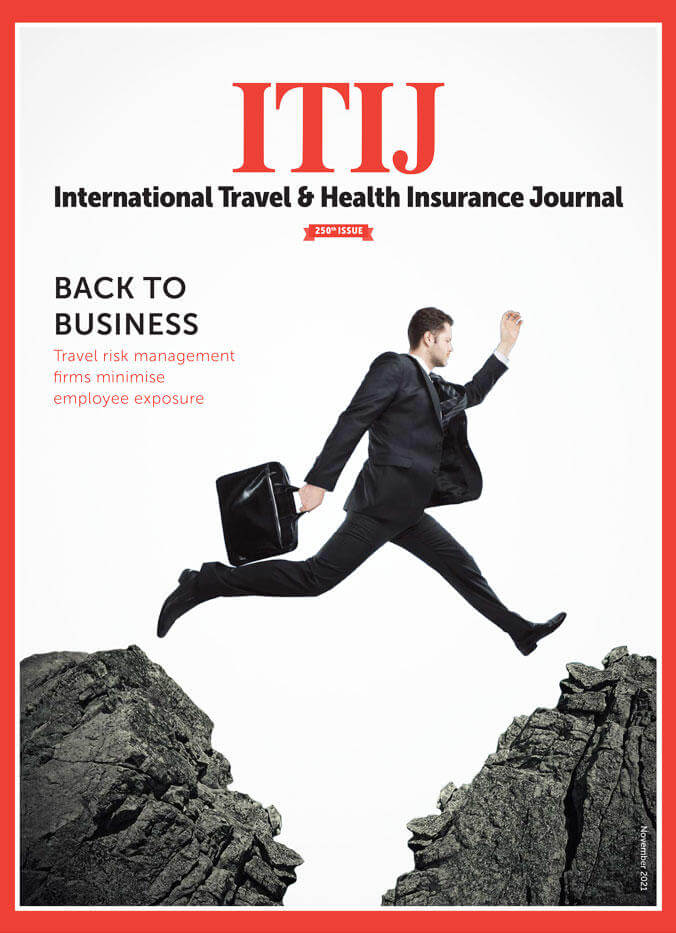
November 2021
Issue
The 250th issue of ITIJ is a real milestone for the team. Our biggest-ever issue, packed with content on travel risk management, the increasing adoption of new technology such as parametric products, the latest insurance software solutions, and moves by the cruise sector to enhance hygiene and medical facilities onboard their ships.
David G
David G (full name withheld at author's request) is Healix International's Director of Security.