
South Korea confronts overtourism amid record visitor surge

A sharp rise in visitor numbers is testing the balance between economic growth and sustainable travel, as the global challenge of overtourism reaches new intensity
South Korea is riding a powerful tourism resurgence – but the momentum is increasingly double-edged. As international arrivals climb sharply, destinations such as Seoul and Jeju Island are straining under the weight of visitor numbers. The challenges now facing South Korea mirror intensifying overtourism pressures around the world, prompting a shift towards more active and strategic management of tourist flows.
Rebound meets reality
The country’s strong tourism performance follows several years of suppressed global mobility. With travel restrictions lifted and pent-up demand now flowing, South Korea’s inbound market has surged. Government data and industry reporting indicate consistent double-digit increases in foreign arrivals throughout 2025, with spending levels having already exceeded pre-pandemic benchmarks in 2024. For Seoul, which welcomed nearly 900,000 international visitors in January alone, the rebound has boosted the retail, hospitality, transportation, and culture sectors.
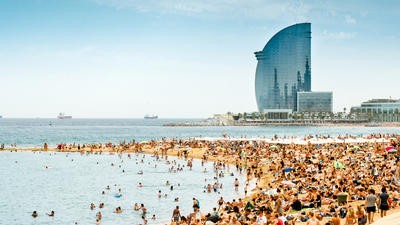
Yet success has created its own set of problems. Seoul’s heritage districts and landmarks, including Gyeongbokgung Palace, Bukchon Hanok Village, and the narrow streets of Ikseon-dong, face chronic congestion. Queues spill onto sidewalks, residential alleys are clogged with tour groups, and the strain on transport systems is palpable during peak hours.
Meanwhile, Jeju Island, often described as “Korea’s Hawaii”, faces some of the worst pressure. The island’s volcanic coastline and protected natural reserves absorb millions of visitors each year, amplifying tensions over waste management, road congestion, rising accommodation costs, and impacts on the island’s fragile ecosystems. Local communities have increasingly voiced frustration, pushing authorities to respond.
Policy measures take shape
Recognising the trajectory, national and local governments have begun implementing a suite of measures designed to disperse travellers, regulate behaviour, and protect community interests.
One of the most visible steps comes from Jeju, where authorities introduced a multilingual tourist behaviour guide in mid-2025 – the first of its kind in South Korea. Distributed by police officers during patrols, the pamphlet outlines fines and penalties for the kinds of behaviour that have become common flashpoints for complaints: littering, public intoxication, disruptive noise, or damaging natural sites. The goal is preventative rather than punitive: officials stress that clarity around expectations can reduce friction between residents and tourists.
At the national level, the Korea Tourism Organization is expanding efforts to promote off-peak and regional tourism through its SPECTRUM strategy, which emphasises sustainable travel experiences, digital enhancements, and lesser-known provincial attractions. Destinations in Gangwon-do, Jeolla-do, and Gyeongsang-do are receiving increased investment in infrastructure and marketing, in the hope of redirecting visitor flows away from Seoul and Jeju.
Meanwhile, industry groups – including the Tourism Sciences Society of Korea – have called for more ambitious reforms, arguing that Korea must shift from volume-based tourism to quality-based management. Without deeper structural change, they warn, the country risks damaging both its cultural assets and its competitiveness.
A challenge shared globally
South Korea’s overtourism dilemmas are part of a broader global narrative. Around the world, the post-pandemic rebound has outpaced expectations, placing enormous strain on urban centres, heritage sites, and small communities.
Japan, for example, is experiencing record-breaking tourism. Cities such as Kyoto have been so inundated with visitors that residents report avoiding major temples altogether. To regain some control, Kyoto’s city government has introduced express tourist buses to ease congestion, launched ‘manners campaigns’, and experimented with guiding tourists towards less crowded neighbourhoods. In 2024 and 2025, Japan also tightened rules around short-term rentals to manage noise, waste, and housing pressures.
National and local governments have begun implementing a suite of measures designed to disperse travellers
Italy – a long-standing symbol of overtourism – has continued to escalate its response. Venice, arguably the world’s best known cautionary tale, implemented its controversial day-tripper fee and continues to cap tour group sizes while restricting large cruise vessels. Florence has banned new short-stay holiday rentals in its historic centre, citing major disruptions to housing affordability. Similar tensions exist in Rome, Milan, and along the Amalfi coast, where locals face soaring prices and infrastructure strain.

Meanwhile Greece, seeing unprecedented visitor numbers across islands such as Santorini, Mykonos, and Rhodes, has introduced stricter cruise schedules, expanded sustainable tourism taxes, and deployed new limits on beach access in protected areas. Officials argue these steps are necessary to safeguard fragile settings and keep local communities viable year-round.
Across the Atlantic, Mexico is wrestling with overtourism in destinations like Cancun, Tulum, and Mexico City. Environmental degradation, rising crime linked to visitor hotspots, and tensions over water use have pushed regional governments to impose environmental levies and promote more sustainable alternatives.
Queues spill onto sidewalks, residential alleys are clogged with tour groups, and the strain on transport systems is palpable during peak hours
And in Croatia, where tourism comprises a large share of the economy, cities such as Dubrovnik have initiated ‘Respect the City’ campaigns, set cruise ship limits, and introduced strict controls on behaviour in the historic old town.
Collectively, these global examples highlight that overtourism is no longer a niche or seasonal problem. It is a structural issue tied to global mobility, digital travel platforms, expanding middle-class demand, and destination marketing that has, in many cases, outpaced regulatory adaptation.
Economic necessity versus long-term sustainability
The tension underlying South Korea’s challenge – and that of many nations – is the delicate relationship between tourism’s economic gains and its social and environmental costs. Tourism remains
one of Korea’s most important service exports, contributing billions in revenue annually. Yet the cost of congestion, infrastructure
wear, environmental damage, and resident dissatisfaction is
harder to quantify.
If destinations become unliveable, unpleasant, or degraded, tourists eventually take note – and the very attractions driving today’s boom risk long-term erosion. This is the paradox at the heart of overtourism: growth, if unmanaged, can undermine a destination’s appeal and competitiveness.
South Korea’s present strategy reflects growing acknowledgement of this risk. Policies increasingly emphasise dispersal, education, and sustainability. But experts argue that stronger institutional coordination, long-horizon planning, and community engagement will be needed to prevent temporary fixes from becoming new friction points.
A global turning point
As the world enters a period of sustained tourism expansion, the decisions made in 2025 will likely shape destination management for the decade ahead. South Korea’s efforts – from Jeju’s behaviour guidelines to national campaigns for off-peak and regional travel – are still developing, but they signal a shift towards more proactive governance.
Ultimately, the challenge is not to suppress tourism, but to ensure it remains a viable and mutually beneficial enterprise. South Korea, like its global peers, must now balance the economic promise of its tourism boom with the responsibility to safeguard communities and landscapes.
If that balance can be achieved, the country has the potential to become a leading example of sustainable tourism management in an era defined by unprecedented mobility and strain.
January 2026
Issue
In this issue of ITIJ we ask whether insurance companies up to date with IPMI benefits; examine how insurers are using automation and AI to streamline claims; and consider whether specialist reputation consultancies can help destinations restore their reputations after a crisis.
Chloe Fox
Chloe Fox is an Editorial Assistant for Voyageur Group, joining in 2024. She writes for ITIJ and AirMed&Rescue, covering a range of topics including international travel and health insurance, medical assistance provision, and air medical transportation. Chloe holds a BA (Hons) in English and an MA in English Literature from the University of Bristol.