
Rising crime pushes authorities to rethink tourist regulations

As tourist numbers surge, destinations worldwide are battling rising crime and disorder, prompting crackdowns and forcing insurers to rethink their risk models
The growing affordability and accessibility of travel, combined with the rise of global tourism and the influence of social media, has led to a surge in visitors to popular destinations – often beyond the limits of what they can handle. This phenomenon, known as overtourism, not only strains local infrastructure but also creates opportunities for criminal activity, increasing the risk of victimisation for both tourists and residents.
As international travel volumes continue to surge, a troubling trend is emerging: a rise in crimes committed by tourists themselves, often fuelled by the pressures and consequences of overtourism. Destinations struggling with record visitor numbers are increasingly reporting incidents where visitors behave unlawfully, creating new challenges for local authorities, insurers, and travel assistance providers.
Tourist crime reveals the strain of overtourism
In Bali, Indonesia, a long-time magnet for budget and luxury travellers alike, authorities have been forced to crack down on unruly foreign visitors. Recent months have seen a number of high-profile incidents, including a British tourist hijacking a truck near Ngurah Rai International Airport, and another tourist attempting to scale the airport’s perimeter fence. These events are symptomatic of a broader issue: mass tourism might encourage a party culture that, coupled with overwhelmed local policing and public infrastructure, creates conditions where reckless acts can escalate into serious crimes.
Spain has also faced similar challenges, particularly in heavily visited areas like Barcelona and the Balearic Islands. Residents have staged protests against what they call the “tourist invasion”, and authorities have reported rising rates of vandalism, disorderly conduct, and drug-related offences among visitors. In Barcelona, measures such as stricter fines for public disturbances have been introduced, but tensions between residents and tourists continue to flare, especially during the crowded summer months.
Elsewhere, Japan – traditionally known for its orderly tourism industry – has recently experienced a spike in inappropriate behaviour by foreign tourists. In Kyoto, sacred temples have been defaced, and local businesses have called for a reduction in visitor numbers. City officials have proposed measures such as restricting access to certain sites and introducing tourist behaviour guidelines, aiming to curb problems associated with overwhelming tourist flows.
On the other hand, incidents have underscored the legal risks tourists face when travelling with prescription medications, particularly in countries with strict drug laws. For example, in 2024, US Navy veteran Charles Wimberly was detained in Dubai for carrying CBD oil and ibuprofen – both prescribed for his post-traumatic stress disorder (PTSD) and back pain. Despite having documentation, he was charged with drug trafficking and faced a possible three-year sentence before being released on bail, though barred from leaving the country.
The impact of crime on tourism
The rising incidence of crimes involving tourists – whether as victims or perpetrators – underscores the evolving risks tied to overtourism. High-profile cases in destinations like Barcelona, where pickpocketing and petty theft have surged, or Bali, where drug-related arrests among foreign visitors have increased, illustrate the dual threat of safety concerns and reputational harm. For travel insurers, these developments signal a broader spectrum of exposures: legal complications, emergency assistance, and increased claims severity all become more likely in high-risk environments.
From an operational standpoint, tourist-heavy cities are struggling to maintain order. Authorities in places like Amsterdam and Phuket have been compelled to allocate additional resources towards policing and managing crime linked to tourism. Meanwhile, insurers are seeing a measurable uptick in claims – ranging from medical evacuations due to assaults in Cancun to legal fees stemming from tourist infractions in Dubai. These trends challenge underwriters to reassess risk models, premium structures, and geographic exclusions.
The rising incidence of crimes involving tourists – whether as victims or perpetrators –underscores the evolving risks tied to overtourism
For residents, crime linked to tourism often erodes social cohesion. Venice has seen growing tensions over vandalism, alcohol-related disturbances, and overcrowding, pushing the city to introduce tourist caps and surveillance measures. Such local reactions can in turn affect the tourist experience, creating a negative feedback loop that impacts future travel demand and insurance planning.
As destinations recalibrate tourism strategies, some are turning to preventative and educational approaches. Iceland’s visitor responsibility campaigns and Japan’s initiatives to disperse tourists beyond crowded hotspots demonstrate proactive risk mitigation. For insurers, collaborating with governments and travel providers to promote safer, more sustainable tourism is becoming a strategic imperative – both to protect clients and to preserve the long-term viability of key markets.
Tourist hotspots impose rules to curb crime
As tourism rebounds post-Covid-19 in key destinations, some governments are taking decisive action to counteract the rise in tourist-related crime and antisocial behaviour. In Bali, where the Alliance for Marginal Tourism Operators has reported a noticeable uptick in violent incidents involving foreign nationals – including fights and brawls – officials are stepping up regulatory efforts. Indonesia’s Deputy Minister of Tourism, Ni Luh Puspa, recently expressed deep concern about these trends, signalling support for stricter law enforcement and possible policy reforms aimed at curbing unlawful or culturally insensitive behaviour.
To address the situation, Balinese authorities have issued updated safety advisories and are actively exploring educational campaigns to better inform visitors about local customs and legal expectations. Recommendations include the reactivation of the once-effective tourist and honorary police forces, as advocated by the Alliance’s chairman, I Wayan Puspa Negara. “To strengthen security in the short term, authorities should reconsider reinstating the tourist police and honorary police, which were highly effective in the past,” he told the Australian Broadcasting Corporation (ABC). Australia’s Smartraveller website also now includes explicit warnings, stating that “offensive behaviour that fails to respect local culture, religion, places of worship and traditional ceremonies can lead to criminal penalties and/or deportation”.
Bali is not alone. Across the globe, other tourism-reliant regions are implementing stricter controls in response to rising tensions between visitors and locals. In Japan, Kyoto has recently restricted tourist access to certain geisha districts following repeated instances of harassment and disruption by overzealous travellers. Similarly, Venice has imposed entrance fees and crowd control measures in high-traffic areas, while Barcelona has expanded municipal fines for public drinking, vandalism, and unauthorised holiday rentals.

Aiming to restore trust
These regulatory interventions aim not only to protect cultural heritage and maintain public order, but also to restore trust among residents and reduce liabilities for the travel ecosystem, including insurers. With travel-related crime contributing to higher claims volumes for theft, legal defence, and emergency assistance, such government measures may ultimately play a role in stabilising the risk environment in tourist-heavy regions.
As tourism rebounds in key destinations, some governments are taking decisive action to counteract the rise in tourist-related crime and antisocial behaviour
For insurers, understanding and adapting to this wave of regulation is increasingly important. Collaboration with governments and tourism operators on safety messaging and policy compliance could reduce claims and improve traveller outcomes – especially as crime prevention becomes a central pillar of sustainable tourism planning.
In conclusion, as overtourism fuels rising crime and public disorder, destinations and insurers alike are being forced to adapt. Smarter regulation, stronger enforcement, and better traveller education are now essential to keeping tourism safe, sustainable, and insurable. It is arguable that the future of travel depends on getting this balance right.
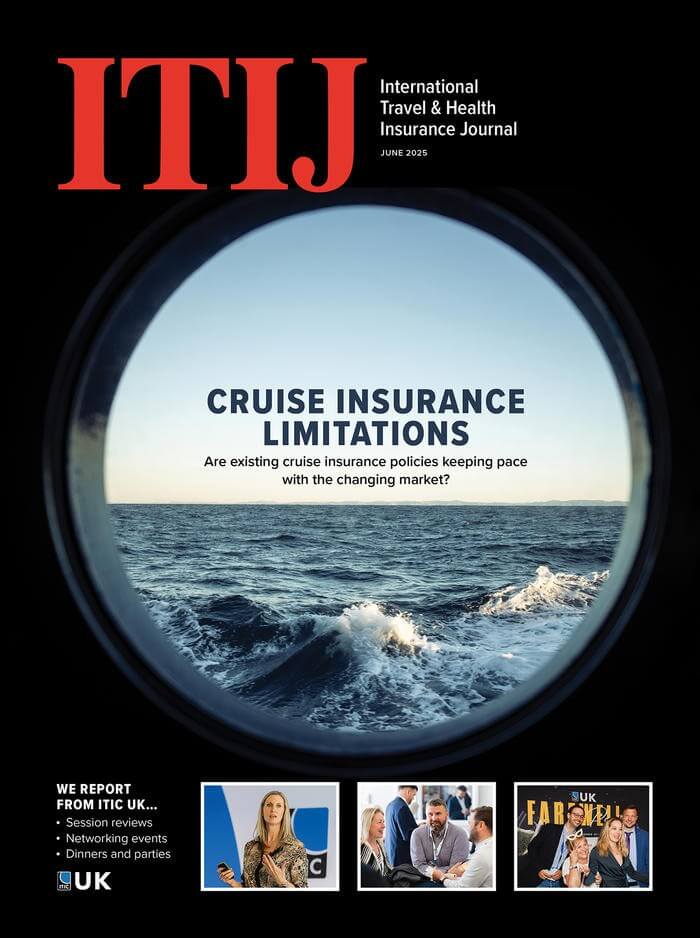
June 2025
Issue
In this issue of ITIJ we examine the repatriation of mortal remains, and look at the trends, challenges and local expertise required. We also consider cruise insurance limits and exclusions and ask whether the latest cruise insurance policies are keeping up with what the travel market is offering.
Chloe Fox
Chloe Fox is an Editorial Assistant for Voyageur Group, joining in 2024. She writes for ITIJ and AirMed&Rescue, covering a range of topics including international travel and health insurance, medical assistance provision, and air medical transportation. Chloe holds a BA (Hons) in English and an MA in English Literature from the University of Bristol.