
Interview: David Eline, Founder, Health Compass

David Eline, Founder of Health Compass, explains the premise of the company, and why transparency is key in healthcare procurement
The basic premise of Health Compass is to give intermediaries the ability to sell international private medical insurance (IPMI) more easily to their clients. This applies to those who focus on other products but occasionally need to access the IPMI market to fulfil a client’s requirements (and prevent them from contacting a competitor intermediary). IPMI brokers are keen to be able to quickly and accurately compare individual and overall IPMI product benefits from a wide range of insurance providers and provide highly tailored advice to clients.
What prompted you to want to develop the program?
Having been an IPMI intermediary myself, I realised how complicated it was to advise customers properly and efficiently. It was impossible for the brokers I was using to properly compare benefits from a wide range of IPMI products or offer me price options on the spot. All I was receiving was proposals from a small number of favoured insurers with no idea of which product was better than the other and no immediate idea of how each compared from a cost perspective. This prompted me to think that there must be a better way!

How long did has it taken from having the initial idea, to proof of concept, to going live?
Things always take longer than you anticipate! The journey took eight years, and it is far from finished.
It started at a dinner when a friend asked me about IPMI and the questions she raised made me realise the difficulties customers go through when looking for any insurance cover: comparing like-for-like covers and understanding whether the benefits truly matched their needs.
We found ourselves drawing boxes and arrows to compare plans, creating Excel spreadsheets to line up benefits. Benefits such as ‘US$150,000 for organ transplants’ sounded great, but we didn’t know the actual cost of healthcare and weren’t able to ask the right questions – for instance, would a donor’s complication be covered, what about administrative/search costs for the transplant, anti-rejection treatment, etc?
The goal was clearly identified at this point: find a way to compare covers on a level playing field basis and score their benefits so the comparison was clear.
After that, I spent a year reading general terms and conditions and table of benefits documents to develop a suitable methodology. This was helped by my previous experience in banking – I was in London for 13 years working on structured products with a focus on rationalising chaotic environments.
The process started from a blank page, learning the rules of a different sector. To properly advise people, I felt the need to roll up my sleeves and become an IPMI broker, which I achieved in 2014, and learn the everyday challenges of an intermediary.
We have been fortunate to be supported by most insurers and providers who understood what our objective was, or maybe more precisely, what it was not: be another price aggregator! In 2016, we launched My-Matchmaker, which was a proof of concept in benefits scoring. Insurers subscribed to this service, which for us meant a lot. It was a validation of our modelling and scoring philosophy.
We grew the number of providers on our systems and decided in 2019 that it was time to reach the next milestone: Health Compass. Health Compass is far more than a ‘boosted up’ version of the Matchmaker. True, it shares the same philosophy of modelling and scoring, but not a single line of code from Matchmaker has been used into Health Compass. Health Compass’ IT architecture is open to the world with new functionalities, such as a multi-provider price engine, an integrated workflow between customers, intermediaries, insurance firms and, of course, an extensive benefits’ scoring database.
As you can imagine, the Covid crisis had an impact on our IT teams, and we had to adapt. After three months of beta testing, Health Compass officially came online on 27 April 2022, and we are grateful to the entire industry for their support in what we built.

You score the insurance products on offer based on your ‘unique algorithmic tool’. Can you explain exactly how this works?
It is difficult to be fully transparent as this is proprietary, but we can share the general idea.
To compare different covers, we had to find a common denominator (call it the IPMI DNA) and its constituents (the chromosomes). We have mapped 79 constituents so far. The first step is to identify the constituents of a cover. Then, for each constituent there is a different reading/rating grid (granular, as it has been built over a number of years), which will allow us to score a particular benefit. Then we apply the concept of dynamic scoring to the entire cover, which will calculate the weighted average of its constituents, provided they are applicable to the query.
The algorithm is dynamic as it reflects the priorities of the customer, meaning that the same cover can have different scorings depending on the initial centre of interest of that person. The reliability of the database is paramount, which means regular updating according to benefits changes, and wording amendments, etc.
The algorithm is dynamic as it reflects the priorities of the customer, meaning that the same cover can have different scorings depending on the initial centre of interest of that person
Transparency of operations is key; what’s the commission structure like for the brokers using the service?
There is a system rental fee to connect to the platform and a commission sharing agreement (the lion’s share goes to the broker). The system rental is waived once a certain volume of transactions are achieved – this level is easily accessible. Even if the broker does not receive the full commission, they may benefit from our preferable rates with insurers and will certainly gain on volumes. With Health Compass, a broker is able to increase reactivity and reduce analysis/pricing/workflow tasks. This frees up time for prospecting and should result in higher production, more than compensating for the commission split.
To be fully transparent, we don’t deal directly with end customers as this would be a conflict of interest with our broker customers. The aim is for Health Compass to be viewed as a connector/enabler, with the ownership of the customer remaining 100 per cent with the intermediary.
Overcoming local and international regulations with regards to sharing customers’ medical data can be a daunting task; how have you managed their process to ensure compliance with regulators?
Europe is at the forefront of data protection in the world and Health Compass is by design following the General Data Protection Regulation and Insurance Distribution Directive. Our digital application workflow and mail system between customer/broker/insurance is capable of communicating sensitive medical information to those with proper accreditations, such as medical underwriting departments.
Aside from data protection, there is the insurance distribution licensing. It is getting more difficult to distribute IPMI on an offshore basis and local regulators request intermediaries to be properly licensed to do so. With Brexit, UK-based intermediaries lost the freedom of service to operate in the European Union (EU) (i.e. they cannot service customers based in Europe) and EU brokers, provided they applied for it, were able to benefit from the Financial Conduct Authority’s (FCA) Temporary Permission Regime (TPR) to continue place risks in the UK. EU brokers will have to transition from TPR to full license applications according to a calendar communicated by the FCA.
Health Compass operates as a bridge between the EU and the UK for intermediaries connected to the platform, making it possible for a UK-based broker to have customers in Europe (and vice and versa). Of course, offshore business can be placed through Health Compass when permitted by the provider.
You’ve got a short, medium and long-term plan for developing the business; what does the future hold for Health Compass? How do you see it being used by IPMI brokers or other lines of insurance?
In the short term, we are looking to grow the Health Compass community with brokers across the globe, but not with specialist IPMI brokers only. The platform can be useful to intermediaries looking to develop this fast-growing insurance line thanks to the turnkey solution it provides. No longer will intermediaries need to pass on a customer’s IPMI request because it does not have the right brokerage agreement, enough time or the right knowledge. Health Compass makes the distribution of a complex product easier. Our first users are in Asia and in the UK. We have 11 main insurers and MGAs on the platform and this number is expanding.
In the medium term, we will offer Health Compass as an API to allow brokers to ‘power’ their public B2C website with our engines, saving them time and money to build such technology.
In the long run, we want to evolve into more local PMI products.
What makes Health Compass different to other IPMI broker solutions in the market, in your opinion?
There are good solutions available, but each of them focuses on a specific angle in different silos: price aggregating, benefits comparison, licensing/brokerage agreements fronting, workflow, etc. Health Compass factors all of this into a 360° solution that is easy to use and will improve profitability for all participants in the IPMI distribution chain.
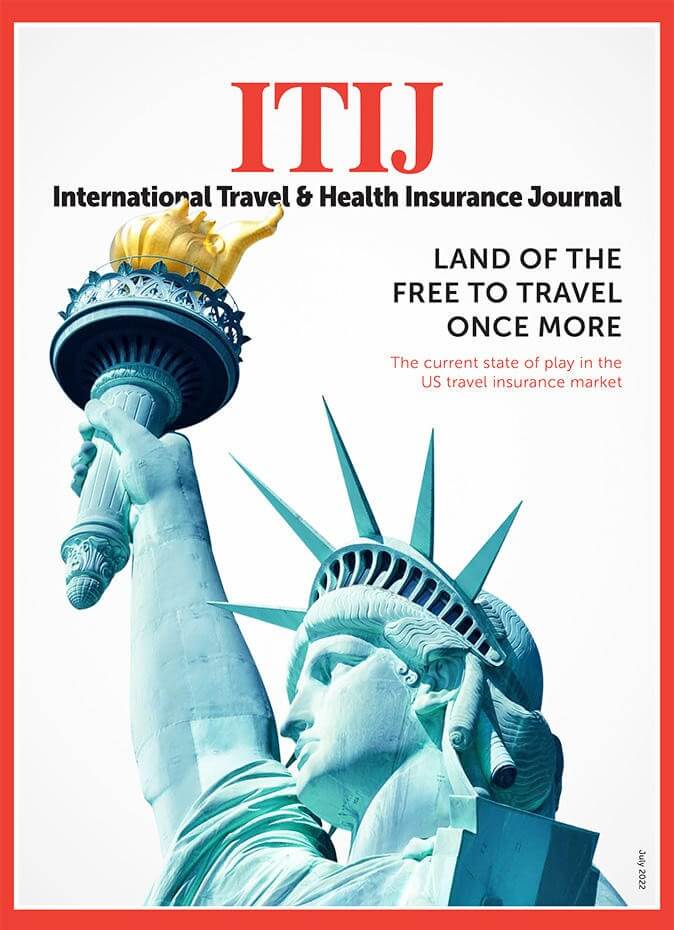
July 2022
Issue
In this issue:
Included in ITIJ this month are features on security in popular travel destinations, consolidation in the travel assistance sector, health onboard cruise ships, and the US travel insurance market, as well as the value of hospital accreditation.
Mandy Langfield
Mandy Langfield is Publishing Director for Voyageur Group. She has written extensively on the topic of international travel and health insurance, as well as medical assistance provision and air medical transportation. Mandy is also on the committee for the International Travel & Health Insurance Conferences (ITIC).












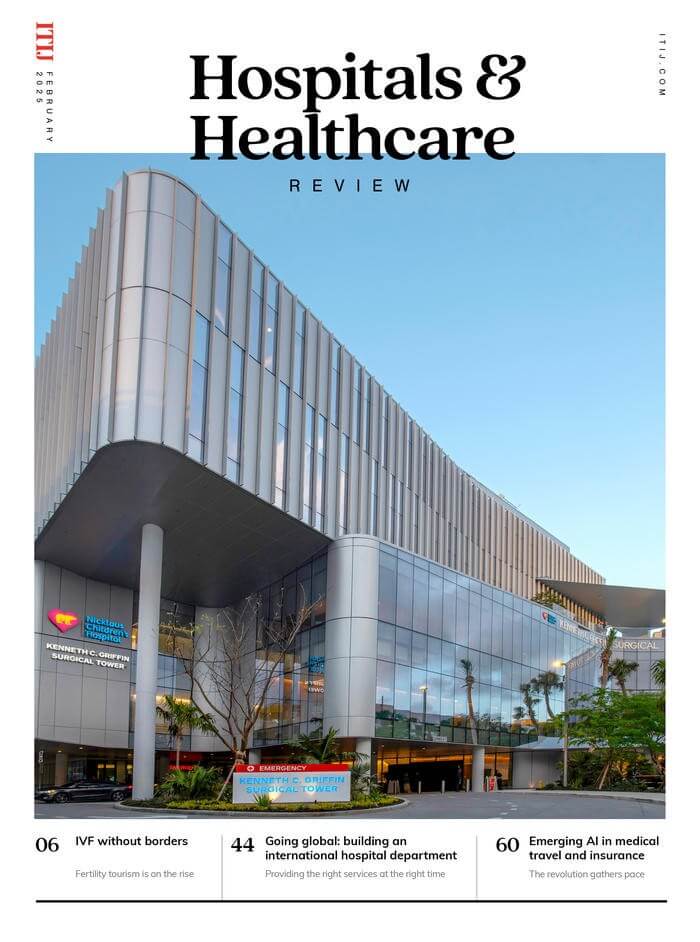
February 2025
Issue
Offering readers a deep dive into the issues facing providers and payers of healthcare services around the world. Cost containment, international patient department development, the role of AI in healthcare delivery and more.