
Industry Voice: The risk factors shaping Ukraine’s landscape

In our new column on security and travel risk, George Dagnall, COO of Hotspot Cover, shares his insights with ITIJ. This month he looks at the risk factors shaping the Ukraine conflict
Ukraine’s current risk landscape
As the war in Ukraine enters its fourth year, the security landscape remains fluid and volatile. While much of the fighting remains concentrated in the eastern and southern regions, developments suggest an evolving threat profile that could have wider implications for people, businesses, and supply chains across the country.
Ukraine’s defence forces have continued targeted counter-offensives in key areas, but Russia’s persistent drone and missile attacks on critical infrastructure have caused widespread disruptions. Winter conditions have compounded these challenges, increasing demand for humanitarian aid while restricting movement across the country. The ongoing destruction of civilian and commercial assets raises concerns about operational resilience, particularly for industries reliant on stable logistics networks.
One of the persistent challenges remains insuring personnel and assets amid unpredictable security conditions
Recent geopolitical shifts, notably the pause on US aid and intelligence, initially sparking alarm, were quickly met with a European Union (EU) commitment to a defence surge in support of Ukraine, although this still does not address all concerns arising from the US pullback. Ukraine’s deepening integration with the EU has provided a positive signal for long-term stabilisation efforts. Looking internally, border tensions with Poland and sporadic protests against wartime conscription present additional challenges that will need to be closely monitored in the coming months.
Insurance challenges and market response
The ongoing conflict has significantly complicated the underwriting landscape for personal accident (PA) and evacuation insurance. While insurers remain cautious, there has been a notable shift towards increased risk appetite, with more providers willing to underwrite policies in the region. This change may be attributed to a more predictable security landscape over time or improved access to risk assessment data, allowing insurers to make more informed decisions. Either way, this marks a positive shift compared with the highly restrictive market conditions following the immediate aftermath of the invasion three years ago.
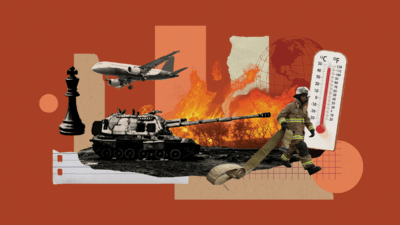
One of the persistent challenges remains insuring personnel and assets amid unpredictable security conditions. The difficulty of evacuating individuals from active conflict zones has led insurers to place greater scrutiny on their third-party administrators (TPAs). A growing market trend is enhanced due diligence on TPAs to ensure that claims-related services are executed effectively when needed and that service providers have undergone comprehensive vetting of their capabilities and personnel. This is a positive development, not only for the Ukrainian market but for all high-risk environments globally.
Strategic considerations
Companies with operational interests in Ukraine should ensure that their coverage is not only sufficient in terms of financial protection but also integrates access to proactive security and evacuation support if needed. Policyholders who incorporate dynamic assistance solutions that work in tandem with their insurance will be best positioned to navigate the risks posed by the ongoing conflict and help develop future resilience.

Forward-looking analysis and emerging risks
Looking ahead, Russia is likely to refine its hybrid warfare tactics, increasingly targeting high-impact, low-traceability sectors such as food supply chains, finance, and telecommunications. As NATO’s summer 2025 summit approaches, intelligence assessments indicate a likely escalation in proxy attacks targeting European defence executives and logistics hubs, aimed at disrupting military supply chains supporting Ukraine.
Additionally, with the shift in US foreign policy, European nations will need to assume a more independent role in intelligence-sharing and counter-sabotage operations. If the US commits to scaling back military aid to Ukraine or engages in negotiations with Russia, European states could become greater targets for Kremlin-backed influence campaigns and cyberattacks aimed at weakening internal unity.
As Western commitments fluctuate, the ability to accurately assess territorial control, military escalation risks, and evacuation feasibility remains paramount in underwriting decisions and crisis response planning.
April 2025
Issue
In this month’s ITIJ we look at UK financial services and the regulatory burden. We also publish the second in our three-part series on IPMI policies, this time concentrating on Europe. Plus ITIC Americas took place in March, and we bring you all the insightful session summaries.
George Dagnall
George is a risk management expert specialising in conflict zones. With a background in security strategy, a decade of military service, and senior consultancy experience, he ensures comprehensive protection in high-risk environments.