
Connected risks in uncertain times: the new era of geopolitical disruption

James Henderson, CEO of Healix International, on the state of play in the risk landscape, the significance of geopolitics, and how leaders should prepare for the year ahead
The Healix Risk Radar 2026 report reveals that cyber threats are considered the top business risk faced today. Yet geopolitics emerges as the thread running through all risks, shaping every major threat organisations face.
The new shape of global risk
The Healix Risk Radar 2026 report shows that cyber threats top the list for more than half of organisations surveyed. But the deeper point is that geopolitics now shapes almost every major risk. Political strain, shifting alliances, and regional conflict no longer stay contained. They cut into cyber exposure, disrupt supply routes, and intensify climate pressures.
These forces fuse into a single network of vulnerabilities. When one pressure builds, others follow. For leaders, this means disruption moves faster, spreads wider, and is harder to pin down than it was even a few years ago.
This environment demands a new mindset. Traditional, siloed approaches are no longer as effective. Instead, organisations need to weave geopolitical awareness into everyday strategy and operations. By tracking global developments and stress-testing their plans, risk leaders can strengthen resilience, manage uncertainty, and protect long-term growth.
Why geopolitics connects everything
The world is moving away from the post-Cold War era of broad alignment and open markets. Major powers now protect national interests more tightly. Regional blocs grow in influence. Countries set economic decisions through a political lens.
This fragmentation shapes business risk in three clear ways:
- Power shifts disrupt trade – tariffs, sanctions, and new alliances redirect supply routes, slow goods, and raise costs. A local political change can now redraw global flows with little warning
- Conflicts trigger cyber activity – state-linked groups use cyberattacks to create pressure, cause confusion, and weaken trust. Businesses face a rise in targeted intrusions, often timed with political flashpoints
- Regulation hardens – nations tighten rules on data, technology, and strategic assets. Firms that operate across borders must adapt to diverging standards.These forces create a web of pressure that stretches across industries. It makes planning harder and heightens the value of early warning.

Interconnected risks driven by rapid shifts
Our survey data from 500 senior risk professionals highlights the top risks for the year ahead: cyber threats (53%), supply chain disruptions (37%), and geopolitical tensions (34%). But what stands out more is how closely tied they now are.
Political strain, shifting alliances, and regional conflict no longer stay contained
State-aligned groups use ransomware and data breaches to disrupt operations and erode public trust, while conflict and sanctions reshape global trade routes. Political volatility blurs the line between strategic and operational risk, making it harder for organisations to plan and adapt.
The challenge for organisations is not just tracking geopolitical events but understanding how they intersect and amplify one another.
The confidence gap
Despite the complexity, our report shows that leaders feel more confident in their crisis response than ever. Nine in 10 believe they would handle a crisis well, and most rate their risk maturity as advanced.
Yet the same survey reveals gaps that should make leaders pause:
- Real-time insight remains limited
- Intelligence is often shared unevenly
- Systems can’t always support fast action
- Plans get tested, but not always with rigour.
This gap between belief and reality marks one of the most significant risks. Confidence can slip into complacency. When nothing goes wrong for a while, assumptions go unchallenged. Testing becomes routine rather than revealing.
State-aligned groups use ransomware and data breaches to disrupt operations and erode public trust, while conflict and sanctions reshape global trade routes
The pandemic showed how damaging that can be. Many teams thought they were prepared, but few had modelled disruption at that scale or speed. Today, leaders remember that shock well, but the slow drift back to old habits is visible.
Barriers that hold organisations back
Most barriers to readiness are practical:
- Older systems
- Cost pressures
- Internal competition for attention
- Uneven use of intelligence.
Our survey shows that while risk intelligence is considered reliable, only two-thirds say it is used consistently across teams. Almost half say it arrives too slowly to support real-time decisions.
This is where many organisations stumble. They invest in intelligence but fail to embed it. They gather insight but do not apply it. They test plans but do not stretch them.
The result is a false sense of security – good preparation on paper, weaker readiness in practice.
What leaders need now: a shift in mindset
In an era where geopolitics binds every major threat, traditional risk management reaches its limits. Leaders need a view that blends political, digital, and operational insight. They need plans that assume disruption will cross boundaries. They need teams able to adapt quickly when a shock lands.
This is less about rewriting frameworks and more about rethinking how risk works. It means recognising that threats travel faster, connect more tightly, and trigger more varied consequences than before.

A strong response rests on five areas:
- Embed geopolitical intelligence – integrate geopolitical awareness into strategy and operations. Use scenario planning to anticipate disruptions. Monitor regional developments and share intelligence across teams. Regular updates help teams respond quickly to new threats
- Build a comprehensive risk framework – link risk assessments to business objectives. Connect external threats with internal vulnerabilities. Empower local teams to act within clear guidelines. Encourage teams to report emerging risks and adapt plans as situations change
- Invest in intelligence and technology – prioritise digital tools for real-time alerts and crisis communication. Choose platforms that deliver timely, actionable data. Test crisis response plans regularly to ensure technology supports decision-making. Use analytics to spot trends and improve forecasting
- Test, challenge, and refresh plans – routinely test crisis plans with varied scenarios. Challenge assumptions and review lessons learned after each test. Update plans to address new gaps. Involve different teams in exercises to build confidence and uncover weaknesses
- Foster a culture of resilience – keep risk management visible and relevant. Link readiness to business outcomes. Encourage knowledge sharing across all levels. Recognise and reward proactive risk management. Make resilience part of everyday operations, not just crisis response.
A new era demands a new approach
The age of connected risk calls for a new approach. Instead of a siloed approach to risk management, organisations must recognise that geopolitics links every major risk, from cyber threats to supply chain vulnerabilities. Leaders need to acknowledge the confidence gap, sharpen intelligence, and stay adaptable.
Fostering a culture of continual readiness across all levels ensures teams stay prepared for new challenges. Regularly testing and refreshing crisis plans helps organisations identify gaps and adapt quickly. By taking these steps, leaders do more than help their organisations survive disruption – they position their companies for long-term success in an unpredictable world.
James Henderson, CEO, Healix International
James brings over 20 years of senior management experience in the UK and internationally, having worked with organisations such as Standard Life, British Gas, Munich Re Group, John Lewis, and smaller SMEs and startups such as Police Mutual, DAS UK, and Zest Capital. His experience has focused on leading strategy, change, and growth, delivering considerable results.
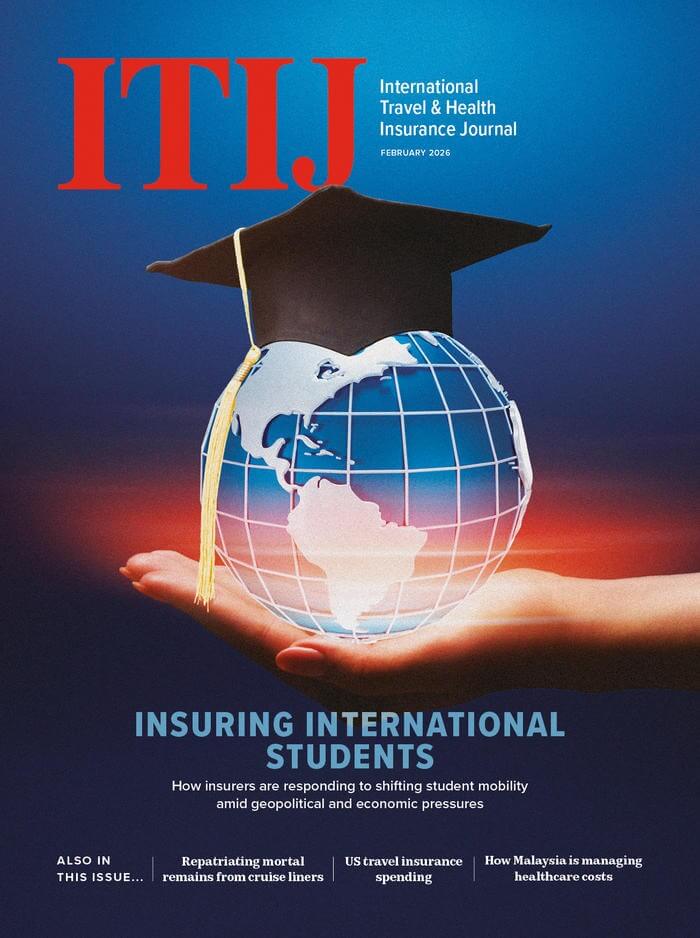
February 2026
Issue
In this issue of ITIJ we look at international student insurance, and consider the impact of geopolitical decisions on market demand; we examine what ensues when a fatality happens on board a cruise ship, and what the protocols are for management of the remains; and we look at younger groups eschewing travel insurance.