
Six workplace health trends brokers need to watch in 2026

As budgets tighten, brokers must help employers deliver flexible, value-driven workplace health solutions that meet evolving employee needs, says Westfield Health
The UK workplace health market enters 2026 under pressure, as employers strive to provide meaningful health support while managing tight budgets, according to Mark Hamson, Managing Director of Insurance at Westfield Health. For brokers and employee benefit advisers, conversations with clients now focus on delivering value, flexibility, and simplicity. Hamson has outlined the key trends to watch out for in 2026.
Delayed decisions, not declining demand
Cost-of-living pressures and higher National Insurance contributions slowed purchasing decisions in 2025, but demand for workplace health benefits has not disappeared. Employers increasingly recognise the need to manage costs while still offering support that drives engagement, wellbeing, and productivity. Renewal discussions are now focused on demonstrable outcomes rather than breadth of cover.
Virtual GP becomes essential
On-demand services, particularly virtual GP access, have moved from ‘nice to have’ to essential as National Health Service (NHS) capacity remains stretched. However, employers are looking beyond virtual GP access alone, seeking more rounded health propositions including musculoskeletal care, enhanced mental health support, preventative screenings, and faster access to specialists. Demand for private medical insurance also rose in 2025 as employers sought solutions for more acute healthcare needs.
Medical inflation sharpens pricing scrutiny
Medical inflation continues to challenge insurers and employers alike. Pricing discipline is critical, with brokers expected to explain premium movements clearly and demonstrate how costs are being controlled without undermining sustainability.
Flexibility over one-size-fits-all
Employees increasingly expect personalised benefits. Simple, flexible packages that can be priced quickly and adapted easily are now a differentiator, supported by real-time portfolio insights that help identify renewal risks earlier.
Employers shift from paying to facilitating
More employers, particularly in the small and medium-sized enterprises (SME) market, are moving away from fully funding benefits and instead focusing on creating access to affordable healthcare options employees can fund themselves.
Simplification wins
In 2026, innovation will centre on simplification – faster quotes, smoother implementation, and fewer administrative headaches – helping employers and employees navigate healthcare with greater confidence.
Hamson recently spoke to ITIJ about how innovation in insurance, digital wellbeing, and preventative care is shaping the future of employee benefits.
To see your news featured on the International Hospitals and Healthcare page, please send your press releases to [email protected].
Chloe Fox
Chloe Fox is a Junior Editor at Voyageur Group, having joined in 2024. She writes for ITIJ and AirMed&Rescue, covering a range of topics including international travel and health insurance, medical assistance provision, and air medical transportation. Chloe holds a BA (Hons) in English and an MA in English Literature from the University of Bristol.











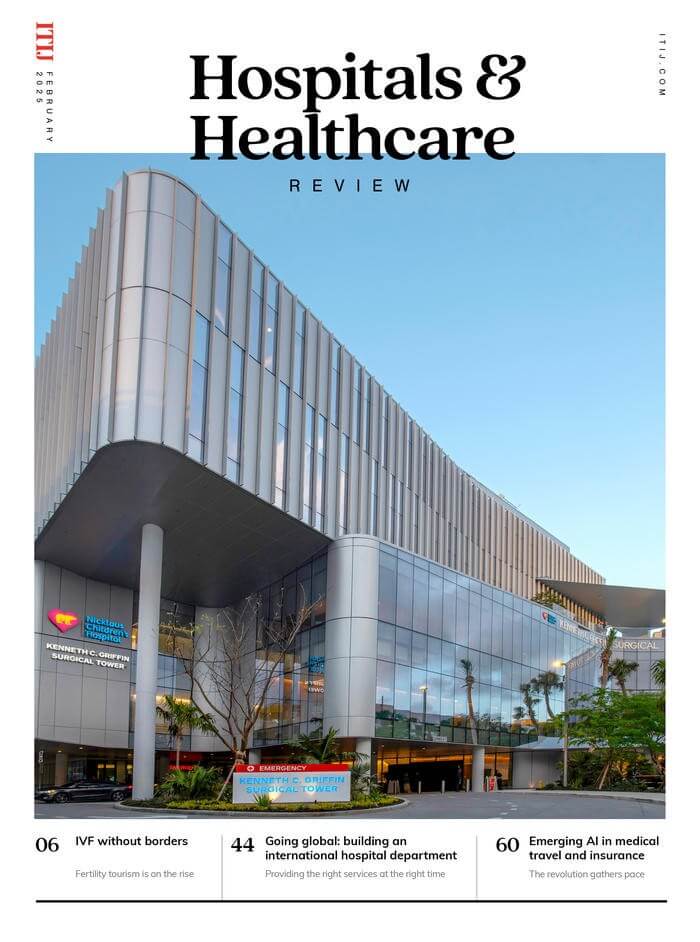
February 2025
Issue
Offering readers a deep dive into the issues facing providers and payers of healthcare services around the world. Cost containment, international patient department development, the role of AI in healthcare delivery and more.