
Interview: Mark Hamson, Westfield Health

Mark Hamson, Westfield Health’s Managing Director of Insurance, speaks to Chloe Fox about how innovation in insurance, digital wellbeing, and preventative care is shaping the future of employee benefits
As Managing Director of Insurance, how have your actuarial, underwriting, or claims experiences shaped your leadership of Westfield’s insurance function?
My time in the industry has taught me that truly understanding what customers value most is key to building long-term loyalty, whether they’re individual policyholders, corporate clients, or brokers. Over the years, I’ve seen how customer expectations evolve, and it’s our job to stay ahead of that curve.
For example, more consumers now expect health services that fit seamlessly into busy lives. That’s why we introduced features such as 24/7 GP access, mental health support, and online physiotherapy – to make care more convenient and inclusive. The pandemic reinforced this need: even when physical access was restricted, demand for health support never went away. Virtual and digital services became essential, and we continue to invest in improving these experiences for our members.
How has Westfield Health’s approach to product innovation evolved as employer expectations shift from traditional insurance towards integrated wellbeing and benefits platforms?
Employer expectations have changed a lot in recent years, with wellbeing now central to employee attraction and retention. Our approach has been to evolve our proposition so it balances traditional health cash plan benefits, like dental and optical cover, with broader wellbeing services that support the entire workforce.
Mental health provision has become a core focus, and we’ve strengthened our partnerships across both the broker market and the growing benefits platform space to ensure our products remain relevant, flexible, and accessible to diverse employee populations.
As competition intensifies in both domestic and global health benefits, how is Westfield Health differentiating its insurance offering to brokers and corporate clients?
We’re concentrating on three core areas that allow us to remain competitive in a rapidly evolving health benefits landscape. First, ensuring our propositions are sustainably priced and aligned with our customers’ real needs. Second, delivering a best-in-class digital experience that makes accessing and managing cover effortless. And third, forming partnerships with like-minded organisations so we can continually expand our offering as new health needs emerge.
How should insurers or brokers design consolidated schemes combining cash plans, private health insurance (PHI), and other types of cover to balance cost, portability, and claims integrity?
The key to balancing claims costs and product portability is to design integrated packages where each layer has a clear role and works in harmony with the others. At Westfield Health, we design cash plans to manage predictable, routine costs such as dental, optical and physiotherapy, with PHI to cover more significant medical needs requiring private treatment. Alongside this, we offer wellbeing services – from corporate fitness to digital health platforms – to proactively support employee health and reduce the likelihood of high-value claims.
Truly understanding what customers value most is key to building long-term loyalty, whether they’re individual policyholders, corporate clients, or brokers
By defining the boundaries of each product, employers avoid duplication and unnecessary spending, while employees gain clarity on what’s covered at every stage. This structure not only keeps costs manageable but also ensures claims integrity. Our My Westfield platform supports this with streamlined, digital claims processing and fast reimbursement for popular everyday benefits, giving employees confidence and employers transparency.

Given that ‘Surgery Choices’ excludes heart and cancer treatment, how should employers assess it against full medical or private medical insurance (PMI)?
Our Surgery Choices are designed to complement and not replace full PMI. By offering access to common non-urgent procedures, it provides a targeted, cost-effective solution for employers looking to support employee health without the expense of comprehensive cover.
At a time when NHS waiting lists remain high, there’s a need to access care more quickly, and many are looking for affordable options that still deliver meaningful impact. Surgery Choices fits that need. It gives employees faster access to routine surgeries that can otherwise keep them off work for longer periods of time, thereby supporting wellbeing and productivity.
It’s also important to recognise that cancer and cardiac care are typically well supported within the NHS and are not the areas where employers necessarily need to intervene. Instead, solutions like Surgery Choices fill a critical gap in access and timing for routine care.
For employers weighing this alongside full PMI, the key is knowing where value lies. For broader teams, products like Surgery Choices offer an efficient way to boost healthcare access, while keeping benefits spend under control.
As artificial intelligence (AI) and virtual clinic models evolve, does Westfield plan to expand beyond UK-based care into global or hybrid medical assistance, or maintain its UK focus through strategic alliances?
International expansion isn’t part of our strategic roadmap. Our strength lies in understanding the UK market and how private healthcare can work alongside the NHS, not replace it.
We continue exploring new ways to improve our products and customer experience through strategic partnerships. Our DoctorLine service already provides 24/7 GP consultations globally for our members, and our cash plans cover treatment costs worldwide – if you need dental treatment abroad, you can claim when you return.
By defining the boundaries of each product, employers avoid duplication and unnecessary spending, while employees gain clarity on what’s covered at every stage
Rather than building global networks, we’re developing relationships with partners who enhance what we offer UK customers. This includes diagnostic services, mental health support, and virtual care platforms that integrate with our existing structure.

In what ways do Westfield Health’s wellbeing offerings support or overlap with IPMI’s second opinion and care coordination services?
Westfield Health’s wellbeing initiatives are rooted in a strong belief in preventative support. Tools like the Wisdom app, mental health helplines, and proactive wellbeing programmes are designed to support everyday health and build resilience. This approach complements, rather than competes with, the services offered in IPMI, such as complex care coordination and second medical opinions. While IPMI typically comes into play when serious health concerns arise, Westfield’s preventative model helps individuals manage their health earlier, potentially avoiding escalation to acute care.
What opportunities do you see for Westfield in the growing intersection between health insurance, digital wellbeing tools, and corporate health data insights?
Westfield has a strong foundation in both insurance and wellbeing, and there is an opportunity for us to deepen that integration. We’re investing in technology that makes it easier for customers to access the right services at the right time, particularly focusing on a frictionless digital experience that reflects how people manage their health today.
Our data insights show that employers are increasingly dealing with a wider range of health challenges, from musculoskeletal and neurodiverse conditions to cancer support. We’re using these insights to design new services that meet those changing needs. Preventative care is also becoming a major focus, with benefits such as health screenings, physiotherapy, and 24/7 GP access helping people to take a more proactive approach to their wellbeing.
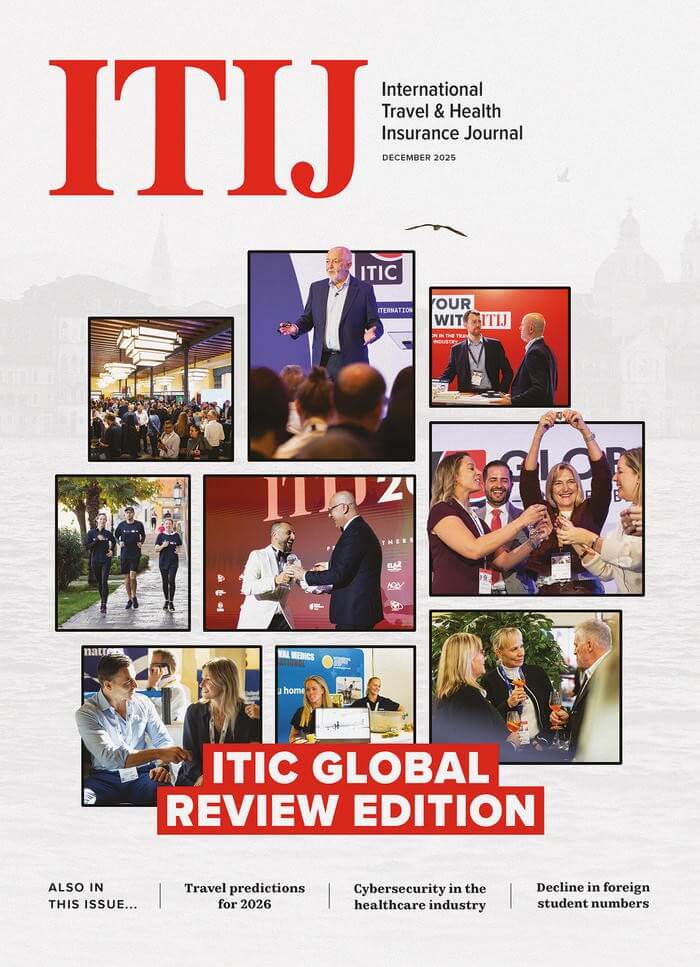
December 2025
Issue
In this issue of ITIJ we examine breaches of cyber security in the healthcare sector and ask what can be done to prevent them, share travel predictions, including risks and hotspots, for 2026, and look at the global implications of changes in international student travel.
Chloe Fox
Chloe Fox is a Junior Editor at Voyageur Group, having joined in 2024. She writes for ITIJ and AirMed&Rescue, covering a range of topics including international travel and health insurance, medical assistance provision, and air medical transportation. Chloe holds a BA (Hons) in English and an MA in English Literature from the University of Bristol.












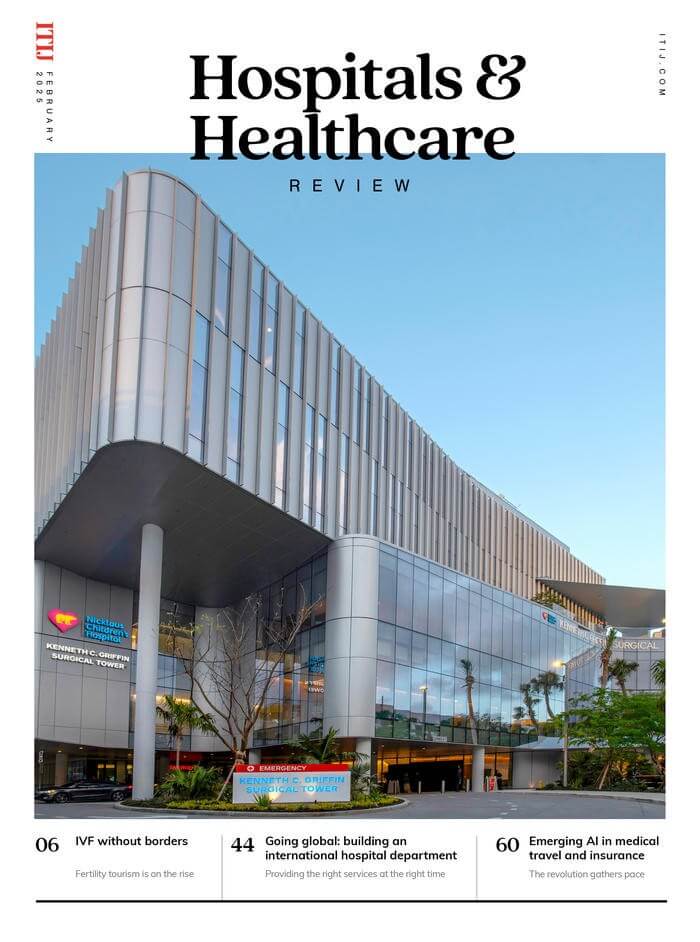
February 2025
Issue
Offering readers a deep dive into the issues facing providers and payers of healthcare services around the world. Cost containment, international patient department development, the role of AI in healthcare delivery and more.