Healthcare faces tech crisis as new report exposes AI readiness gap

New survey data reveals how legacy systems are undermining patient safety and slowing the healthcare sector’s progress towards effective AI adoption
Global technology services provider Presidio has released Unlocking Healthcare’s AI Potential, a new report based on a survey of more than 1,000 frontline healthcare professionals across the US, UK, and Ireland. The findings point to a sector struggling with legacy systems while facing soaring demand, widening the gap between clinicians’ needs and the technology supporting them.
According to the report, 98% of respondents said inefficient technology was leading to delays or errors in patient care, with an average of 11 incidents per month. Nearly all surveyed clinicians believed these failures were directly compromising patient safety, and almost a quarter experienced a safety-related incident at least once every shift.
“Hospitals and healthcare workers are being pushed to the brink,” said Cabul Mehta, Industry Principal, Healthcare and Life Sciences, at Presidio. “Healthcare professionals are being asked to do more with less, while relying on outdated technology systems that were never designed for the complexity of modern care. Presidio’s new data reinforces that modern, artificial intelligence (AI) driven systems can change that – easing burnout, reducing errors, and, most importantly, giving clinicians the time back to focus on delivering safe, efficient care.”
Despite 98% of respondents believing AI could streamline routine tasks, fewer than half said their organisations used AI tools, highlighting a wide readiness gap. Clinicians also reported turning to unsanctioned apps to compensate for inadequate systems, increasing compliance and data security risks.
The report identifies real-time data and automation as the most powerful – yet underutilised – enablers. More than 90% of clinicians believe real-time data would improve core aspects of care, while 99% believe AI would have an immediate positive impact if technical barriers were removed.
With global workforce pressures intensifying, Presidio argues that modern, secure, interoperable infrastructure is now essential. “The message from the front line is clear: technology should never come between a clinician and a patient; it should bring them closer and eventually feel invisible,” added Mehta. “When we modernise healthcare systems, we’re doing more than upgrading IT. We’re restoring connection and trust and ultimately improving every patient’s experience.”
The ITIJ team recently asked experts for their opinion on the most effective ways to mitigate the effects of medical inflation.
Chloe Fox
Chloe Fox is an Editorial Assistant for Voyageur Group, joining in 2024. She writes for ITIJ and AirMed&Rescue, covering a range of topics including international travel and health insurance, medical assistance provision, and air medical transportation. Chloe holds a BA (Hons) in English and an MA in English Literature from the University of Bristol.








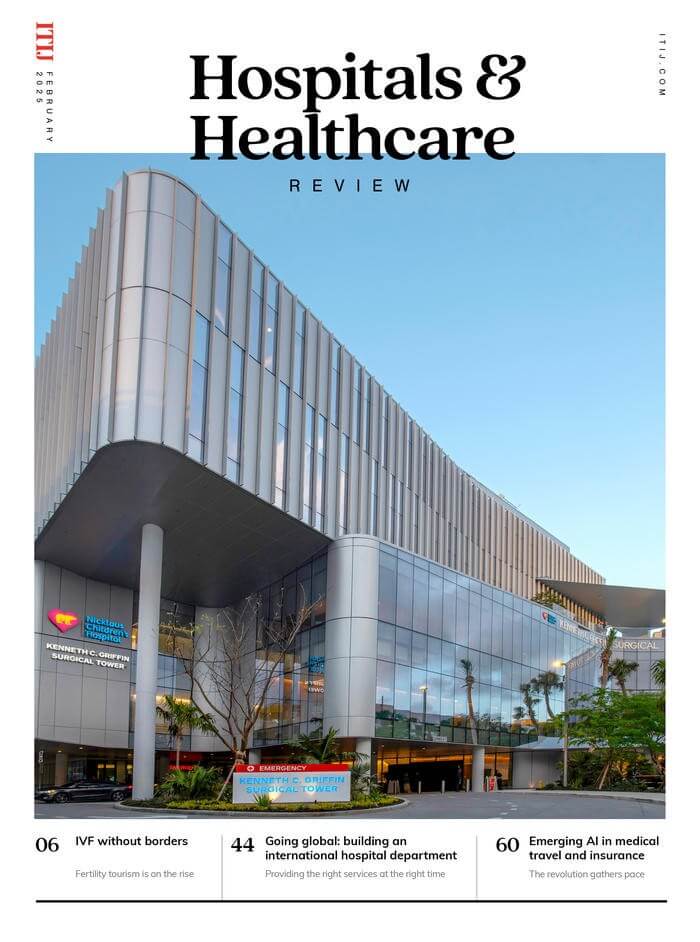
February 2025
Issue
Offering readers a deep dive into the issues facing providers and payers of healthcare services around the world. Cost containment, international patient department development, the role of AI in healthcare delivery and more.