Can the medical inflation balloon be popped?

Throughout 2024 and into 2025, global medical inflation rates have continued to present significant challenges for healthcare systems, governments, and insurers. Mandy Langfield asks experts for their opinion on the most effective ways to mitigate the effects of increasing costs
Medical inflation refers to the increase in the cost of healthcare services, including hospital fees, medical equipment, pharmaceuticals, and the wages of healthcare professionals. A number of factors accelerated the pace of medical inflation in 2024, making it one of the key issues in global health economics this year. Meanwhile, economic tariffs imposed by governments will inevitably have a ripple effect on the provision of healthcare services as supply chains are reliant on trade fluidity.
Factors driving medical inflation:
- Post-pandemic economic recovery
Healthcare systems in many regions are still recovering from the strain placed on them during the height of Covid-19. Hospitals and clinics are dealing with a backlog of medical procedures and treatments that were postponed during the pandemic. Additionally, many countries are still adjusting their healthcare budgets and investing in expanding healthcare access to meet the demand generated by the crisis. - Labour shortages in healthcare
The healthcare sector is facing a significant workforce shortage, resulting in higher wages, which directly contribute to the rising costs of healthcare. In some countries, this shortage has led to the outsourcing of medical services, which often comes at a higher cost. - Pharmaceutical prices
Drug prices are rising, especially for biologics, specialty medications, and new treatments for chronic diseases like cancer and diabetes. Regulatory changes or patent expirations lead to price hikes for essential medications. Furthermore, supply chain disruptions and geopolitical tensions are driving up pharmaceutical prices. - Technological advancements
While technological advancements in healthcare have led to improved patient outcomes, they have also contributed to higher costs. The integration of artificial intelligence (AI), telemedicine, robotics, and personalised medicine into healthcare delivery has increased the upfront capital required for healthcare providers. - Ageing populations
As the elderly population increases, healthcare demand rises, further driving up costs.

Regional variations in medical inflation
The impact of medical inflation varies by region. David Broderick, Head of Global Medical Provider Management for Allianz Partners, highlighted the issue to ITIJ: “In the past three years, inflationary pressures from medical providers have been felt across various regions globally. While the situation has largely stabilised, certain areas continue to face ongoing challenges. Over the last six months, both Singapore and Hong Kong in Asia have experienced persistent inflationary trends, creating ongoing pressure. Additionally, some parts of Europe, including the UK and the Netherlands, are seeing medical providers requesting price increases that are higher than usual.”
US healthcare in a world of its own
In the US, healthcare inflation has been a persistent issue for years, with the country spending a larger percentage of its GDP on healthcare than any other nation. In 2024, this trend continued, as the rising costs of healthcare services, prescription drugs, and insurance premiums remain a significant challenge. The Affordable Care Act (ACA) has helped many people access health insurance, but premiums continue to climb, and President Trump’s moves are undoubtedly going to have an effect on healthcare cost and accessibility.
NFG is monitoring a potential rise in the costs of medical equipment and supplies, drug prices, and healthcare providers facing higher operating costs adjusting their billing practices
In March 2025, the Centers for Medicare & Medicaid Services (CMS) issued the Marketplace Integrity and Affordability Proposed Rule, which proposes standards for the Health Insurance Marketplaces, as well as for health insurance issuers and the brokers and agents who connect millions of consumers to ACA coverage. The rule proposes additional safeguards to protect consumers from improper enrolments and changes to their healthcare coverage, as well as establishing standards to ensure the integrity of the Marketplaces.
However, Sabrina Corlette, a research professor and the Co-Director of the Center on Health Insurance Reforms at Georgetown University, commented at the time: “Under this banner of trying to crack down on the bad actions of some insurance brokers, they are penalising consumers, particularly low-income consumers, with more burdensome requirements and more limits on their access to coverage.”
For international health insurance companies with exposure to US hospital bills, cost containment measures are key. Such efforts vary from accessing preferred provider organisations (PPOs) and health maintenance organisations (HMOs), which offer different levels of savings with varying terms and conditions regarding payment time frames. Partnering with a local cost containment company is also considered a key tool in the armoury of combatting high charges for medical care.
New Frontier Group (NFG) is one such company, and it’s said it is keeping a close eye on how the tariffs introduced by President Trump will affect costs for international payers. NFG is monitoring a potential rise in the costs of medical equipment and supplies, drug prices, and healthcare providers facing higher operating costs adjusting their billing practices. Gitte Bach, CEO, commented: “While it is too early to quantify and know for certain the full financial impact, we anticipate that these shifts may contribute to an uptick in medical inflation and costs, especially in high-volume tourist destinations or urban centres where providers have more pricing power.”

Europe and ROW
In Europe, healthcare inflation is sometimes thought to be more moderate, but it is still a significant concern for insurers, as Broderick mentioned previously. Many European nations have publicly funded healthcare systems, which means governments absorb much of the cost. However, as healthcare demands grow and populations age, these countries are facing increased financial pressure. Countries like Germany, France, and the UK are looking for ways to maintain universal access to care while keeping costs under control.
Indeed, as Linda Beavis, Global Leader for Mobility, Global Benefits, at Aon, told ITIJ: “The European international insurers are putting forward higher inflationary increases than the Americas or Middle East. However, you need to bear in mind that the populations covered by these policies are all over the globe. Therefore a provider’s increases may be impacted if they have high numbers of members in certain territories, such as the US or Asia Pacific, where medical inflation rates are projected to be the highest in 2025 in Aon’s Global Medical Trends survey.”
Expats and travellers in places like India and Brazil are more likely to access care through the private system, where costs are higher, but still lower than their home country. However, costs are rising fast – a report by Onsurity found that medical inflation in India stood at 14% in September 2024, which was the highest among Asian countries.
European international insurers are putting forward higher inflationary increases than the Americas or Middle East
In Asia, the costs associated with hospitalisation have surged sharply alongside inflation, with average increases of 15%. Professional fees can often exceed 20%, driven by rising case complexity and the high costs associated with medical professionals. According to APRIL International, outpatient costs have also surged, with a 10% increase observed. The frequency and average cost of outpatient visits have risen, with the average number of visits per member increasing from 7.6 visits per year (2018–22) to 8.7 visits per year in 2024.
Romain Di Meglio, Regional Chief Executive Officer at APRIL International, Asia Pacific and the Middle East, also highlighted an increased demand for and utilisation of specific services such as physiotherapy and traditional Chinese medicine – the company has largely attributedthis to an increase in claims for musculoskeletal injuries. Di Meglio spoke to ITIJ about what measures can be taken by insurers to mitigate the effects of medical inflations in high-cost healthcare environments like Hong Kong and Singapore.
Key strategies he mentioned were:
- Leverage virtual health services: “By offering telehealth solutions, such as those from Teladoc Health, insurers can minimise the reliance on in-person consultations for minor health issues. This not only enhances patient convenience but also significantly reduces outpatient costs”
- Introduce flexible deductible options: “Providing a range of deductible levels for inpatient services can lead to substantial savings for both insurers and policyholders, with potential reductions in premiums of up to 45%, depending on the chosen deductible”
- Develop a specified inpatient providers (SIP) network: “Encouraging policyholders to utilise a designated network of inpatient providers can result in savings of up to 15% in premiums compared to standard networks, promoting both cost efficiency and quality care”
- Offer room occupancy alternatives: “By providing options for double occupancy rooms rather than single occupancy, insurers can facilitate savings of around 15% in premiums, helping to lower overall hospitalisation costs”
- Implement outpatient co-insurance options: “Introducing a 20% co-insurance model for outpatient services can lead to premium reductions of up to 16%, based on the outpatient service level utilised by members.”


Mechanisms for impact mitigation
Insurers have to take a multifaceted approach to managing the impact of medical inflation and securing the best value for their clients. For Allianz, the focus is on building strong, long-term relationships with their strategic providers. Broderick explained: “These partnerships enable us to secure more favourable pricing and terms for our customers through long-term commitments.” With a global reach, Allianz has the ability to combine forces: “We enhance our negotiating power by combining our global spend across various lines of business, and, through this consolidated approach, we can maximise purchasing power and secure better deals with providers.”
Other key weapons in Allianz’s tool chest are:
- Tiered options for clients: guiding customers towards the correct providers for their specific needs and avoiding providers with rates that may be higher than the industry norms
- Evaluation of medical providers: ensuring medical and financial exposure is minimised while supporting the best possible outcomes
- Tailored product modifications: adjusting copays and deductibles for specific provider categories helps clients manage costs while still accessing quality care
- Digital health solutions: AI-driven tools, chat, and video consultations provide members with more convenient, timely, and often lower-cost options for care
- Preventative care: proactive screenings, health checks and wellness programs help prevent long-term, high-cost treatments.
Not all strategies work on a universal basis – local cultural nuances and market dynamics are, of course, part of the decision-making process for insurers when it comes to the best way to mitigate the effect of high medical costs. “Additionally,” said Broderick, “some levers are more direct in their application, engaging providers directly to negotiate better terms, while others work indirectly by influencing the client and member experience. For example, strategies like consolidating global spend or offering tiered pricing options tend to be more universally applicable and can be tailored based on our market position and local buying power. On the other hand, approaches such as leveraging cultural insights or fostering trust in the healthcare system are more region-specific, reflecting the unique challenges and expectations of each market.”
For Di Meglio, another way of engaging with members effectively to empower them and reassure them that decisions are being taken that will ensure the best outcome for the best price is to offer second medical opinion services. He explained: “This helps members resolve conflicting diagnoses from different medical experts and make informed decisions.
An impartial external review can confirm the necessity of surgery or treatments and explore suitable alternatives. Requiring pre-authorisation for planned hospitalisations ensures medical necessity and cost-effectiveness, verifying the appropriateness of the treatment plan.”
Cross-border treatment can mean significant savings – the difference in costs between even some major centres of excellence can make it worth paying for a member to travel to a different destination, as Di Meglio noted: “Cross-border steerage for planned admissions can support members in seeking medical care in other cities or countries where costs are lower. This helps insurers mitigate the effects of medical inflation by leveraging price differences between locations.”

Coordination of care protocols will result in savings
The challenge of managing medical inflation will require coordinated efforts across sectors, with a focus on improving efficiency, reducing waste, and ensuring that the benefits of technological innovations are accessible to all.
Beavis said that combatting the effects of medical inflation will take a coordinated effort from all parties – providers, payers and users of healthcare services. Insurers can improve their efforts to identify fraud, waste and abuse; they can focus on medical innovations, and data analytics that review the performance of their provider networks. They can manage overprescription and overtesting, reviewing consistent outcomes of regular procedures and maintaining ongoing cost negotiations.
Furthermore, Beavis added: “Providers are also continually reviewing their offerings outside of the core medical benefits management to include proactive preventative care and wellbeing for their members. These may include mental health support, nutritional, exercise and sleep education and health risk assessments.” Nearly all providers are looking at how they can utilise AI in both the administration of services and providing more levels of care, she said.
The whole healthcare delivery ecosystem has a part to play in mitigating the effects of medical inflation, though, with Beavis pointing out: “Intermediaries and consultants can contribute by reviewing the data from providers, challenging providers around their proposition, and ensuring that they are discussing and advising their clients around benefits and the performance of their schemes. This can include benchmarking and advice around cost containment or financing arrangements, plus a view on preventative treatments and services.
“Clients can also educate their employees around the value of the benefits they have, and that with a clear and sensible approach, they can also contribute to managing the future costs.” If everyone works together, while costs will increase, they should hopefully remain manageable.

August 2025
Issue
This month we look at the rising demand for medical escorts on commercial airlines, plus ask how the latest technology can help insurance companies. In our International Hospitals and Healthcare Review we examine humanising IPMI in the digital age, and ask what makes a destination desirable for medical tourism.
Mandy Langfield
Mandy Langfield is a Director of Palladium Media Partners and former Publishing Director at Voyageur Group. She has written extensively on international travel and health insurance, medical assistance provision, and air medical transportation.












February 2025
Issue
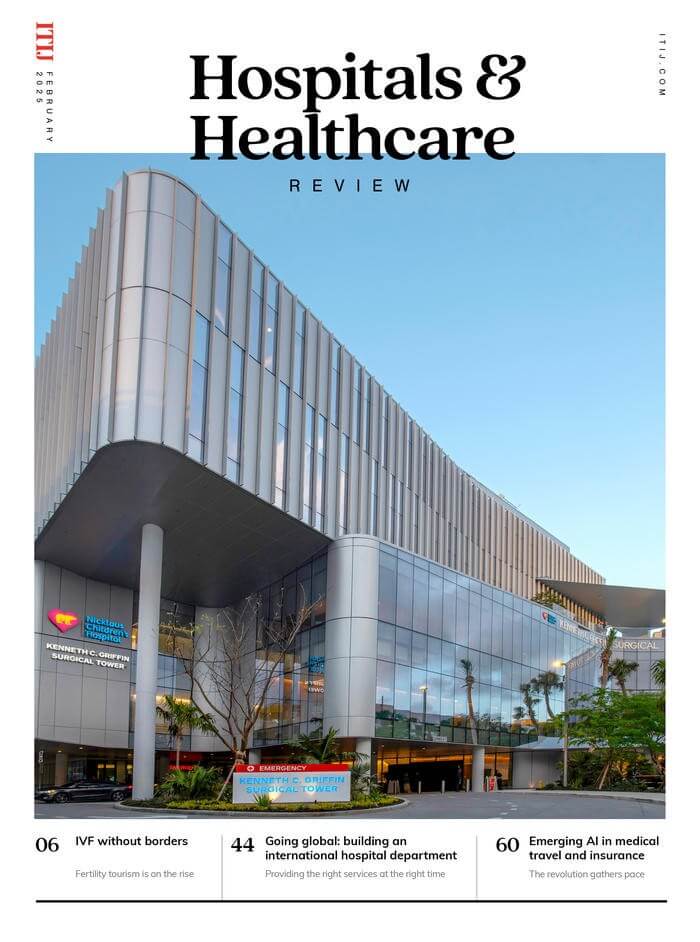
Offering readers a deep dive into the issues facing providers and payers of healthcare services around the world. Cost containment, international patient department development, the role of AI in healthcare delivery and more.