
Staffing pressure points shaping modern air ambulance operations

Global air ambulance providers speak to Chloe Fox about how staffing pressures, from experience gaps to training, fatigue, and regional realities, are reshaping recruitment, retention, and operational resilience
Staffing pressures in air ambulance operations are increasingly layered, shaped by healthcare system strain, aviation market dynamics, and the realities of delivering critical care in flight. In this feature, contributors consistently describe shortages that extend beyond raw numbers into experience, resilience, and the ability to operate in demanding environments.
From a Central European perspective, Johannes Hoischen, Head of Flight Operation Center at Malteser AeroMedical, pointed first to the clinical workforce. He explained that “the biggest staffing pressure we’re dealing with now is clearly on the clinical side, experienced flight nurses and critical care physicians”, adding that “in Central Europe in particular, this has become increasingly difficult because the entire healthcare system is under strain”. As hospitals attempt to stabilise their own teams, competition has intensified: “Hospitals are facing massive shortages of their own, and they’re recruiting very aggressively to stabilise their teams. That means we’re all fishing in the same pond, but the pond is getting smaller every year.”
The biggest staffing pressure we’re dealing with now is clearly on the clinical side, experienced flight nurses and critical care physicians
Those who do enter aeromedical work face a distinct set of demands. As Hoischen told ITIJ, “the challenge isn’t just finding people with the right qualifications; it’s finding people who are able and willing to work in an environment that’s inherently more demanding than a hospital setting”, citing the “long duty hours, irregular shifts, high-acuity patients, and the stress that comes with providing critical care in the back of an aircraft instead of in a fully equipped ICU”. Under these conditions, he pointed out that, recently, “retention has become just as big of an issue as recruitment”, noting that “burnout plays a significant role, especially for those who are still splitting their time between hospital obligations and aeromedical missions”.
Looking more broadly across international operations, Douglas B Weisz, Senior Director of Business Development at REVA, framed the issue less as a headcount problem and more as an experience gap. He observed that, “across the industry, the most impactful shortages are not about total headcount, but about experience in critical roles”. In particular, “flight crewmembers with international experience and critical-care medical crew capable of managing high-acuity, long-haul missions remain the hardest profiles to staff”. These shortages may not halt routine operations, but their effects are felt during demand spikes, as “they do affect surge capacity, growth flexibility, and responsiveness during peak travel seasons”.
Volker Lemke, Managing Director of FAI Medical Services, agreed that the industry was suffering from “a real shortage of pilots”. He pointed out that there were “many alternatives in the aviation sector, which has a negative impact on our search for pilots”.

In Africa, staffing challenges are intensified by structural and economic factors affecting both aviation and healthcare. Laura Eva Oliwa, Head of People, Culture and Administration at AMREF Flying Doctors (AFD), highlighted pilot shortages “driven by rising global aviation demand”. She told ITIJ that “the high cost of pilot training places the profession out of reach for many, contributing to skills shortages”. Aeromedical operations further narrow the pool, as “air ambulance operations, particularly in Africa, also require specialised competencies, including operating into remote or unmanned airstrips and conducting complex medical missions”.
Further to this, clinical shortages compound the challenge. Oliwa added that “there is also a shortage of critical care nurses, driven by population growth and an imbalance between patient demand and available skills”, with migration exacerbating the issue: “In Kenya, healthcare workforce coverage remains below optimal levels, estimated at approximately 23%, particularly for specialised critical care roles.”
However, not all staffing pressure manifests through vacancies alone. From a systems perspective, Viktoriya Gopfauf, Business Development Manager at Avinode Group, argued that “the staffing challenges we’re seeing aren’t directly about recruitment; they’re about adoption”, pointing to the difficulty of coordinating multiple competencies without cohesive processes. As a result, “regions relying on older or non-standardised systems [are] struggling even more to connect all those different professionals into one successful mission”.
Managing training demands and preventing burnout has become a very real part of our daily leadership
Meanwhile, in the Asia-Pacific region, the picture looks different again. Tyson Smith, General Manager of LifeFlight, described a shift away from acute numerical shortages, saying: “There isn’t a single staffing group that stands out as an acute numerical shortage in the way the industry experienced immediately post-Covid-19.” While competition remains, “there is still a viable pool of qualified candidates”, leading LifeFlight to prioritise alignment over volume: “Our focus has shifted away from purely filling seats and more towards hiring people who are aligned with the purpose of the work.”
By contrast, in niche markets across the Middle East and Southeast Asia, Vinod Nair, Chief Executive Officer of Bluedot Air Ambulance, identified a more specific vulnerability, explaining that “the greatest staffing challenge lies at the mid-level sales and operations layer, followed by experienced aeromedical medical crew”, as air ambulance and repatriation “remain highly niche, with a limited talent pool operating at global standards”.
When recruitment becomes a bottleneck
As staffing pressure grows, recruitment processes themselves are increasingly described as a constraint, shaped by specialist preparation, regulatory compliance, and shifting candidate expectations. Even when clinicians arrive with strong hospital backgrounds, Hoischen explained that additional preparation is unavoidable: “Even when we hire highly experienced ICU or emergency clinicians, we still need to put them through aeromedical-specific preparation human factors training, safety courses, and medical fitness for flight.” He added that while “these steps are essential for safe operations, they do extend the time before someone is deployable”.
At the same time, recruitment timelines have lengthened as candidates become more selective. Hoischen noted that “clinicians today are far more selective” and increasingly focused on “clearer career pathways, predictable schedules, and a degree of flexibility”.
From a systems standpoint, Gopfauf described the administrative load as the heaviest burden, with recruitment now dominated by “verifying credentials, managing multiple regulatory requirements, and ensuring documentation accuracy across jurisdictions”. Where systems are fragmented, “operators using disconnected or legacy systems often duplicate work, manually reconcile records, and chase documentation across several platforms”.
At AFD, Oliwa outlined the scale of vetting required in safety-critical environments, explaining that “background checks have become increasingly burdensome and are often outsourced to ensure thorough vetting”, a process that is “time-intensive and has cost implications”. Recruitment timelines are further extended because “many operators are aircraft type-specific, which significantly narrows the available talent pool”.
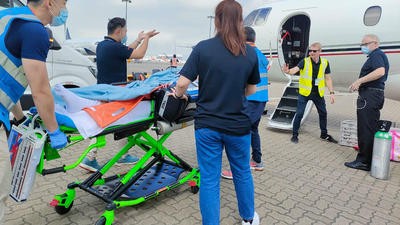
At REVA, onboarding timelines reflect the combined weight of regulatory and operational requirements. As Weisz explained, “from hire to independent flight-line status, that process can take up to 75 days” for flight crew, while “for medical crewmembers, onboarding to the flight line typically takes approximately 30 days”. Access to training can be just as limiting as candidate availability, as “without that coordination, training availability, not candidate interest, can quickly become the primary bottleneck”.
For organisations experiencing sustained growth, recruitment pressure is continuous rather than episodic. Smith described how “recruitment becomes a continuous process rather than a discrete activity”, creating compounding workloads across onboarding, training, and governance. This pressure extends upward, as “managing that transition thoughtfully, while continuing to recruit and train at volume, places a significant burden on leadership capacity”.
From Nair’s perspective, the most persistent challenge lies in alignment rather than sourcing alone, with “identifying experienced talent and aligning them to a clear long-term career path” proving critical in a sector where “mismatched expectations can quickly lead to burnout-related turnover”.
Balancing training demands with fatigue, wellbeing, and readiness
With training demands rising, industry experts emphasised the need to protect wellbeing while maintaining operational readiness.
At Malteser AeroMedical, Hoischen described a cultural shift: “Managing training demands and preventing burnout has become a very real part of our daily leadership.” Predictability has become central, with “more predictable schedules and making sure they have genuine recovery time after difficult missions” now a priority. Emotional support has been strengthened alongside this, as “high-acuity or emotionally heavy transports stay with people”, making “regular debriefings and an active peer-support culture” essential.
Lemke noted that rising training requirements were nothing new in air ambulance services, saying: “We [FAI Medical Services] have had to adapt to them for decades and introduce appropriate programmes.”
He added: “Burnout-related staff turnover is difficult to influence, but we have the advantage that there are quieter phases with fewer missions, and flight crews can also be deployed in the somewhat more ‘relaxed’ charter sector.”
Once again, Gopfauf pointed to infrastructure as a mitigating factor, arguing that “automating recency tracking, standardising training content, and reducing the number of platforms agents and users must interact with significantly lowers cognitive load” and that “a stable digital environment directly reduces administrative burnout”.

In air medical transport, staffing decisions are ultimately patient safety decisions
At AFD, Oliwa outlined a deliberate approach to pacing, explaining that “we ensure a flexible training schedule, avoiding back-to-back mandatory courses”, with training “distributed across the calendar year to reduce fatigue”. Rest is actively protected through rostering, as “our rostering and adequate headcount models are designed to ensure sufficient rest”.
At REVA, fatigue management is embedded into daily operations rather than treated reactively. As Weisz explained, “the focus has been on predictability”, supported by clearly defined duty periods and a “robust” fatigue management programme.
Smith highlighted the value of collective training in sustaining readiness over time, noting that “a few times each year, individual bases are temporarily removed from service so the majority of staff can train together”, a trade-off that ultimately supports “a more sustainable workforce and a higher, more consistent standard of service”.
Nair pointed to structural capacity as a safeguard, emphasising that “operations must retain a sufficient manpower cushion for long standby or extended missions”, supported by “a well-knit, appropriately certified global clinical associate network”.
Regional realities and how they shape hiring strategy
Regional healthcare systems, cost-of-living pressures, and cultural factors continue to shape recruitment strategies in distinct ways.
Hoischen described a highly competitive environment in Central Europe, where “we’re in direct competition with hospitals and emergency services”, prompting a focus on purpose and transparency. “People are drawn to the international scope of what we do, the variety of missions, and the sense of purpose that comes with helping patients across borders,” he said.
Oliwa highlighted stark contrasts across Africa, explaining that “remote regions face severe shortages due to limited capacity to retain specialised professionals”, while volatile regions require “stringent security-vetting requirements” alongside multilingual and culturally adaptive crews.
Weisz contrasted regional models, noting that, “in the Americas, competition from airlines and hospital systems is the primary factor”, while in Europe “the challenge has been broadening the qualified candidate pool”.
Smith described cost-of-living pressures shaping recruitment in Australia, where “high housing demand, rising rents, and property affordability … have become a material consideration in recruitment and retention”, with similar pressures intensified in Singapore, as “recruitment there requires careful alignment of salary, benefits, and lifestyle considerations”.
Summarising the global picture, Nair noted that “recruitment challenges vary significantly by region due to cultural, linguistic, regulatory, and work-practice differences” while maintaining that “alignment with the company vision and role clarity are non-negotiable”.

Getting recruitment right first time
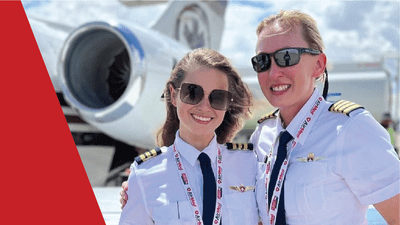
Across all regions, contributors consistently emphasised transparency, expectation-setting, and cultural alignment as the foundation of right-first-time recruitment. At Malteser AeroMedical, Hoischen described a more intentional approach, explaining that “what has really helped us improve recruitment is being much more intentional about finding the right people from the start”, including being explicit about “duty hours, the types of cases we see, the lifestyle impact”. The results, he said, have been clear: “New staff reach full readiness quicker, early departures have dropped, and overall mission quality has improved.”
From a systems perspective, Gopfauf told ITIJ: “The more an organisation controls the process through a single, standardised system, the fewer errors or missing compliance elements appear downstream.”
At AFD, Oliwa outlined a layered process built around “competency-based interviews”, “role-specific psychometric testing”, and “a pre-vetted talent pool ready for deployment”.
Weisz underscored the stakes involved, stating that, “in air medical transport, staffing decisions are ultimately patient safety decisions”, making it essential that “operational realities are discussed throughout the interview, hiring, training, and probationary phases”.
Smith returned to purpose as the unifying factor, saying that “right-first-time recruitment, for us, consistently comes back to hiring for purpose before anything else,” because “what drives long-term success is whether an individual understands why they want to do this work”.
Across the industry, the most impactful shortages are not about total headcount, but about experience in critical roles
For Nair, outcomes depend on early investment, as “right-first-time recruitment starts with investing time upfront – deeply assessing candidates and clearly communicating the company vision and long-term career pathways”, an approach that “has significantly reduced early turnover and improved team stability”.
In conclusion, staffing pressure in air ambulance operations has become a deeply interconnected challenge, shaped by healthcare system strain, aviation market forces, and the demands of delivering critical care in-flight. Across regions, recruitment and onboarding now carry as much weight as headcount, requiring greater transparency and alignment to avoid early attrition. At the same time, organisations are recognising that wellbeing, fatigue management, and sustainable training models are central to retaining skilled staff.
March 2026
Issue
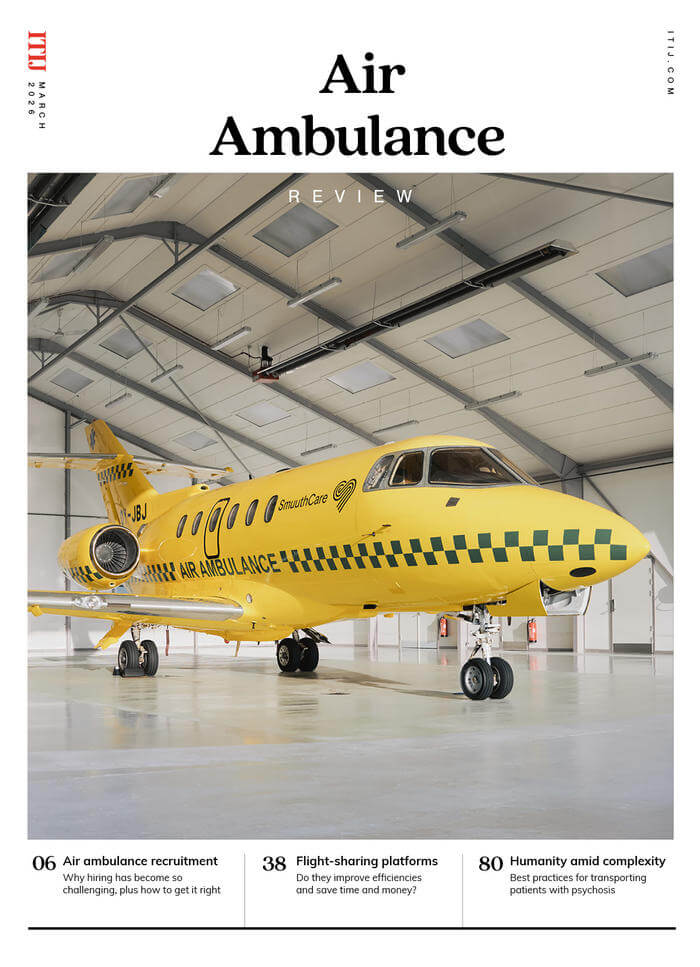
In this issue of Air Ambulance Review we examine the challenges facing air ambulance providers when it comes to recruitment; look at flight-sharing platforms and ask if they can improve efficiencies; and we delve into the latest medications, protocols and best practices for transferring vulnerable patients with psychosis.
Chloe Fox
Chloe Fox is an Editorial Assistant for Voyageur Group, joining in 2024. She writes for ITIJ and AirMed&Rescue, covering a range of topics including international travel and health insurance, medical assistance provision, and air medical transportation. Chloe holds a BA (Hons) in English and an MA in English Literature from the University of Bristol.