
Saudi Arabia – the next big thing for expats?

Alysia Cameron-Davies explores the benefits and challenges of relocating to the Gulf state, navigating its healthcare system, and the vital role insurers play in supporting its growing expatriate community
The Kingdom of Saudi Arabia is rapidly establishing itself as a top destination for expatriates, ranking second in the InterNations 2024 Working Abroad Index thanks to its excellent job prospects and competitive salaries.
In addition to competitive salaries, many employees moving to the Kingdom receive attractive benefits packages through their companies, which often include housing allowances, health insurance, education funding for their children, and perks like flights home to visit family. With no personal income tax and many expenses covered through these generous packages, expats typically enjoy a substantial amount of disposable income.
Beyond the economic benefits, Saudi Arabia is expanding its range of recreational and family-friendly activities, driven largely by the Vision 2030 initiatives launched in April 2016. Vision 2030 aims to drive economic growth, attract foreign investment, boost tourism, and improve sectors like private healthcare, positioning the Kingdom as a thriving global hub by 2030. Rana Maristani, the Founder and CEO of R Consultancy Group, stated: “Saudi Arabia’s transformation under the Vision 2030 initiative has been remarkable, making the Kingdom an increasingly attractive destination for expatriates. The initiative has opened up vast economic opportunities, particularly in sectors like finance, healthcare, and technology, which are seeing rapid growth.”
Navigating challenges: how can insurers help?
Despite the progress brought by the Vision 2030 initiatives, there are still aspects of life in Saudi Arabia that expats may find challenging. While salaries are high and tax-free, the cost of living is also elevated. Respondents to the Working Abroad Index highlighted long working hours as one of the downsides to working in the country.
“Cultural adaptation is another significant hurdle,” noted Bilge Bora, CEO of Marm Assistance. “Saudi Arabia is known for its deep-rooted traditions and social norms, which can be quite different from those in other countries.” While recent social reforms have granted women greater freedoms, such as the right to drive (a notable change since the ban was lifted in 2018), many strict laws remain in place. Rules regarding gender segregation, dating, and cohabitation outside of marriage are still enforced, and same-sex relationships are illegal. As a result, life in the Kingdom can be particularly challenging for women, members of the LGBT community, and those unaccustomed to a conservative environment, where these social norms impact both professional and daily life.
Saudi Arabia’s transformation under the Vision 2030 initiative has been remarkable, making the Kingdom an increasingly attractive destination for expatriates
Although many restrictions may not apply within expat compounds, Bora explained that adjusting to cultural differences can cause stress and anxiety for expats and their families. “In my experience, offering cultural awareness programmes as part of the onboarding process for expatriates has had a notable impact on their overall wellbeing,” she said. “These programmes, combined with access to mental health services through insurance policies, help ease the transition and ensure a more comfortable adjustment period.”
Another important consideration is the weather. “The scorching heat of summer can leave expats feeling frazzled,” Bora noted, adding: “Conditions like dehydration, heatstroke, and other heat-related illnesses are common, particularly during the intense summer months. While insurance coverage typically addresses emergency care for these conditions, it’s also about educating expatriates on how to mitigate these risks,” she said. “I’ve seen firsthand how offering preventive guidance, from hydration strategies to heat-avoidance techniques, can be as valuable as providing emergency coverage.
“Driving conditions in Saudi Arabia also present a unique challenge for expatriates,” continued Bora. “With the recent reforms allowing women to drive and the general increase in road users, traffic accidents have unfortunately become more frequent. Expatriates, unfamiliar with local driving styles, often find themselves at a higher risk of accidents, which has led to an increase in related claims. Offering comprehensive auto insurance solutions, along with education on road safety, is essential in addressing these risks.”
In addition to culture shock and extreme weather, navigating Saudi Arabia’s healthcare system can also be tricky. Maristani noted that from an employer’s perspective, ensuring staff compliance with mandatory health insurance regulations can be challenging. For employees, understanding the system and what’s included in their insurance coverage can be difficult too. Bora emphasised the importance of providing expats with clear, accessible information about their insurance coverage so they can make informed healthcare decisions and minimise unnecessary stress during medical situations.
Maristani said that by investing in comprehensive cultural orientation programmes and offering flexible work schedules during the hottest months, companies can significantly help their employees acclimatise to life in Saudi Arabia. “On the healthcare front, businesses need to work closely with local insurers to ensure that their expatriates are covered under comprehensive health plans, which helps ease the transition.”
Compulsory health insurance under the microscope
Saudi Arabia’s health insurance regulations require all expatriates to obtain health insurance, ensuring they have access to essential healthcare services. Companies relocating staff must provide appropriate healthcare coverage through insurers accredited by the Council of Health Insurance (CHI). “With compulsory health insurance regulations in place and an influx of expatriates from around the world, the role of insurance providers has never been more critical,” said Bora.
Maristani noted the compulsory mandate offers “significant peace of mind for both employees and employers”. However, drawing on her previous point, she added: “It also introduces an additional administrative burden for businesses, which must navigate the complex local insurance market to select plans that comply with legal requirements and meet the diverse needs of their expatriate workforce. This process involves careful consideration of coverage levels, network hospitals, and specific medical needs, making it a challenging but necessary task.”
Businesses need to work closely with local insurers to ensure that their expatriates are covered under comprehensive health plans, which helps ease the transition
Shifting back to the positives, she highlighted that while this adds to the operational workload for employers, offering comprehensive health insurance can make relocation packages more attractive, “helping to secure top talent”. Additionally, the peace of mind that comes with knowing healthcare is covered can significantly boost employee job satisfaction and improve retention.
Drawing comparison with nearby countries, Bora explained: “Saudi Arabia’s compulsory health insurance system is well structured, ensuring that expatriates have access to essential medical services. Unlike some neighbouring countries where insurance policies can vary significantly depending on the region, Saudi Arabia’s approach provides a more standardised level of care across the board. This consistency is particularly important for expatriates, as it offers a clear understanding of the coverage they can expect, regardless of their employer or location within the country. In terms of cost, Saudi premiums are generally competitive, though the demand for private healthcare – often preferred by expatriates – can drive costs up, especially when compared to countries like Oman or Kuwait.”
Richard Poinson, Country Manager at APRIL International, United Arab Emirates (UAE), noted: “When comparing the cost of premiums, we observed that Saudi Arabia’s international private medical insurance solutions are comparable to those in the neighbouring UAE. As the market expands, more health insurance options are expected to emerge, offering competitive pricing and enhanced coverage.”
Bora pointed out: “Insurers and employers alike are constantly navigating the fine line between providing high-quality private healthcare and managing costs. From my experience in this industry, it’s crucial to strike the right balance. For example, in our operations, we’ve found that offering tailored guidance to expatriates – helping them navigate both public and private healthcare systems – goes a long way in managing costs while still ensuring quality care. This has proven especially valuable for industries with high health and safety demands, such as energy and construction, where occupational health needs are often specialised and require a more nuanced approach.”

Top reasons for claims
Bora revealed that the most common claims filed by expats in the country involve outpatient care, emergency services, and maternity care.
Regarding outpatient care, she indicated that routine doctor visits, diagnostic tests, and treatments for common ailments account for a substantial percentage of these claims. “Respiratory issues are particularly prevalent,” she said, due “to the dusty, dry climate, which exacerbates conditions like asthma and allergies”.
In terms of emergency care, she revealed that heat exhaustion and road accidents are two common reasons for claims. She underscored the importance of collaborating with trusted healthcare providers specialising in common outpatient conditions and maintaining a robust network of assistance services that can respond quickly to emergencies.
With compulsory health insurance regulations in place and an influx of expatriates from around the world, the role of insurance providers has never been more critical
Turning to maternity and paediatric care, Bora highlighted the importance of offering comprehensive coverage to ensure timely and efficient healthcare for mothers and children. This includes offering streamlined processes for accessing services, such as scheduling prenatal appointments and arranging paediatric vaccinations.
Finally, she noted that chronic conditions, such as diabetes and cardiovascular diseases, are other common reasons for claims, especially among long-term residents. She stressed that comprehensive coverage for these conditions should be included in policies, affirming: “In my experience, facilitating access to specialists and ensuring continuity of care is key to maintaining the long-term health of expatriates managing chronic conditions.”

What’s on the horizon?
“As the expatriate population in Saudi Arabia continues to evolve, so too do their healthcare needs,” stated Bora.
“We see significant opportunities in Saudi Arabia’s evolving landscape,” added Poinson. “Based on our business experience in the neighbouring UAE, we expect a surge in demand for health insurance as Saudi Arabia continues its global expansion efforts, attracting expatriates from diverse backgrounds.
“To support the needs of this expatriate community, health insurance companies are expected to develop more flexible and customisable international private health insurance plans, along with advanced digital services tailored to them, ensuring they can receive high-quality healthcare services both within and outside Saudi Arabia,” he said.
Bora agreed that digitalisation is key and will transform expat healthcare. “One of the most significant shifts we anticipate is the increased reliance on digital health solutions,” she said. “Telemedicine has become a vital component of healthcare delivery, especially since the onset of the Covid-19 pandemic. In my view, this trend will only continue to grow as more expatriates seek convenient, remote access to healthcare professionals.”
Insurers and employers alike are constantly navigating the fine line between providing high-quality private healthcare and managing costs
Bora explained how this digital shift will streamline the healthcare experience, making mobile apps and online platforms the norm for managing health needs and enabling expats to access services, submit claims, and receive care more efficiently. “By integrating digital tools into our own processes, we’ve seen how this improves customer satisfaction and reduces the administrative burden for both expatriates and insurers,” she added.
Poinson highlighted that Saudi Arabia’s Vision 2030 initiatives and Health Sector Transformation Program are set to enhance healthcare access and modernise facilities, further driving the digital shift. “The policy direction is expected to foster a supportive environment for digital health technologies,” he said.
Bora also forecast developments in mental health coverage and preventative healthcare. She discussed how mental health support can help expats navigate culture shock and feelings of isolation during relocation. “As awareness around mental health continues to rise, particularly in high-stress environments like expatriate life, insurers will need to offer more comprehensive mental health services. This includes access to counselling and therapy, as well as preventative mental health programmes,” she said.
As for preventative health, the focus will be on wellness programmes, health screenings, and preventing chronic conditions, she said, highlighting that “investing in preventive care not only improves health outcomes but also reduces long-term healthcare costs for insurers and employers alike”.
Reflecting on personalised solutions, Bora echoed Poinson’s view that flexibility is fundamental. She noted: “The ability to tailor coverage to suit individual preferences – whether that’s enhanced mental health support, telemedicine services, or chronic disease management – will become a critical factor in meeting the healthcare needs of expatriates. Offering flexible packages that cater to different demographics, from single professionals to large families, will ensure that expatriates have access to the specific services they require.”
Conclusion
Relocating to Saudi Arabia presents unique challenges, from adjusting to the climate and cultural norms to navigating the healthcare system. The Vision 2030 initiatives, coupled with the expanding expat population, are driving changes in the health insurance landscape. “By offering comprehensive services, insurance companies are playing a crucial role in supporting expatriates in Saudi Arabia’s growth and development,” said Poinson.
Bora highlighted that the evolving needs of expats present both challenges and opportunities for the insurance industry. “By staying ahead of these trends and continuously adapting our offerings, we can ensure that expatriates receive the care and support they need, no matter where their journey takes them,” she concluded.
January 2025
Issue
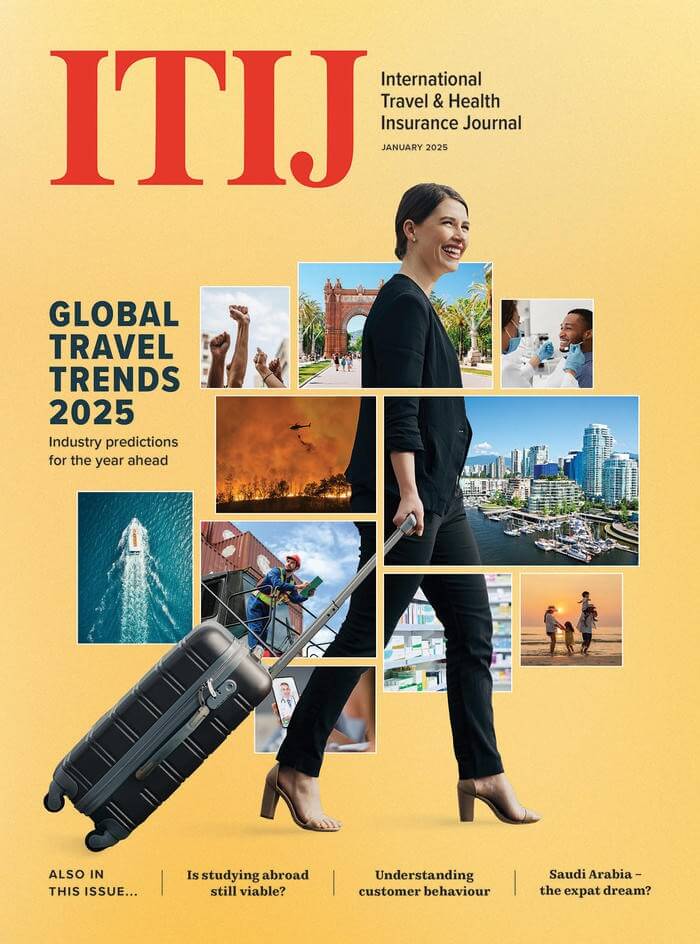
In this issue we look at worldwide travel trends for the year ahead; speak to insurance experts about how they go about understanding their customers; examine the pros and cons of living and working in Saudi Arabia; and look at the shift in the international student community.
Alysia Cameron-Davies
Alysia is a copy writer for Voyageur Publishing.