
Risk reality: Nigeria

In our regular column on security and travel risk, George Dagnall, COO of Hotspot Cover, shares his insights with ITIJ. This month he looks at reform and risk in West Africa’s giant, Nigeria
Nigeria is edging into a familiar yet volatile space, high on reform promises, low on delivery, and increasingly burdened by insecurity. President Bola Tinubu’s administration came in with the right headlines: subsidy removal, currency unification, and economic restructuring. But in practice, these moves have triggered inflation, worsened hardship, and inflamed unrest across a country already grappling with fragmented violence.
In the north, jihadist insurgencies persist despite government claims of progress. Islamic State West Africa Province (ISWAP) remains active around Lake Chad, and rural areas of Borno and Yobe still see regular attacks. In the northwest, so-called ‘bandits’, highly organised, well-armed criminal groups, control swathes of land, engaging in mass kidnappings and rural blockades. In the southeast, separatist sentiment tied to the Indigenous People of Biafra (IPOB) continues to flare, with targeted killings and movement restrictions disrupting daily life.
Even relatively stable hubs like Lagos and Abuja are not immune. Protest activity is growing, trust in government remains low, and infrastructure is stretched. Power cuts are frequent, and many Nigerians are priced out of basic services. For organisations operating in-country, from extractive industries to non-governmental organisations (NGOs) and logistics providers, the day-to-day operating picture is one of friction. Travel routes are dynamic, threat actors are diverse, and emergency response is often slow or compromised.
More recently, the rise in criminal checkpoints, targeted roadside ambushes, and sporadic political violence has made situational awareness and local access critical to any risk mitigation strategy. Movement security, reliable communications, and trusted local fixers are now as important as any static asset protection. For security teams managing projects in Nigeria, responsiveness, not just planning, is the operative word. Nigeria remains central to West African commerce and diplomacy. But stability is never a given, and any operational footprint must be hardened with agility in mind.
Insurance challenges and market response
Nigeria is often categorised as ‘high-risk’, but that shorthand misses the nuance. From an insurance and assistance perspective, the country presents not just physical security threats, but systemic and structural volatility that can erode policy effectiveness in ways many products might not be designed to address.
Protest activity is growing, trust in government remains low, and infrastructure is stretched
A key development is the shift toward embedded local partnerships. Under the National Insurance Commission’s (NAICOM’s) localisation push, international insurers are increasingly required to route premiums through Nigerian-licensed underwriters and brokers. This regulatory drive isn’t just red tape; local partnerships can offer practical operational benefits: faster claims handling, stronger on-the-ground intelligence, and the ability to navigate grey zones such as unofficial checkpoints or militia-controlled areas.
That said, international organisations still require globally backed solutions. NAICOM’s localisation policies may reshape premium flow and risk retention, but not the need for coverage that addresses multinational risk exposures. Organisations operating in Nigeria often face scenarios that exceed local capacity or require international response, from cross-border evacuation to crisis management or high-limit personal accident. The most effective approach may be a hybrid structure: combining local compliance with international flexibility, often using Lloyd’s capacity or A-rated support alongside in-country partners.

Strategic takeaway
Insurance in Nigeria isn’t just about underwriting; it’s about access, networks, and timing. With NAICOM’s localisation drive tightening the regulatory screws, and volatility continuing across financial and security lines, organisations must plan not just for cover but for how that cover is delivered and activated.
Those with embedded local relationships and international structuring flexibility are gaining faster claims response and operational edge, especially in areas where delays can prove critical. The future of insuring Nigeria may well hinge less on traditional pricing and more on executional capability: who you know, how fast they move, and how well they can get things done when the plan hits friction.
August 2025
Issue
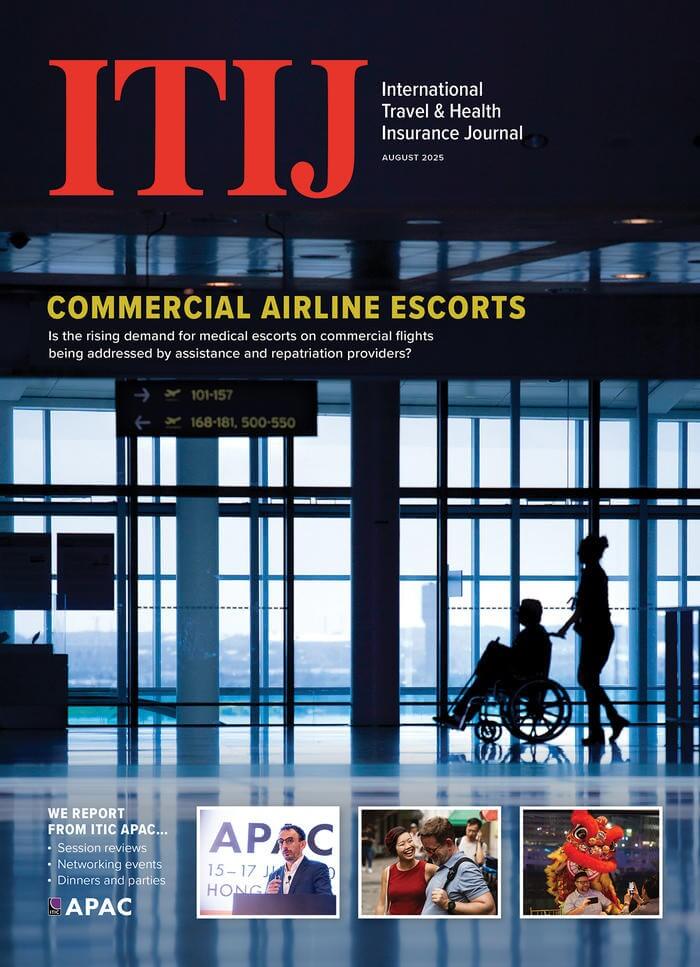
This month we look at the rising demand for medical escorts on commercial airlines, plus ask how the latest technology can help insurance companies. In our International Hospitals and Healthcare Review we examine humanising IPMI in the digital age, and ask what makes a destination desirable for medical tourism.
George Dagnall
George is a risk management expert specialising in conflict zones. With a background in security strategy, a decade of military service, and senior consultancy experience, he ensures comprehensive protection in high-risk environments.