
The alarming rise of mpox

ITIJ reviews the status of the mpox outbreak that continues to affect countries in Africa
Mpox is an illness caused by the monkeypox virus (MPXV). It is a viral infection which can spread between people, mainly through close contact, and occasionally from the environment to people via things and surfaces that have been touched by a person with mpox. In settings where the monkeypox virus is present among some wild animals, it can also be transmitted from infected animals to people who have contact with them.
The monkeypox virus was discovered in Denmark in 1958 in monkeys kept for research. The first reported human case of mpox was a nine-month-old boy in the Democratic Republic of the Congo (DRC) in 1970. Following the eradication of smallpox in 1980 and the end of smallpox vaccination worldwide, mpox steadily emerged in Central, East and West Africa. Since then, mpox has been reported sporadically in Central and East Africa (the clade I strain) and West Africa (clade II). In 2003, a clade II outbreak in the US was linked to imported wild animals. Since 2005, thousands of cases have been reported in DRC every year. In 2017, mpox re-emerged in Nigeria and continues to spread between people across the country and in travellers to other destinations.

In May 2022, an outbreak of mpox appeared suddenly and rapidly spread across Europe, the Americas and then the rest of the world. The global outbreak affected primarily (but not only) men who have sex with men and has spread person-to-person through sexual networks.
In August 2024, the Africa Centres for Disease Control and Prevention (Africa CDC) and the World Health Organization (WHO) declared mpox a public health emergency of continental security and a public health emergency of international concern, respectively
Also in 2022, outbreaks of mpox due to clade I occurred in refugee camps in Sudan. Since then, there has also been an upsurge in mpox cases and deaths in the DRC. In some areas of the country, a new offshoot of clade I, called clade Ib, has been spreading person-to-person. By mid-2024, the clade was also being reported in other countries.
Since November 2023, the DRC has been experiencing an mpox outbreak caused by MPXV clade I. In 2024, cases caused by MPXV clade I increased and spread to several other African countries.
In August 2024, the Africa Centres for Disease Control and Prevention (Africa CDC) and the World Health Organization (WHO) declared mpox a public health emergency of continental security and a public health emergency of international concern, respectively.
More than 120 countries reported mpox between January 2022 and August 2024, with over 100,000 laboratory-confirmed cases reported and over 220 deaths among the confirmed cases. Although most of the cases have been in African nations, Sweden, Pakistan and Thailand also reported cases in returning travellers.
To prevent the spread of mpox to others, people with mpox should isolate at home following guidance from their healthcare provider, or in hospital if needed, for the duration of the infectious period (from onset of symptoms until lesions have healed and scabs fallen off). Covering lesions and wearing a well-fitting mask when in the presence of others may help to prevent spread. Using condoms during sex will help reduce the risk of getting mpox but will not prevent spread from skin-to-skin or mouth-to-skin contact. If having sex, use condoms as a precaution for 12 weeks after recovering from mpox.
Taking a break from sexual activity with new partners during periods of increased transmission can reduce the risk of getting mpox. Those who have had contact with someone with mpox should monitor for signs and symptoms for 21 days and take precautions such as avoiding sexual activity during this period.
Health workers should follow infection prevention and control measures to protect themselves while caring for patients with mpox by wearing appropriate personal protective equipment (PPE; i.e. gloves, gown, eye protection and respirator) and adhering to protocol for safely swabbing lesions for diagnostic testing and handling sharp objects such as needles.
There are vaccines recommended by WHO for use against mpox. Many years of research have led to the development of newer and safer vaccines for smallpox, and some of these have been approved in various countries for use against mpox.
At present, WHO recommends use of MVA-BN or LC16 vaccines, or the ACAM2000 vaccine when the others are not available.
Only people who are at risk (for example, someone who has been a close contact of someone who has mpox, or someone who belongs to a group at high risk of exposure to mpox) should be considered for vaccination. Mass vaccination is not currently recommended. Travellers who may be at risk based on an individual risk assessment with their healthcare provider may wish to consider vaccination.
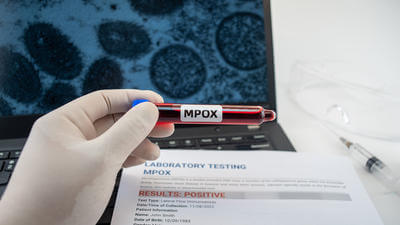
Risk of mpox is low for most travellers. This risk can be reduced by taking the following steps:
- Avoid contact (including sexual contact) with anyone who is unwell or has an unusual rash
- Wash hands often with soap and water or an alcohol-based hand sanitiser containing at least 60% alcohol. Keep your hands away from your eyes, nose, and mouth. If you touch your face, make sure your hands are clean
- Talk to sexual partners about their sexual and general health and ask if they have any symptoms
- Before you have sex, go to a party or event, check yourself for mpox symptoms, including rashes and blisters. If you have mpox symptoms, take a break from attending events or having sex until you’ve been assessed by a health professional
- It can take up to three weeks for symptoms to appear after having contact with someone with mpox, so stay alert for symptoms after you have skin-to-skin or sexual contact with someone new
- Everyone is encouraged to exchange contact details with sexual partners, to help stop further mpox spread when cases occur
- Avoid touching items such as bedding/clothing and do not share eating utensils/cups, food or drink with anyone who has symptoms or has mpox
- Avoid contact with animals, especially rodents
- Do not eat, cook or prepare any type of raw or wild meat (bushmeat) or any meat from unknown sources.
Aid workers and health professionals planning humanitarian work in countries with outbreaks or isolated mpox cases should seek advice and training from their employer/organisation before travel. Any organisation deploying UK-resident staff to areas affected by the mpox clade I virus, in response to the outbreak, should register with the UK Health Security Agency’s Returning Workers Scheme.
November 2024
Issue
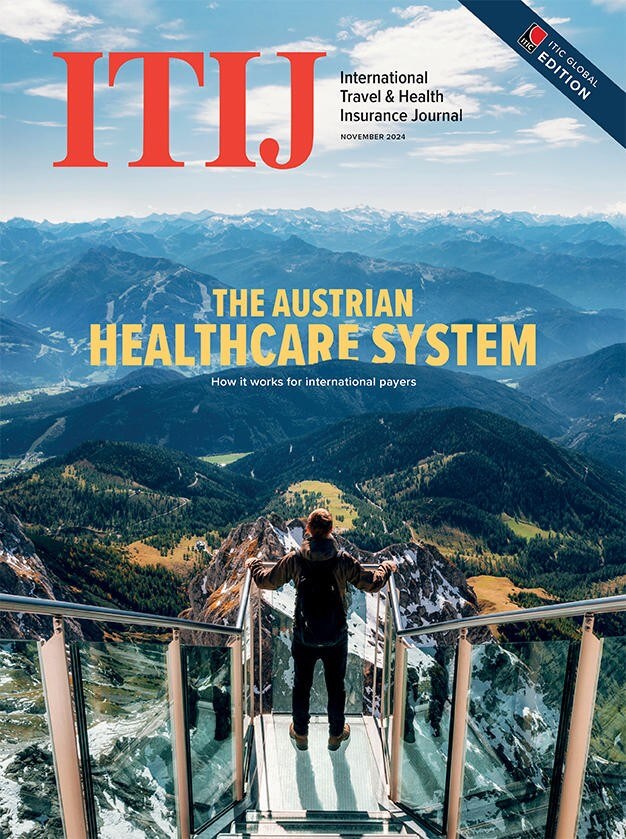
This month we look at affinity partnerships and ask if online travel agencies are the perfect partners for insurers; we cover the trends around cruising in the Mediterranean; we delve into the specifics of the Austrian healthcare system; plus we examine international healthcare and technology, asking how far can technology go.
Editorial Team
The Editorial Team updates the ITIJ website daily, and works on features for the print edition. With expert industry knowledge and years of experience in writing about complex travel insurance issues, the Editorial Team is ready to investigate and report on the topics that matter most to ITIJ's readers.