It takes more than an aircraft to move a patient

From patient assessment to final handover, experience brings every piece together. We’re equipped for the mission and accountable to the promise, says Brent Gateman, Chief Operating Officer at Branta Aeromedical
Moving a patient by air can sound deceptively simple: identify an aircraft, determine where the patient needs to go and arrange the flight. In reality, the aircraft is only one part of the mission.
The challenges
For a patient requiring critical care, international repatriation or specialised medical transportation, dozens of clinical, aviation and logistical decisions need to work together. The more complex the patient’s needs or the greater the distance, the more important experience becomes. It starts before anyone boards an aircraft.
The patient’s condition must be assessed to determine whether they are fit to fly, what level of care will be required, and which medical professionals and equipment should accompany them. The aircraft must be selected not only for range, but for cabin configuration, medical capabilities, airport access and the specific requirements of the patient. Then comes everything surrounding the flight.
Ground transportation may be required at both ends. Sending and receiving healthcare facilities need to coordinate. International missions can involve permits, customs, immigration, airport handlers and multiple jurisdictions. Weather, airport restrictions and changing patient conditions can alter a plan quickly.
This is why Branta Aeromedical approaches patient transportation as an integrated mission rather than simply a flight.
Our professional teams
Our teams bring medical care, aviation operations and logistics together to coordinate the journey from initial assessment through final patient handover. Depending on the mission, that can include ground ambulance transportation, critical-care personnel, specialised medical equipment, international flight planning and continuous communication with healthcare providers, assistance companies, insurers and families.
Aeromedical platforms
For complex missions, aircraft capability matters too. Through Sunwest Aviation, Branta has access to aeromedical platforms ranging from King Air aircraft suited to regional and remote operations to Learjet 45s and Challenger aircraft configured for longer-range criticalcare transportation. The Challenger platform provides the cabin space, range and medical infrastructure required for particularly demanding international and specialty missions. At Branta, we believe in having the best trained personnel, the best equipment and medications, but we also believe that if the aircraft does not have the space to allow the work to be done in the most efficient manner, it may all be for nothing.
But being equipped for the mission is only part of the responsibility.
When a patient needs to be moved, families, insurers, assistance companies and healthcare providers are already dealing with an incredibly stressful situation. They need more than reassurance. They need information they can trust.
Our experience
Experience means understanding what can realistically be delivered, anticipating complications and being transparent when circumstances affect the plan. It means resisting the temptation to promise what a client wants to hear simply to secure a mission.
At Branta, we believe a commitment should only be made when we have the people, aircraft, medical capabilities and operational plan to stand behind it.
And once we make that commitment, we hold ourselves accountable to it.
That means proactive communication, realistic expectations and experienced decision-making when weather, permits, logistics or a patient’s clinical condition changes. Because in aeromedical transportation, trust isn’t built by promising the world. It’s built by knowing what it takes to deliver and being clear about what is possible every step of the way.
Branta’s aeromedical roots extend back decades through Sunwest Aviation. Today, that experience supports worldwide patient transportation ranging from ambulatory and commercial medical escort services to adult and paediatric critical care, bariatric transportation, isolation requirements, international repatriations and complex specialty missions.
Because when someone’s health depends on the journey, experience is critical. We’re equipped for the mission and accountable to the promise.
About Branta Aeromedical
Branta provides worldwide critical care medical transportation, combining experienced medical crews with long-range aircraft equipped for complex missions. From bedside-to-bedside transfers to international repatriations, we deliver safe, compassionate care with the expertise, transparency and reliability patients and families depend on when experience is critical and every decision matters.
Brent Gateman
Chief Operating Officer, Branta Aeromedical
Brent is the Chief Operating Officer at Branta Aeromedical, a Sunwest company providing worldwide air ambulance and aeromedical transportation. With experience across aviation, patient transportation and complex international missions, Brent works with healthcare organisations, assistance companies, insurers and families to coordinate safe, responsive and clinically appropriate patient transportation around the world.
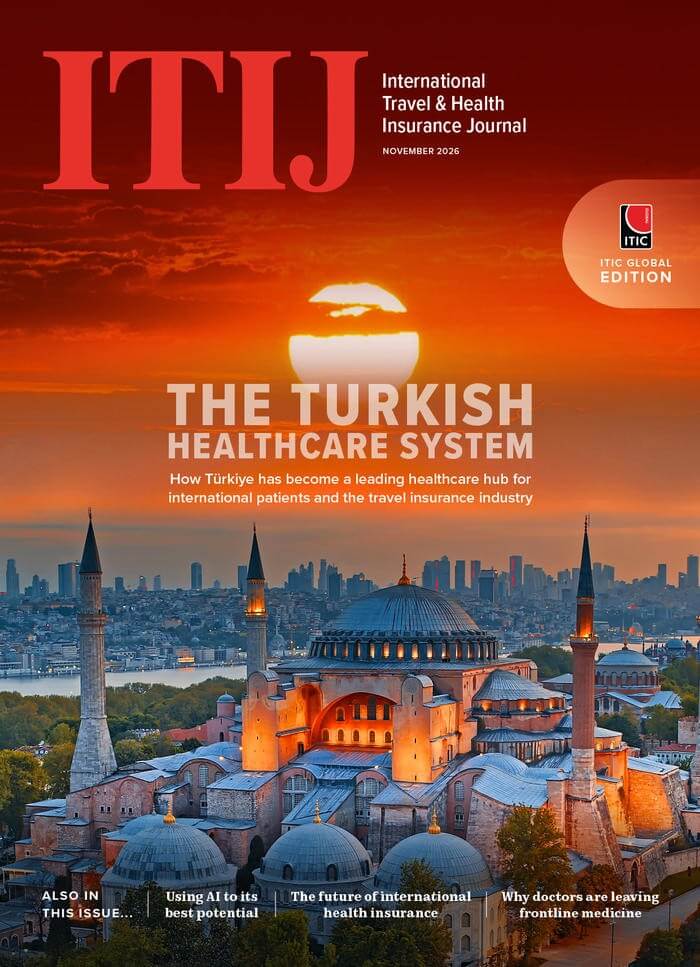
November 2026
Issue
In this, our biggest issue ever, our main focus is on artificial intelligence. After recent threats and warnings about the potential dangers of AI and calls for coordinated action to slow the technology's development, we speak to experts about the technology in a three-part special. We look at data-driven risk assessment, underwriting, and portfolio optimisation, which are all being transformed by AI, and ask what insurers and underwriters are doing to get the most out of the technology.
Editorial Team
The Editorial Team updates the ITIJ website daily, and works on features for the print edition. With expert industry knowledge and years of experience in writing about complex travel insurance issues, the Editorial Team is ready to investigate and report on the topics that matter most to ITIJ's readers.