
Industry Voice: Thailand’s growing popularity comes with growing insurance risks

Jess Strange, Chief Customer Officer for SCTI, tells ITIJ how Thailand is increasingly popular for Australia and New Zealand travellers, with the company seeing growth in policy sales and subsequent claims
Thailand remains one of the most popular international destinations for Southern Cross Travel Insurance (SCTI) customers from Australia and New Zealand. Its mix of affordability, accessibility, and high-quality tourism infrastructure continues to attract travellers in large numbers. But alongside this growth sits a clear and consistent insurance story: Thailand is also one of the most materially significant claims destinations for Australia and New Zealand.
Drawing on our claims data from 2023–25, alongside insights from the SCTI Future of Travel 2026 reports for Australia and New Zealand, several clear trends emerge around medical risk, traveller behaviour, and how quickly relatively minor incidents can escalate into high-cost claims when something goes wrong overseas.
Thailand is a fantastic destination. It offers incredible experiences and generally excellent private healthcare. But what our claims data shows very clearly is that it’s not a low-risk environment. Illness, injury, and disruption are common, and the financial consequences can be significant without the right protection in place.

Medical and evacuation claims
Medical and evacuation claims continue to represent the largest cost exposure for travellers to Thailand. Among Australian customers, SCTI recorded medical and evacuation claims in 2023 costing approximately NZ$493,000. In 2024, that increased to more than $1.2 million, before easing slightly to $704,000 in 2025.
The spike in 2024 was driven by a small number of severe cases, including a claim exceeding $360,000 involving pneumothorax, critical care, and air ambulance evacuation back to Australia.
These are precisely the kinds of situations travellers rarely anticipate. You may arrive healthy, but illness can strike suddenly and evacuation alone can cost more than most people earn in several years.
New Zealand travellers display a similar pattern. Medical and emergency claims increased from approximately $420,000 in 2023 to $664,000 in 2024, before moderating to around $527,000 in 2025. While the average claims remain relatively stable, SCTI continues to see a steady flow of high-severity claims exceeding $100,000, particularly where inpatient care is paired with repatriation or prolonged recovery.
Medical and emergency claims increased from approximately $420,000 in 2023 to $664,000 in 2024, before moderating to around $527,000 in 2025
Thailand consistently sits near the top of our claims league table for New Zealanders. It’s not because care is poor, it’s because care is private, and when something serious happens, the costs add up very quickly.
Gastrointestinal illness remains the most frequent reason New Zealand travellers claim in Thailand and elsewhere in Asia. SCTI data shows gastro-related illness, primarily from Thailand, Bali (Indonesia), and the Philippines, increasing sharply in the region, in both volume and cost, rising from approximately $1.6 million in 2023 to more than $3.4 million in 2025.
While most cases involve outpatient treatment or intravenous rehydration, costs often escalate due to flight disruptions, missed connections, and additional accommodation. Gastro sounds minor, but it’s one of our biggest cost drivers. If you’re dehydrated and unfit to fly, the medical bill is only the beginning.
Australian travellers are following a similar trajectory, with gastro claim costs specifically relating to Thailand climbing from around $56,000 in 2023 to more than $200,000 in 2025. These trends reinforce Thailand’s position as a hotspot for illness-related claims and align with SCTI’s broader regional experience in Southeast Asia.
Not-so-minor mishaps
Trips, slips, and falls are another significant contributor, particularly for New Zealand travellers. Wet tiles, boat transfers, and poorly lit stairways are recurring themes.
Most people think of these as minor mishaps, but we see fractures, head injuries, and cases where travellers simply can’t continue their journey as planned.
Moped and scooter use continues to generate a disproportionate share of high-severity claims. Among New Zealand travellers, SCTI paid more than $280,000 in moped-related claims in each of 2024 and 2025, with fractures and multi-day hospital admissions common outcomes. Australian claim volumes are lower, but severity remains high when surgery or evacuation is required.
Every year, we see travellers underestimate the risks of riding in unfamiliar traffic conditions and as a result we are seeing a worrying trend of travellers adopting a ‘she’ll be right’ attitude and choosing not to take out the additional moped cover.
Every year, we see travellers underestimate the risks of riding in unfamiliar traffic conditions and as a result we are seeing a worrying trend of travellers adopting a ‘she’ll be right’ attitude and choosing not to take out the additional moped cover
These events are often life-changing for the individual, and extremely costly without the right level of cover, which has resulted in a surge in GoFundMe pages to assist with hefty medical bills. It’s incredibly sad, and so easily avoided.
Medical events in Thailand also frequently trigger secondary claims for changes to journey, including flight rebooking, additional accommodation, and cancelled activities. These costs compound the overall financial impact well beyond the original medical treatment.

Affordable markets
Insights from the Future of Travel 2026 reports provide important context. In both Australia and New Zealand, 88% of travellers now say travel insurance is a priority for international trips. At the same time, cost-of-living pressures are influencing destination choice, with travellers gravitating toward affordable markets like Thailand.
There’s a tension we see very clearly. People are travelling to Thailand and other Asian destinations because they want value, but that doesn’t remove risk. In fact, it can increase if insurance is seen as optional.
Thailand’s popularity shows no sign of slowing down and policy sales for Australasian customers including Thailand have shown consistent growth over the last three years.
Thank goodness this is the case, and long may it continue. However, market surveys we conduct on a monthly basis suggest that there’s one cohort that is risking a great deal – and that’s younger travellers.
Market surveys we conduct on a monthly basis suggest that there’s one cohort that is risking a great deal – and that’s younger travellers
Our data shows that in general, nearly a quarter of all travellers under 24 years of age are choosing to forgo travel insurance of any kind. As an industry that’s something we all need to work on. It’s not about discouraging adventure, it’s simply being clear about the consequences of not having cover. And with Thailand a popular destination with young travellers, it’s critical we and other insurers continue to highlight the risks of travelling uninsured. A crowd-sourced funding campaign is not a health strategy!
Further to this, we know that 40% of Australians and New Zealanders say they are likely to use artificial intelligence (AI) to assist with planning or travel experiences, with younger travellers leading the charge. Gen Z and millennials say they already use AI to help their travel decisions. While this trend has huge potential to support travellers on their trips, AI shouldn’t replace basic due diligence and we remind travellers to always book through reputable platforms and double-check things like attraction opening hours and accommodation to ensure a smooth trip.
For us as an insurer, we’re not about discouraging travel; it’s about making sure travellers understand the realities and that they’re properly protected so they can focus on enjoying the journey.
Sample Thailand claims (all values in NZ$)
New Zealand:
An adult traveller with acute gastroenteritis and dehydration, requiring intravenous fluids and antibiotics for a bacterial infection. A teen family member subsequently came down with the same illness. Costs incurred for treatment and changes to journey: $8,364
An adult traveller started to feel ill with flu-like symptoms and was subsequently diagnosed and treated for dengue fever: $6,490
A young solo traveller’s moped accident resulted in a broken tibia and fibula. Treatment, family support, and Business Class upgrade to return to New Zealand: $44,765
The traveller’s hotel sink overflowed following a tap being accidentally knocked. Water damage was caused to multiple personal items: $3,023
A traveller injured themselves in New Zealand and subsequently was unable to take their planned trip. Support for changes to journey: $15,979
Australia:
An adult traveller suffered a fall, causing acute brain injury, including fracture at occipital bone. Three weeks of hospital care and treatment, and air ambulance return once fit to fly: $299,029
An adult traveller requiring care for a fractured hip – four weeks’ hospital care and escorted repatriation: $59,248
A couple hit gravel travelling on a moped, losing control. Both suffered injuries requiring treatment, and support for changes to journey: $3,266
A traveller suffering anaphylaxis resulting from an insect bite – SCTI paid a claim for treatment to the value of $9,399
An adult traveller suffering from severe stomach cramps, diarrhoea, nausea, and extreme fatigue, requiring an IV and changes to journey support: $4,364
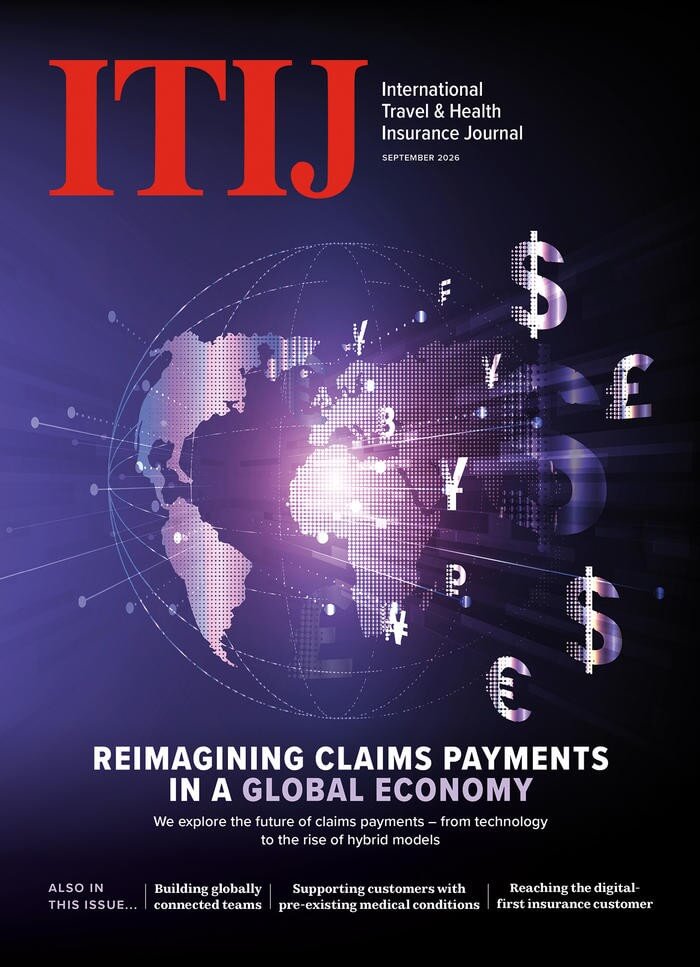
September 2026
Issue
This month we take a close look at claims payments. As these payments become increasingly global, organisations are evaluating traditional international transfers, cryptocurrency, and parametric payment models to balance speed, cost, compliance, and customer experience.
While traditional banking systems remain trusted for reliability and regulatory certainty, they often fail to meet growing expectations for instant payments. Industry leaders increasingly favour hybrid payment ecosystems, combining established banking networks with modern digital technologies to deliver flexible, efficient, and customer-centric payment solutions. We hope the insights from our experts give you food for thought.
Jess Strange
Jess is responsible for leading the organisation’s customer strategy and ensuring people are supported when it matters most. A member of SCTI’s executive team, she plays a key role in shaping how the business responds to customers across every stage of their travel journey.
With a strong focus on trust, clarity, and care, Jess brings together commercial leadership and customer advocacy to guide decision-making. Her work centres on delivering practical, human-centred outcomes while maintaining confidence and transparency for customers.