
Industry Voice: The role of brokers in North American travel insurance distribution

Scott Fleming, President of Aon Affinity Travel Practice, talks to ITIJ about the broker’s role, the insight they have on the industry, and how they help navigate the market
According to a recent report from Allied Market Research, the global personalised travel and experiences market is expected to reach US$447.3 billion by 2030, increasing at a compound annual growth rate of 17.8% from 2021 to 2030. The report also estimates that the cruise lines personalisation segment is estimated to witness the fastest growth of all service types, with a compound annual growth rate of 20.5% during the forecast period.
We see this trend playing out as our travel supplier clients unveil new itineraries and experiences – from a line-up of small, international group tours designed for Gen X travellers to a cruise tailored for families with young children, complete with a stop at a private island. This drive for customisation makes it an exciting moment to be a travel insurance broker. After all, brokers were built for this. They embraced customisation before it was a trend, and they don’t do one-size-fits-all.
The broker’s role
At their core, travel insurance brokers believe that a travel insurance programme should be tailored to align with a travel supplier’s audience, destinations, and experience. Tapping into insights, experience and resources, brokers guide travel suppliers in developing and implementing programs that optimise protection products and services for their customers.
However, like the travel industry itself, the role of the traditional travel insurance broker has evolved over time. Today, brokers often serve as an extension of a travel supplier’s team and act as trusted advisers focused on their changing priorities. That evolution defines the role brokers play in North American travel insurance distribution. Brokers are not middlemen. They help build the product, service, and delivery ecosystem clients need to drive continuous innovation and growth at scale.
At their core, travel insurance brokers believe that a travel insurance programme should be tailored to align with a travel supplier’s audience, destinations, and experience
North American travel suppliers see many advantages when they work with a travel insurance broker. But in today’s evolving travel landscape, four benefits have taken on even greater importance as suppliers look to design a travel protection programme that’s both relevant and adequate.
Brokers bring strategy
A responsive, valuable travel insurance programme must be rooted in strategy. That’s why travel insurance brokers work closely with travel suppliers to gain a deep understanding of their business goals and customer needs. At the same time, brokers bring a broader, unbiased perspective to the table, powered by scale and relationships with a range of carriers, service providers, industry leaders and more. With that foundation of internal and external intelligence, brokers shape strategies that address current and emerging challenges and opportunities. That approach helps enable a travel supplier’s travel insurance programme to respond to shifting market demands and stay in step with travellers’ ever-evolving expectations.

Brokers offer insight
The travel industry has seen its share of challenges in the 2020s. From the Covid-19 pandemic to an increase in extreme weather events to geopolitical risks, travel insurance brokers have been called upon time and again to help clients understand how these issues are impacting their customers and help ensure programmes are responding to their needs. Brokers can offer that unique insight because they foster holistic relationships, leverage data and analytics, and tap into deep knowledge of the markets and industries served to deliver travel protection solutions that help clients meet these challenges.
Beyond insight into policy design and evolution, brokers can also provide guidance and share best practices in another key area: consumer education. While there will always be customers who don’t read the fine print, proactive work to increase understanding can help reduce claim denials and increase consumer satisfaction.
Brokers offer choice and provide transparency
One size does not fit all. Working with a broker provides choices that simply do not exist with other types of business relationships. Brokers also understand that collaboration is at the heart of any successful travel protection programme. They can leverage data-based marketing, analytics, and merchandising experience, and provide reporting to travel suppliers, arming them with clarity and confidence to make better decisions to protect and grow their business. For a travel supplier, this ongoing honest, open, and collaborative approach can be vital in helping to improve the customer experience and optimise programme performance.
Beyond insight into policy design and evolution, brokers can also provide guidance and share best practices in another key area: consumer education
Brokers make travel insurance easier to optimise (especially with artificial intelligence)
Travel suppliers turn to travel insurance brokers for a win-win. They want a product that can be customised for their guest demographics, which benefits their customers, while also helping to meet the supplier’s own specific goals for their travel protection programme. Brokers can go beyond what a single product offers to help clients do just that. They can leverage negotiating power and help match travel suppliers with carriers that understand their customers’ travel protection concerns. And brokers can even plug and play products from multiple carriers not only to maximise the offering, but to create a programme that has the optimum pricing and benefit customisation. That leads to a more personalised programme that considers factors such as the type of travel supplier, customer segment, customer demographics, primary method of sale, single or multi-trip, destination, and other customer needs.
When you provide consumers with a complementary offering at the point of sale for their travel, it makes it easier for them to say yes to travel insurance. And that benefits everyone.

Final thoughts
Today, two powerful trends are converging that are reshaping how consumers approach travel – a growing appetite for custom experiences coupled with a rise in potential travel disrupters, from extreme weather to geopolitical issues. Against this backdrop, travel insurance brokers can be essential strategic partners, playing an essential role in helping North American travel suppliers navigate this complex and evolving market to create tailored travel protection programmes that meet the needs of passengers and the goals of the travel supplier.
Brokers are uniquely able to deliver the expansive product choice, speed, insights, and openness required to drive market performance.
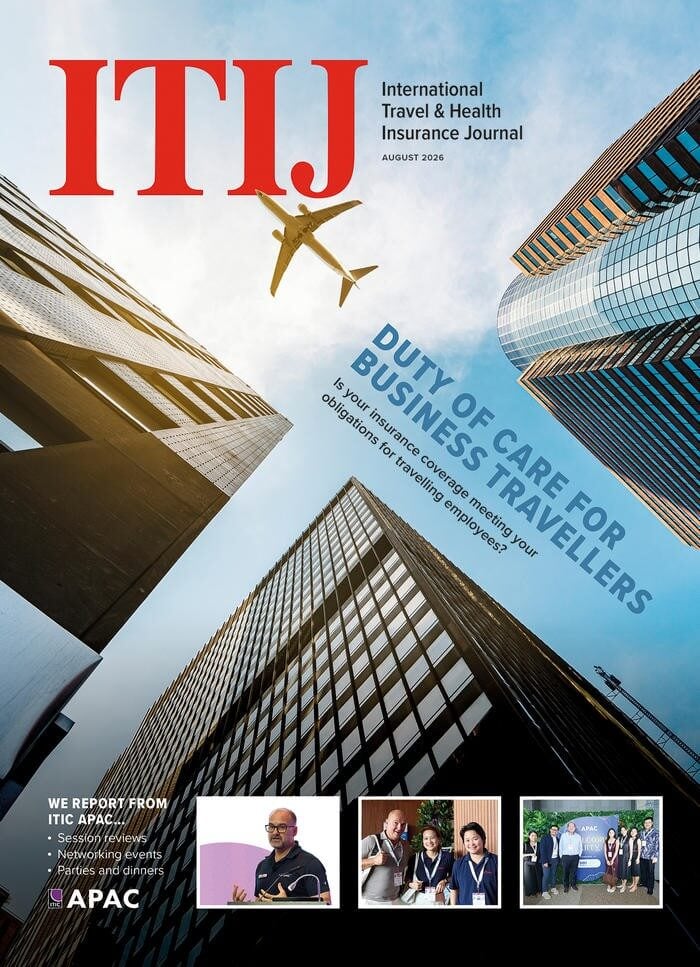
August 2026
Issue
This month we examine an issue important to many of us – the complexities of insuring business travellers. Employee travel exposes organisations to risks including medical emergencies, travel disruption, geopolitical instability and cyber threats. Adequate insurance coverage is more than a financial safeguard; it is a vital part of meeting an organisation’s duty of care obligations and responsibilities.
Scott Fleming
Scott leads customised travel protection programmes for some of the world’s most recognised travel companies. With more than 17 years of experience in the travel insurance industry, he has built a reputation for strengthening partnerships, guiding product strategy and driving growth across the industry.