
Industry Voice: Latest developments in travel risk management

It can be difficult to navigate the risks involved in business travel, but technology can help. Kate Fitzpatrick, Regional Security Director, EMEA at World Travel Protection, offers advice for employers on supporting their teams on the road
In the past some companies were perhaps a little blasé about business travel. But Covid-19, geopolitical conflicts and climate change – leading to an increase in natural disasters, such as wildfires, floods, hurricanes, and possibly even earthquakes – have changed all that. Most businesses are now aware that the global travel landscape is changing and of how quickly situations can develop.
Pre-trip education
New developments in travel risk management begin with improved preparation before travel. All employers have a duty of care to protect their employees from reasonably foreseeable risks. This includes providing education and information before they travel to prepare and protect them.
Pre-travel education should warn employees about potential risks in their destination countries, including health hazards, political instability, natural disasters and cultural sensitivities. Travellers should also be equipped with relevant information such as local contacts, transport options, safety guidelines and what to do in emergencies.
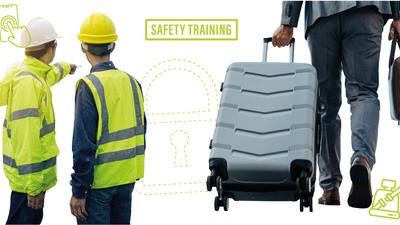
Technology means that information can be given to all your employees when preparing them for travel
Travel technology
Advanced travel risk technologies and travel assistance apps can help with day-to-day challenges as well as in emergencies. For customers who choose to share their trip information or location, they can access automatic push notifications, providing security and health risks tailored for them. Then, in the event of an incident, a customer can be identified and located immediately as potentially at risk, and contacted to ensure their safety. For example, we recently identified a group of leisure and corporate customers located near a significant earthquake. Because travellers were sharing their itineraries and could geolocate them, we could identify quickly who might be impacted. They were then personally contacted to ascertain their safety as well as checking to see if they required any assistance.
Travel technology
Advanced travel risk technologies and travel assistance apps can help with day-to-day challenges as well as in emergencies. For customers who choose to share their trip information or location, they can access automatic push notifications, providing security and health risks tailored for them. Then, in the event of an incident, a customer can be identified and located immediately as potentially at risk, and contacted to ensure their safety. For example, we recently identified a group of leisure and corporate customers located near a significant earthquake. Because travellers were sharing their itineraries and could geolocate them, we could identify quickly who might be impacted. They were then personally contacted to ascertain their safety as well as checking to see if they required any assistance.
24/7 global monitoring
Technology also plays a crucial role in identifying and understanding global threats. Travel risk managers can now monitor real-time events and incidents, and anticipate risks to travellers.
One of the latest developments at World Travel Protection is the Travel Assist App, which has a full interactive map for our users. They can see where events are happening in relation to their location and are also able to search anywhere in the world to view additional events and click on them for detailed information. The app also provides access to travel safety video guides to inform travellers on risks they may encounter and how best to manage them, including specific women’s travel and LGBTQ+ safety information. Local event feeds, powered with artificial intelligence (AI), provide instant delivery of news happening within the user’s defined radius. Targeted travel alerts can be sent to their smartphones of any emerging or endemic risks, for example sociopolitical unrest or natural disasters, directly in their travel path. Then, at the simple press of the ‘emergency’ button, travellers can reach our team immediately if they find themselves in imminent danger.
Preparation is key, but if you can’t locate or speak to your team on the ground when something goes wrong, you are in trouble. Organisations are now taking a proactive approach to ensuring the health and safety of their teams.
Improving compliance
One key challenge is communicating to teams the importance of using this technology. We have found there can be apathy from travellers, who perhaps feel that they do not need this level of support, as well as some expressing dislike about organisations knowing their location and feeling ‘under surveillance’. For those worried about the ‘surveillance’ aspect, the Travel Assist App allows the user to control their own appetite for location sharing through its privacy function, which places a traveller within a 5km radius of their location. By keeping it on, but masking their precise location, individuals can still be identified as potentially at risk if a situation occurs, while maintaining their privacy. Travellers can also control when they receive notifications depending on their appetite for risk, including a combination of the category and severity of and distance from an event.
What needs to be remembered is that each individual is unique and the amount of education and support needed will be different


Virtual care
While virtual care, or telehealth, has been around for decades, it spiked in use and popularity during the pandemic. This convenience and ability to receive medical care remotely play a supporting role in travel risk management.
Global telemedicine is a cost-effective solution that provides appropriate care for the individual. We see telemedicine as a complementary service that enables us to direct non-critical medical assistance to the service and this in turn allows our case managers and medical staff time to triage the cases that require more attention.
Another benefit is the enhanced access to healthcare and medical evacuation. Telemedicine means that remote workers can receive timely consultations, diagnosis and treatment, which reduces travel requirements and enables prompt medical attention. It is possible to reduce medical costs by minimising transport expenses incurred from frequent, non-emergency-related medical travel.
Traveller hesitancy
Ensuring the physical and mental health of employees on the road is the responsibility of every employer. Some people were concerned about returning to business travel following the pandemic. In fact, in our recent global survey, only one third (33 per cent) said they were happy to be travelling for work again. After many years of working from home, it is understandable that travel could be daunting for some, especially those who may have been promoted or changed roles during that time, and not experienced the pre-pandemic business travel world.
The world can also be a scary place. It is feeling particularly volatile and unpredictable at the moment, and it can be difficult to navigate the risks. Awareness around mental health has increased significantly, and another benefit for telehealth is the ability for travellers to always have someone to speak to if they need it.
What needs to be remembered is that each individual is unique and that the amount of education and support needed will be different, but it needs to be inclusive. LGBTQ+ and women travellers, for instance, may have to take additional precautions, especially if travelling to a country where their rights aren’t protected. Technology means that information can be given to all your employees when preparing them for travel, and they can decide for themselves what is relevant to them, and whether or not to travel to a specific destination.
World Travel Protection is at the forefront of utilising technology to enhance travel risk management. When it comes to the future, we will continue to invest heavily in technology to ensure we have a world-class product and service for clients to ensure their travelling teams feel safe and supported.
October 2023
Issue
In the October issue of ITIJ we examine the Nordic travel insurance market across Norway, Denmark, Sweden and Iceland, and look at the unique needs of the traveller. We investigate policies for students in the US, and ask if they provide sufficient medical cover and assistance. IPMI for remote workers in the oil and gas industry is vital – we look at opportunities and challenges facing insurers and telehealth providers. The Spanish healthcare system is among the best in the world – we hear from Spanish health insurers and hospital leaders about points of pride, areas for improvement and provider relationships.
Kate Fitzpatrick
Regional Security Director, EMEA | World Travel Protection
Kate has worked in global security for more than two decades. An expert in operations, intelligence, investigations and security risk management, she works closely with clients to identify potential travel risks and provide expert security advice and support.
