
Industry Voice: Hyper-personalised insurance: the pros and cons

Jonathan Frankham, General Manager, UK and Europe, at World Nomads, says algorithms are music to insurers’ ears when it comes to hyper-personalisation – but let the buyer beware
In the ever-evolving digital landscape, there’s a fervent discussion taking place across industries about the need to adopt hyper-personalisation. It feels like the starter pistol is already raised, and everyone is getting ready to sprint.
Hyper-personalisation means using data, artificial intelligence (AI), and machine learning (ML) to tailor products and services to the individual needs and preferences of each customer.
In insurance terms, customers get products that are uniquely suited to them, and insurers get more loyal customers. What’s not to like? But as with anything that seems too good to be true, hyper-personalisation comes with its own unique set of challenges and drawbacks, which are accentuated by the fact that AI technology is still in its infancy and remains relatively untested at scale on what remains a complex product (insurance).
The promise and perils of hyper-personalisation are woven together. The adoption strategy can (and almost certainly will) revolutionise customer experiences, while also raising the spectre of significant risks if rushed without proper consideration – particularly in lines of insurance like travel, where price often trumps policy quality, and customer knowledge remains somewhat limited.
The promise: why hyper-personalisation works
At its core, hyper-personalisation is about delivering a highly customised experience to the customer by using vast amounts of data to predict their needs and preferences. Traditional personalisation might involve addressing a customer by their name in an email, or, in the case of World Nomads, allowing them to tailor their policy by adding sports or activities, or insuring items such as tech or personal belongings.
Hyper-personalisation goes much deeper. It involves analysing real-time data from multiple sources, such as customer behaviour on a website, past purchase history, social media activity, and even wearable technology, to offer products and services that are incredibly relevant to the individual.
Think of Amazon, the standard-bearer in hyper-personalised e-commerce. It knows your purchase history (intimately) and collates the data of other customers with similar purchase histories to anticipate what other products or services you might be on the lookout for.
Enhanced customer experience
Imagine a scenario where your insurance provider knows not only your name and age, but also your travel habits, health status, and your preferred communication channels. By leveraging this information, insurers can offer products that are tailored specifically to your needs at the exact right time.
If you’re someone who frequently travels for work, for example, your insurer might suggest a travel insurance policy that offers coverage for lost luggage or missed flights. This level of personalisation can make customers feel valued and seen. That’s going to lead to higher satisfaction and loyalty.
Better risk management
Hyper-personalisation also touts the potential to improve risk management for insurers. By analysing detailed customer data, insurers can more accurately assess the risk associated with each policyholder. The result? More precise pricing, where low-risk customers are rewarded with lower premiums, and high-risk customers are charged appropriately. In theory, this creates a fairer system where everyone pays for the coverage they need.
For insurers, this can also help reduce claims costs and improve overall profitability. By identifying patterns in customer behaviour, insurers can take proactive measures to prevent fraudulent claims, reducing their exposure to financial loss.
So far, so good. Better customer experience, reduced costs – it’s all tangible upsides. However, while the benefits are clear, it’s not without its drawbacks – some of which can have serious implications for both consumers and insurers.
The risks of over-personalisation
At its core, hyper-personalisation is about delivering a highly customised experience to the customer by using vast amounts of data to predict their needs and preferences
One of the biggest risks of hyper-personalisation is that it can lead to over-personalisation, where the tailoring of products becomes so granular that it undermines the quality of coverage. This is particularly concerning in price-sensitive markets like travel insurance, where customers often prioritise cost over the specifics of coverage.
Travel insurance is often a grudge purchase. And so the onus is on the insurer to provide a seamless customer experience. Otherwise the customer will look elsewhere. But this also means that customers don’t always fully understand the product they are buying.
So, imagine a scenario where hyper-personalisation is used to offer a customer a cheaper travel insurance policy by reducing certain coverages that the algorithm deems unnecessary. The policy might lower the coverage limit for personal accident insurance from £250,000 to £50,000 or increase the excess from £50 to £250 to save the customer a few pounds on their premium. While this might seem like a good deal on the surface, it could leave the customer underinsured in the event of a serious accident or claim.
The issue here is that many consumers might not fully understand the implications of these changes. The difference between a £250 and £50 excess or between a £250,000 and £50,000 coverage limit might not be immediately clear, especially when the focus is on getting the lowest possible price. As a result, customers could end up with policies that don’t adequately protect them, leading to financial hardship in the event of a claim. It’s a similar issue faced through the proliferation of price aggregator sites where cost is king (rather than providing a suitable product for the traveller’s specific needs).
Ethical concerns and data privacy
Another significant peril of hyper-personalisation is the ethical concern surrounding data privacy. To offer highly personalised insurance products, insurers need access to vast amounts of personal data. This raises questions about how this data is collected, stored, and used. In an era where data breaches are becoming increasingly common, the more data insurers collect, the greater the risk of it being compromised.
Moreover, there are ethical concerns about how this data is used. This is the other side of the coin when it comes to better risk management. If all insurers use hyper-personalisation to offer lower premiums to low-risk customers, it will lead to higher premiums for those deemed high-risk. This will disproportionately affect vulnerable populations, creating a system where only the wealthy and healthy can afford adequate coverage.
Transparency is key here. Customers need to be fully informed about how their data is being used and should have the option to opt out of certain types of data collection. Insurers also need to ensure they are compliant with data protection regulations and are taking all necessary steps to safeguard customer information.
The commoditisation of insurance
There’s also the risk that hyper-personalisation could lead to the further commoditisation of insurance. If every aspect of a policy is personalised down to the smallest detail, insurance could become more of a transactional product than a protective service. Customers might begin to see insurance as just another commodity, choosing their provider based solely on price rather than the quality of coverage or the reputation of the insurer.
This commoditisation could ultimately undermine the trust that is essential in the insurance relationship. Insurance is meant to be a safety net. If hyper-personalisation reduces insurance to just another line item on a budget, it could erode the foundational trust the industry is supposed to be built upon.

Finding the balance: the future of hyper-personalisation in insurance
The key to realising the promise while avoiding the perils lies in finding the right balance. Insurers need to ensure that in using data and technology to offer personalised products, they are not sacrificing the quality of their coverage or the trust of their customers in the process.
This means being transparent about how policies are personalised and making sure customers fully understand the implications of any changes to their coverage. It also means ensuring that data is used ethically, and that privacy is prioritised. Insurers should also be careful not to over-rely on personalisation algorithms to the point where human judgement and empathy are lost.
Hyper-personalisation cannot be a one-size-fits-all solution. Insurers must be mindful of the risks and strive to create a balance between personalisation and protection.
Going back to my analogy about the starter pistol, I would say that rather than treat this like a 100-metre dash, the insurance sector would do well to consider this a marathon, where the ability to maintain a steady pace is key to thriving.
November 2024
Issue
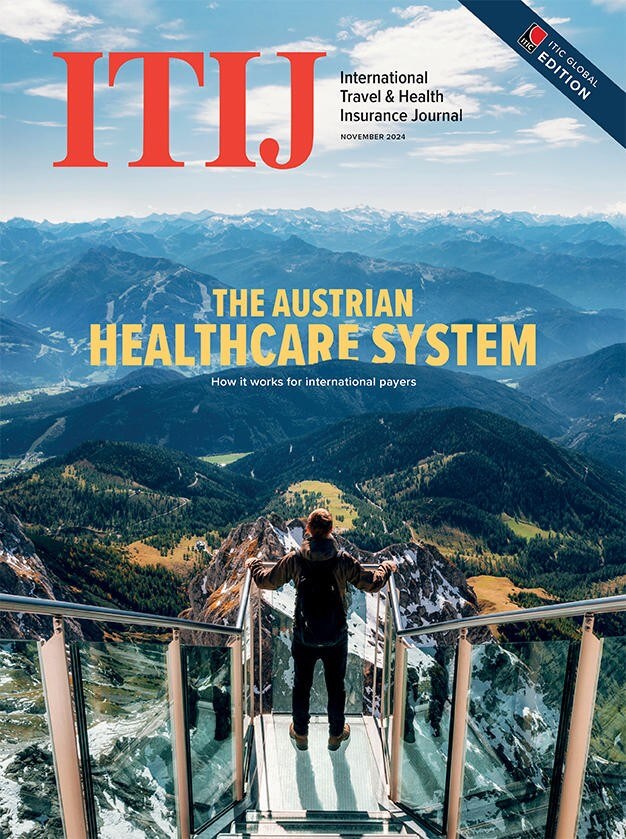
This month we look at affinity partnerships and ask if online travel agencies are the perfect partners for insurers; we cover the trends around cruising in the Mediterranean; we delve into the specifics of the Austrian healthcare system; plus we examine international healthcare and technology, asking how far can technology go.
Jonathan Frankham
Jonathan Frankham is an established senior executive with over 10 years’ experience in multinational organisations, including Big Four and FTSE 100 insurers. With a proven track record of delivering change and process improvement in challenging and fast-paced environments and leading cross-functional multi-location teams, Jonathan was a natural fit to take on the role of General Manager, UK and Europe, at nib Group in May 2022, having previously served as the group’s Divisional Financial Controller and Head of Internal Audit.