Industry Voice: addressing the healthcare workforce crisis: how AI is transforming the industry

Tyler Fletcher, Executive Vice President of Healthcare Data at GlobalData, shares his thoughts on AI’s potential to address the global healthcare workforce crisis by automating tasks, improving efficiency, and supporting workers
In a time of real crisis, new applications of artificial intelligence (AI) are emerging and bringing with them the potential to transform the workplace in multiple ways. For healthcare professionals, it is helping to turn the tide on a labour shortage that the World Health Organization (WHO) estimates will be equal to
11 million health workers by 2030.
At present, the shortage spans almost all roles in the workforce, including nursing professionals, general practitioners, healthcare assistants,
and home-based care workers, and more predominantly affects low- and lower-middle-income countries.
With careful implementation, clear communication and patience, AI could be the answer to closing the burgeoning labour gap that is limiting the provision of high-quality medical care around the world.
Burnout, tight budgets and growing demand
In recent years, a career in healthcare has become known for high workloads, long hours and various other challenges. As a result, the shortfall in workers is not just impacting the workforce’s ability to deliver healthcare to patients in need, but is also making retention more difficult as it increases the likelihood of burnout.
While salaries have largely remained at the same level, and the prospect of upskilling and job progression becomes more difficult with a lack of resources, healthcare workers in many countries are turning to other roles. Any new implementations of AI come with the usual challenge of having to fit into already tight budgets and are often met by low levels of trust from employees.
The future, however, is looking brighter, and there is promise that new advancements in AI are making a difference. With time, AI will go some way to addressing some of the issues facing healthcare workers by delivering valuable time savings for professionals, cost savings for organisations, and a greater employee experience.
Through careful implementation, AI’s ability to offer more accurate predictive models, sophisticated data analysis tools, and advanced systems for automating clinical and administrative tasks will provide crucial respite for workers.
AI has enormous potential to support in redesigning the prospect of a career in the healthcare sector, but organisations should be wary that they are likely to be met with scepticism. Many people will have justifiable concerns around the data being collected and utilised to train models, particularly if it is personal information, so organisations looking to implement these new applications should ensure that measures are in place to protect sensitive patient and staff data.
Where AI can help
AI is already being used by many to power ambient scribe tools that are deployed to record entire patient visits, create transcripts and draft the necessary clinical notes. Recently, Microsoft and Nuance collaborated on DAX, a tool that they found reduced the workload of medical professionals, with 57% reporting that they spent less time on clinical documentation while using the tool. This reduced workload can be crucial as medical professionals find themselves managing a high number of patients under time constraints.
Another popular use case for AI in medicine is in analysis of medical imagery. For example, AI-assisted computed tomography (CT) imaging has the potential to simplify and speed up diagnosis that uses CT imaging by automating it. By quickly spotting differences in organ features, AI can identify indications of disease and support fast diagnosis.
Any new implementations of AI come with the usual challenge of having to fit into already tight budgets and are often met by low levels of trust from employees
Without AI, analysing imagery with the human eye traditionally takes 30–40 minutes per scan, meaning the tools can greatly help radiologists and other clinicians accelerate the time taken to interpret images. Faster diagnoses in these instances will ultimately lead to improved patient outcomes and save valuable time for medical professionals as they seek to manage a high workload in times or staffing shortfalls.
Applications like this could trigger a shift in many practitioners focusing their time and work on preventative care. Naturally, combining the masses of available medical data with AI opens a world of new potential, and it is promising that AI is already successfully detecting changes to support treatment efforts.
AI for business performance
Within all healthcare organisations, budgets are decreasing and need to be managed more effectively than ever. AI tools can efficiently analyse and support business functions, identify avenues for cost reductions, and assist management teams with their efforts.
Access to data-led insights across businesses is proving a key factor in growth and performance. AI’s ability to optimise and simplify decision-making at board level and offer valuable insights in areas such as understanding profit margins is proving a valuable addition to the tech stack.
It can also prove valuable in improving the employee experience. Management teams now have access to tools that can highlight where individuals or teams are stretched, warning managers of the potential for burnout before it comes to fruition.

Careful implementation
For all its advantages, AI does come with risk. In time, it will assist with the much-needed reinvention of the healthcare workplace and empower workers to thrive.
First, though, many workers will have questions and concerns around potential job displacement, increased complexity of medical information and cases, and how they can take on the necessary new skills to manage new systems and applications while ensuring it doesn’t lead to diminishing clinical skills.
AI tools can efficiently analyse and support business functions, identify avenues for cost reductions, and assist management teams with their efforts
Carefully managing AI implementation while paying close attention to these concerns is crucial to its success. Organisations must make sure they are measuring the impact of these new technologies, gathering regular feedback, and ensuring that a high quality of care remains. With the right support, workers can utilise AI to achieve even more positive outcomes for patients.
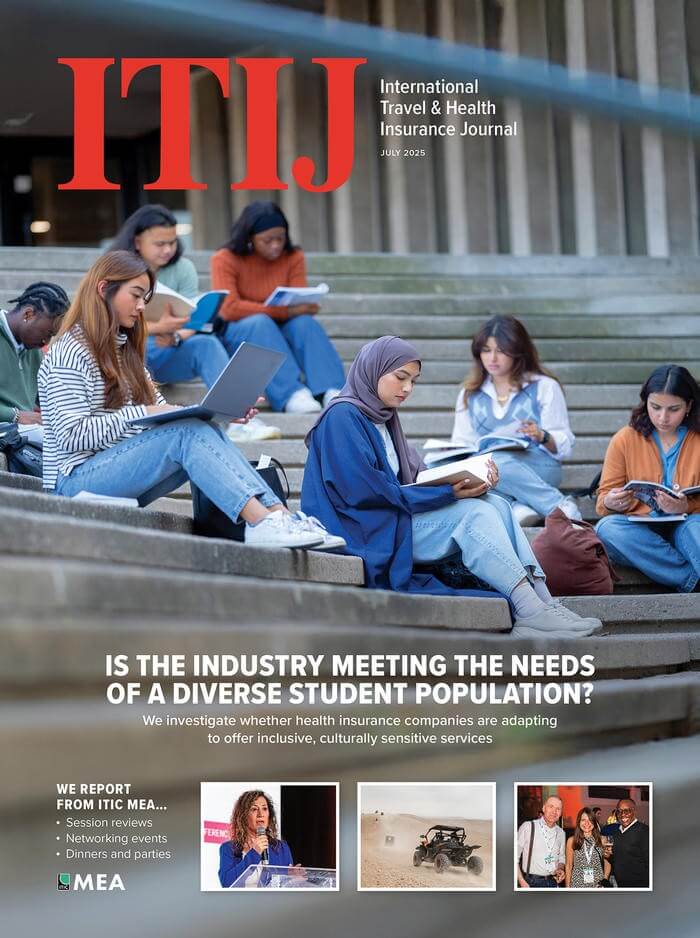
July 2025
Issue
In this issue we look at health insurance for international students, and ask if the industry is adapting to offer inclusive, culturally sensitive policies. We also examine the potentially lucrative world of bancassurance, plus we investigate wait times in the American hospital system.
Tyler Fletcher
Tyler is the Executive Vice President of Healthcare Data, Analytics and AI, M&A and Consulting at GlobalData. Before joining GlobalData, he spent nearly 10 years at Decision Resources Group, part of Clarivate, and is currently a Senior Adviser at TEAMFund. He has a proven track record of driving multi-million-dollar businesses through creating and executing short-term and long-term strategy plans, strong sales execution, cost management, M&A, people management, marketing and analytics-based decision-making.











February 2025
Issue
Offering readers a deep dive into the issues facing providers and payers of healthcare services around the world. Cost containment, international patient department development, the role of AI in healthcare delivery and more.