
Global travel predictions for 2026

Alysia Cameron-Davies explores the trends shaping the year ahead, from the impact of geopolitical tensions and climate change to the rise of solo travel, coolcations, and the demand for authentic, meaningful experiences
Moving into 2026, travellers remain eager to pack their suitcases, with younger generations helping to drive new travel patterns and preferences. Meanwhile, the global travel landscape is evolving against a backdrop of geopolitical uncertainty, rising costs, and climate pressures. These factors are increasingly influencing where people go and how they plan their trips, giving rise to trends like ‘coolcations’ and shoulder-season travel.
Where travellers went in 2025, and where they are heading in 2026
France continues to lead as the world’s most-visited destination, with Spain and the US close behind, and China, Italy, and Turkey also remaining popular. Japan has emerged as a breakout destination this year, experiencing a major surge in global interest and welcoming a record-breaking number of international visitors.
In line with this, Squaremouth’s sales data shows that for the last few years, the US, Mexico, Italy, France, Spain, and Canada have continued to be popular with American travellers. However, early data for 2026 shows the Bahamas entering the top five for the first time, suggesting a rising interest in Caribbean travel.
For Australian travellers, Dylan Wilkinson, Head of APAC and nib Travel Marketing, highlighted Bali and Japan as the two major winners. The ski season has been a particular draw for Japan, with around half of travellers adding snow-sports coverage to their insurance policies.
“As we look toward 2026,” he said, “we expect Japan’s momentum to continue, while keeping our eyes on emerging destinations where value, experience, and accessibility align and current travel trends based around sustainability and unique experiences continue to evolve and influence travellers’ behaviour.”
Panama remains the number one destination for expats, followed by Colombia
For adventure travellers, UK-based B Corp tour operator Wild Frontiers has identified 16 destinations expected to be especially popular in 2026. Its line-up includes: Kyrgyzstan, Iraq, Tanzania, South Korea, Egypt, Sri Lanka, Turkey, Japan, Oman, Chile, Argentina, Kashmir (India), Georgia, Saudi Arabia, Algeria, Pakistan, and Ecuador.
Top spots for expats
The expat community is now larger, more diverse, and more mobile than ever. According to the latest InterNations Expat Insider survey, Panama remains the number one destination for expats, followed by Colombia. The other countries that made it into the top 10 were Mexico, Thailand, Vietnam, China, the UAE, Indonesia, Spain, and Malaysia. These countries ranked highly due to their low costs of living, high levels of disposable income, and good quality of life.
Business travel makes a comeback
Over the past few years, business travel has gradually rebounded from pandemic lows, with professionals eager to reconnect face-to-face after long stretches of virtual meetings. The rise of ‘bleisure’ – blending work trips with leisure time – has also taken hold, becoming standard practice for many, especially younger workers who want to make the most of travel opportunities.
Tim Riley, Managing Director of True Traveller, believes the bleisure trend is here to stay, and expects business travel to keep growing, with 2026 marking a full return to pre-pandemic levels.
Going solo
In 2025, solo travel has also been on the up with more travellers embarking on lone adventures. Riley said his company was seeing strong demand from solo travellers booking everything from short breaks to full gap-year adventures.
Adam Schrader, Director of Operations at Riskline, highlighted popular destinations ranging from Bali, Thailand, India, and Japan to Italy, Portugal, Spain, Greece, Iceland, Ireland, Australia, and New Zealand. Top city choices in 2025 included New York, Vancouver, Sydney, Tokyo, Lisbon, and Berlin.
Riley said Japan was also surging in popularity with True Traveller customers, as were lesser-known Mediterranean destinations such as Albania. He noted: “There is a tendency for solos to travel slightly off the beaten track in safer countries where the infrastructure is good, such as Bali, Thailand, and Vietnam.”
The days of unchecked tourism growth are over for many hotspots that have reached breaking point

Overtourism: managing the masses
Concerns about overtourism have also made headlines in 2025, with residents in popular European destinations such as Barcelona, Venice, and Santorini taking to the streets to protest against mass tourism. Overcrowding, rising living costs, water shortages, and strain on local services have fuelled tensions, leading to tourists being met with unwelcoming slogans like ‘Tourists go home’.
Cruise ships have also become a particular pressure point, and while many of these destinations depend heavily on tourism, they’re struggling to cope with the sheer volume of visitors. Similar issues are being seen worldwide, and governments are now being forced to take action to address the issue.
To manage tourism sustainably and reduce pressure on local communities, many countries are introducing measures such as tourist taxes and restrictions on short-term rentals. Following its recent tourism boom, Japan, for example, has implemented visitor caps and new fees at popular sites while also encouraging travellers to explore lesser-visited regions. Randy Durband, CEO of the Global Sustainable Tourism Council (GSTC), predicts more countries will adopt such measures: “This shift could reshape global tourism by encouraging a balance between volume and value, prioritising long-term over short-term gains,” he said.
Wilkinson added that Spain, Greece, Italy, and France have all introduced similar initiatives and noted: “This marks a genuine shift in how destinations are thinking about tourism. It’s no longer just about attracting visitors; it’s about sustainable visitor management. The days of unchecked tourism growth are over for many hotspots that have reached breaking point.”
Growing awareness of the negative impacts of mass tourism is prompting some travellers to deliberately avoid overcrowded hotspots. Ernesto Suarez, CEO of Gigasure, said that many were now seeking authentic experiences in lesser-known destinations, often using social media platforms like TikTok and Instagram to uncover places that are “off the beaten track”.
“Destinations are watching and learning from each other,” Wilkinson said. “The future of travel will increasingly balance access with preservation, and savvy travellers will adapt by exploring emerging destinations, travelling off-peak, or embracing the regulations as part of responsible travel.”
Impact of geopolitical issues
The global picture is anything but straightforward, with issues including the ongoing wars in Ukraine and Gaza, escalating unrest in the Middle East and parts of Africa, and rising tensions in the US.
In 2026, travellers will continue navigating a complex landscape. Schrader explained that geopolitical instability could be difficult to predict, as sudden events can quickly affect the safety of a destination – for example, the recent violent protests in Indonesia and Nepal.
Some risks, however, unfold more slowly, gradually influencing travel patterns. “A good example might be tensions between European countries and Russia since 2014,” he said. “Now, more than a decade later, tourists may avoid places like Poland or the Baltic states due to the conflict in nearby Ukraine. This sort of change in travel patterns likely started slowly and accelerated after the outbreak of war in 2022.”
Perception of risk also matters, explained Schrader. For example, although Jordan is considered safe, its proximity to conflict has impacted tourism. Riley agreed, noting that tourism to Israel had been “decimated” since 7 October 2023, and Jordan had seen a decline too as a result. By contrast, ongoing border tensions between Cambodia and Thailand have had little noticeable effect on tourism, Schrader noted.
This year has also seen a drop in inbound travel to the US, believed to be driven in part by political tensions. Wilkinson said that nib Travel had noted a corresponding decrease in travel insurance policy purchases for the US compared with the same period last year. Suarez added: “It’s no secret that inbound travel to the US has seen a decline this year; however, we expect those numbers to climb back up again as Brits head across the pond to catch some of the 2026 World Cup action!” The US, Canada, and Mexico are hosting the FIFA World Cup 26 in June and July.
Destinations that offer stability, manageable climates, and strong infrastructure are increasingly attractive
Jackie Mondelli, Chief Marketing Officer at Squaremouth, said that while travel to the US might stabilise next year, ongoing geopolitical tensions and policy-related concerns could still influence traveller behaviour. However, she noted that rather than cancelling trips, many travellers are choosing to take out extended coverage to protect their plans.

Shoulder-season travel and coolcations
The increased frequency and intensity of extreme weather events is a stark reminder that climate change is no longer a distant threat. Summer in the northern hemisphere was marked by record-breaking heatwaves and wildfires that forced evacuations across Southern Europe, Canada, and parts of the US, while other regions faced droughts, flash floods, and hurricanes.
In response, travellers are increasingly factoring climate conditions into their plans – shifting to shoulder-season trips, seeking cooler ‘coolcation’ destinations in the Nordics, and prioritising holidays that are more sustainable and climate-conscious.
Commenting on the rising preference for shoulder-season travel, Wilkinson said: “Travellers are getting savvier, choosing spring and autumn to avoid extreme temperatures while still enjoying the European experience. It’s a practical response to climate reality that we expect will accelerate.
“The message is clear,” he continued, “travellers are actively weighing up risk and comfort when planning trips. Destinations that offer stability, manageable climates, and strong infrastructure are increasingly attractive, while regions facing ongoing instability or extreme weather patterns may see softened demand until conditions improve.”
Low-risk destinations
Considering geopolitical and climate issues, Schrader said that low-risk destinations in 2026 would continue to be those with long-standing, stable governments, robust infrastructure, and good services. According to Riskline, he said, those countries include: “China, Japan, Australia, New Zealand, and several countries in Southeast Asia. Much of Europe remains a safe destination, notwithstanding the ongoing war in Ukraine. North America and countries like Chile and Argentina in the south are also low risk.”
Cost of living crisis
Thinning household budgets are also starting to influence travel. In the US, this has led to the rise of “micro-cations”, explained Daniel Durazo, Director of External Communications at Allianz Partners USA. These short trips last between one and four days.
Riley said that, although the cost of living might become an issue in the future for UK travellers, he described Brits as being “incredibly resilient”, stressing that they will protect their main holiday at all costs – cutting back elsewhere during the year, travelling off-season, or hunting for better-value destinations so they can still get away.
Travellers seek authentic and meaningful experiences
Building on this, Mondelli explained that travellers were increasingly prioritising authenticity and memorable experiences, even if they come at a higher cost. “This means they’re more interested in value-driven travel offerings, off-the-beaten-path destinations, and culturally immersive experiences,” she stated.
Suarez and Wilkinson agreed, observing that younger travellers, in particular, were driving this shift. Wilkinson said that travellers, especially millennials and Gen Z, were “moving well beyond checklist tourism. They’re seeking cultural immersion, sustainability, and genuine connection with the places they visit,” he explained. “Social media has played a role here, exposing people to diverse cultures and creating an appetite for experiences that go deeper than the typical tourist trail.” He expects this trend to strengthen further in 2026, with destinations that succeed being those that “lean into authenticity, showcasing immersive cultural experiences, forging meaningful partnerships with local communities, and prioritising eco-friendly tourism”.
Travellers are also prioritising more intentional experiences, often blending business and leisure travel and focusing on wellness, cultural events, and unique activities, added Durazo. He predicted this would continue, alongside the rise in luxury travel led by Gen Z and millennials, which will create new opportunities for more premium, personalised travel offerings.
Suarez drew on social media’s role in fuelling a rising trend known as ‘set-jetting’ – where travellers visit destinations featured in their favourite films or TV shows – while also observing that many of today’s travellers prioritise quality of trips over quantity, and therefore opt for fewer but longer and more meaningful trips.
Finally, Durband emphasised that travellers “define authenticity in different ways” and highlighted a key challenge going forward: “finding a balance between meeting visitor expectations and preserving the essence of the place and the community that calls it home”.
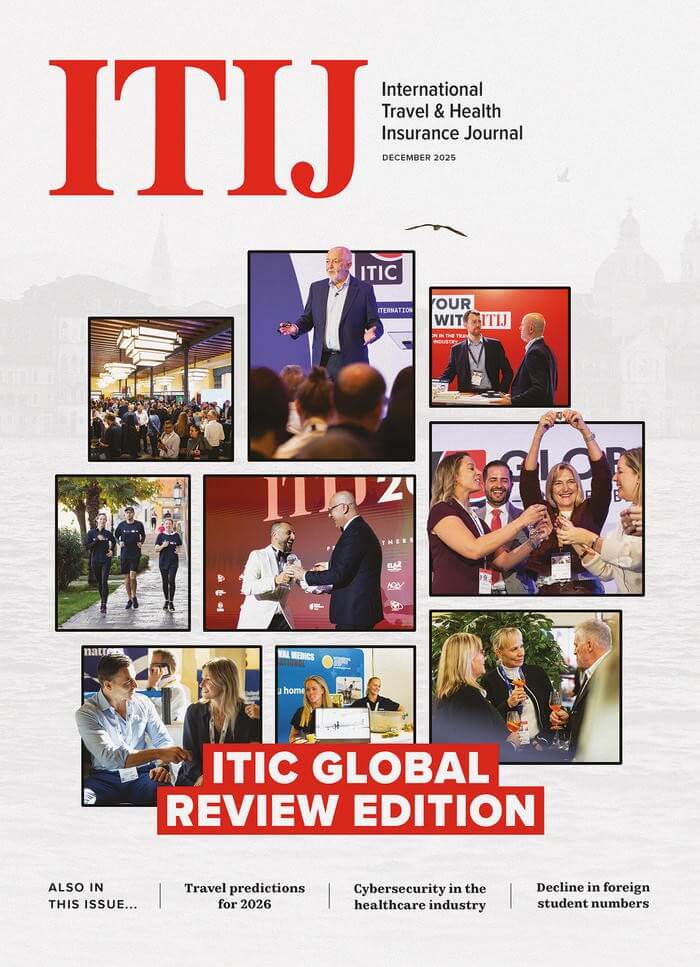
December 2025
Issue
In this issue of ITIJ we examine breaches of cyber security in the healthcare sector and ask what can be done to prevent them, share travel predictions, including risks and hotspots, for 2026, and look at the global implications of changes in international student travel.
Alysia Cameron-Davies
Alysia is a copy writer for Voyageur Publishing.