
Europe’s climate extremes: redefining travel and insurance risk

The World Meteorological Organization explores climate change in Europe and the risks posed to travellers
Europe is warming faster than any other region, a trend consistently documented by both the World Meteorological Organization (WMO) and the European Union’s Copernicus Climate Change Service (C3S). According to the annual European State of the Climate report, average temperatures across Europe are increasing at roughly twice the global average, positioning the region as a climate change hotspot.1
This accelerated warming reflects both rising global greenhouse gas concentrations and regional climate dynamics. Changes in atmospheric circulation are favouring more frequent and intense summer heatwaves. At the same time, declining aerosol pollution allows more solar radiation to reach the surface. Parts of Europe also extend into the Arctic, which is the fastest-warming region on Earth.
The past decade has demonstrated the consequences of this rapid warming. The European State of the Climate Report highlights a succession of record-breaking heatwaves alongside unprecedented flooding, longer and more destructive wildfire seasons, and growing variability in winter conditions.
Recent summers have repeatedly ranked among the hottest on record, while winters have shown sharp contrasts, with episodes of extreme cold occurring alongside prolonged periods of unseasonable warmth. Extreme weather events are becoming not only more common, but also more intense and more disruptive. Heatwaves now affect larger areas for longer durations, placing severe strain on public health systems, ecosystems, and economic sectors. Meanwhile, extreme precipitation events have intensified, triggering major river, flash, and urban floods.
Europe is also increasingly experiencing extremes that interact and reinforce one another. Heatwaves often coincide with drought and wildfire outbreaks, while severe storms with heavy rain can overwhelm river catchments and drainage systems, triggering widespread and prolonged flooding. These compound events amplify disruption and reduce the time available for effective response.
For the travel and insurance sector, these are not abstract climate signals. They translate into operational volatility, shifting seasonality, evolving medical exposure and increasing claims complexity. Europe’s changing climate is steadily reshaping the baseline conditions under which the industry operates.
Public warning systems and pre-emptive actions are critical for protecting the lives and livelihoods of both locals and tourists. For example, despite the Swiss village of Blatten being completely destroyed when the Birch Glacier collapsed due to destabilisation from climate change in May 2025, its 300 residents had already been evacuated by the local authorities.
In addition, new public–private partnerships are emerging to help businesses anticipate and adapt to evolving climate risks. In Switzerland, for example, the Snow Compass initiative brings together meteorological and scientific institutions with tourism authorities and ski resort operators to develop climate-informed planning tools that help resorts assess future snow conditions and guide infrastructure investment and tourism diversification strategies.
Heat extremes and heat-health stress shaping future travel
Extreme heat has become one of the most consequential climate-related risk drivers affecting international travel, insurance, and medical assistance operations. Heatwaves are now the leading cause of weather-related deaths in Europe, surpassing floods and storms, and their impacts extend far beyond discomfort or temporary disruption to travel itineraries. For travellers, tour operators, and assistance providers alike, extreme heat is increasingly shaping destination safety profiles, medical exposure, and operational resilience.
Across most of Europe, heatwaves are becoming more frequent, more intense, and longer lasting, with temperatures regularly exceeding historical thresholds. These extremes place travellers at heightened risk of dehydration, heat exhaustion, cardiovascular stress, and the exacerbation of chronic illness, particularly among older travellers, children, and those with pre-existing conditions. Demand for medical assistance rises sharply during heat events, placing strain on local health systems during peak tourism inflows.
Festivals, sporting competitions, and outdoor cultural activities have faced repeated disruption as authorities impose restrictions, adjust schedules, or cancel activities to reduce prolonged heat exposure
Heat stress is also reshaping the planning and safety of summer events and mass gatherings. Festivals, sporting competitions, and outdoor cultural activities have faced repeated disruption as authorities impose restrictions, adjust schedules, or cancel activities to reduce prolonged heat exposure. This introduces new uncertainty around duty of care, liability, and emergency preparedness for organisers, insurers, and assistance providers.
Heat risk frequently compounds with wildfire danger. In recent summers, parts of Southern Europe have required localised evacuations of residents and visitors as extreme heat and fire conditions converged, triggering relocation, emergency accommodation, and transport disruption. Even geographically limited fires have led to broader cancellations and insurance claims as risk perception spreads across destination regions.
Periods of intense heat are also more often followed by prolonged dry spells and sudden convective storms, increasing exposure for outdoor and adventure tourism while complicating contingency planning for operators and assistance providers. The accelerating pace of transition between extremes is becoming operationally significant.
Local fires, systemic consequences
Fire seasons are starting earlier, lasting longer, and burning with greater intensity, driven by extreme heat, drought, and strong winds. Wildfires have become one of the most operationally disruptive climate hazards affecting travel, particularly across Mediterranean Europe and coastal and island destinations.
Direct impacts include hotel evacuations, road closures, ferry and flight disruptions, and emergency accommodation logistics for displaced tourists. Wildfires on Greek islands such as Rhodes and Chios in recent summers required the evacuation of thousands of visitors, transport shutdowns, and extensive coordination between local authorities, tour operators, and assistance providers. These events underscored the logistical challenges of managing tourist flows in geographically constrained island environments.
Wildfires have become one of the most operationally disruptive climate hazards affecting travel, particularly across Mediterranean Europe and coastal and island destinations
However, the most significant challenge for travel risk management lies in the non-linear nature of wildfire disruption. Localised fires can generate widespread consequences through smoke dispersion, degraded air quality, and cascading transport impacts. Smoke can travel hundreds of kilometres, triggering respiratory distress, increasing medical claims, and forcing flight diversions or cancellations even in destinations far from the flames.
Exposure to fine particulate matter aggravates asthma, chronic respiratory disease, and cardiovascular conditions, particularly among vulnerable travellers. For insurers and assistance providers, this translates into higher volumes of medical consultations, hospital referrals, and evacuation requests during peak fire periods.

Expanding infectious disease exposure
Extreme heat also carries longer-term public health implications. Rising temperatures are contributing to the expansion of vector-borne diseases across Europe. Higher temperatures have enabled disease-carrying mosquitoes, sandflies, and ticks to expand their distribution further north and to higher altitudes. Locally transmitted outbreaks of dengue, chikungunya, West Nile fever and even malaria have occurred in Southern and Southeastern Europe in recent years. Several European countries have reported that ticks carrying Lyme borreliosis and tick-borne encephalitis are migrating northwards and into previously unaffected elevation zones.
Warmer climatic conditions allow insect species to survive and reproduce in areas previously considered low risk, altering Europe’s epidemiological landscape. For travellers, this represents a gradual but material shift in health exposure profiles. The implications extend to pre-travel medical advice, vaccination guidance, underwriting practices, and in-destination medical response.
For the travel and insurance sector, infectious disease exposure linked to climate change is less visible than heatwaves or wildfires, but potentially more structural. It introduces a sustained evolution in baseline risk, requiring updated health communication, revised actuarial assumptions, and closer integration between climate monitoring and medical assistance planning.
Flooding and escalating travel disruption
In recent decades, there has been an increase in average rainfall, particularly over Northern, Western, Central, and Eastern Europe.
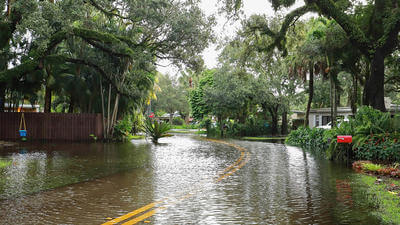
In 2024, the region experienced the most widespread flooding in a decade, with approximately a third of the continent’s river systems experiencing high flood levels. A prolonged period of intense rainfall affected Spain’s Mediterranean and adjacent provinces. The combined rainfall and river flooding led to devastating impacts in the province of Valencia, where at least 232 people lost their lives. Infrastructure damage and economic losses were severe, totalling around €16.5 billion. Similar disasters have occurred elsewhere in Europe as well, for example in 2021 in Belgium, Germany, and the Netherlands, when over 200 lives were lost, thousands of homes were damaged, and water and electricity supplies disrupted. Extreme precipitation and flooding are projected to increase in all regions of Europe in the future.
Heavier rainfall events are increasing the risk of flash floods, particularly in urban areas and along major transport corridors. Travellers may be affected through rail and road disruptions, flooded airports and metro systems, and temporary loss of accommodation and essential services. Even short-duration rainfall events can result in prolonged travel disruption, missed connections, and unplanned extended stays, with knock-on effects for assistance services and claims management.
Winter tourism: snow scarcity and severity in a warming Europe
If summers are intensifying, winters are destabilising.
The Intergovernmental Panel on Climate Change (IPCC) Sixth Assessment Report (AR6)2,3 concludes with high confidence that warming has shortened snow seasons and reduced snow cover duration across many European mountain regions. Rising temperatures are shifting marginal precipitation from snow to rain, particularly at lower and mid-elevations. Even with snowmaking, a growing share of ski resorts faces structural snow-supply risk.4
The implications extend beyond individual resorts. Analysis of 93 past and potential Winter Olympics host locations shows the pool of climatically reliable venues is shrinking. Under mid-century (2050s) warming scenarios, only around 52 historic hosts may remain suitable without extensive artificial snow production, declining to 46 by the 2080s.5 The reliance on engineered snow at events such as the Milano Cortina 2026 Winter Olympics illustrates how even flagship destinations must actively manage winter conditions rather than assume them.
For insurers, declining snow reliability increases exposure where contracts depend on minimum snow thresholds or guaranteed season start dates. Reinsurers report broader shifts in weather-related loss patterns. Swiss Re notes that winter storms remain a major driver of insured losses, with climate change increasing the frequency and severity of events and requiring reassessment of risk models and pricing.6 Munich Re similarly reports a rise in weather-related natural disasters in recent decades.7
Recent seasons have also highlighted elevated avalanche risk across the Alps, Europe’s primary winter tourism corridor
For operators, this translates into compressed and less reliable seasons. December openings have been delayed and early-season snow cover insufficient across parts of Switzerland, Austria, and France, narrowing revenue windows. Warm early-season conditions have left slopes snowless in some areas, delayed lift operations, and increased reliance on artificial snow to sustain peak holiday demand.
Recent seasons have also highlighted elevated avalanche risk across the Alps, Europe’s primary winter tourism corridor. According to the European Avalanche Warning Services, at least 99 people died in avalanche incidents across Europe between October 2025 and February 2026, including 28 fatalities in the French Alps, compared with an average of around eight at the same point in the season.
While direct attribution to climate change remains complex, more variable snowfall patterns, fluctuating rain–snow lines and freeze–thaw cycles are contributing to unstable mountain conditions. For winter tourism economies, this increases safety exposure for backcountry travel and demand for rescue and assistance operations.
There are complex and evolving links between Arctic change and mid-latitude winter variability, reinforcing that warming does not eliminate severe cold or heavy snowfall events. In January 2026, temperatures in parts of Lapland fell to nearly −40°C, disrupting operations at key tourism gateways, including Rovaniemi and Kittilä, and leaving thousands of travellers stranded after flight cancellations.
From a travel risk perspective, winter exposure is therefore increasingly bifurcated: chronic warming undermines snow reliability, while episodic cold extremes and storms generate concentrated disruption costs. Managing winter travel risk now requires preparedness for both scarcity and severity – often within weeks of
each other.
Managing risk through weather and climate intelligence
Given these increasing climate-related risks to the travel and insurance market, a structural shift from reactive crisis response to anticipatory risk management is needed, in terms of both preparedness and pricing.
As climate hazards intensify, protecting traveller health will increasingly depend on public early warning systems
Advances in forecasting now enable earlier and more targeted preparation, from seasonal outlooks informing underwriting and capacity planning to short-range impact warnings supporting pre-emptive operational decisions. Integrating climate intelligence into planning frameworks allows insurers, assistance providers, and travel operators to reduce disruption, mobilise response more efficiently, and manage exposure more proactively.
The interaction of climate and health risks highlights the need for close public–private engagement with extreme heat, wildfire exposure, and the spread of vector-borne diseases collectively underscoring the importance of anticipatory, climate-informed decision-making across the travel ecosystem.
As climate hazards intensify, protecting traveller health will increasingly depend on public early warning systems, collaboration between climate and public health experts, heat and air-quality alerts, clear risk communication, and close coordination between sectors.
As the United Nations’ authoritative body on weather, climate, and water, the WMO plays a central role in translating meteorological, climate, and hydrological science into actionable intelligence for real-world decision-making. Working with the National Meteorological and Hydrological Services (NMHSs) across Europe, WMO supports:
- Early warning systems for heat, floods, and storms
- Impact-based forecasts focused on real-world consequences rather than meteorological
- variables alone
- The Extreme Heat Risk Governance Framework and Toolkit
- Fire danger forecasting and evacuation planning
- Climate monitoring and risk assessment aligned with IPCC and Copernicus data.
These capabilities are increasingly supported by modern alert dissemination systems that enable coordination across countries and sectors. At the global level, the Common Alerting Protocol (CAP), promoted by WMO and its partners, provides a standardised format for sharing hazard warnings across multiple platforms and national systems. In Europe, warnings issued by 41 European NMHSs are aggregated through the MeteoAlarm platform, which provides harmonised, colour-coded alerts across much of
the continent, enabling consistent communication across languages and helping ensure that early warnings reach travellers, authorities, and businesses quickly and clearly, supporting timely risk awareness and early action.
For the travel and insurance sectors, these services enable:
- More effective pre-travel risk communication
- Improved crisis preparedness and coordination
- Better alignment between climate risk data and actuarial modelling
- Integration of climate services into operational risk management.
All of these public services, as well as tailored B2C and B2B weather and climate decision support, rely on the global public infrastructure that WMO coordinates. While advances in AI forecasting, data processing, visualisation, and communication offer significant improvements in the timeliness and targeting of information services, they rely on data as a global public good.
As WMO Secretary-General Celeste Saulo said recently: “Every forecast, every risk model, every insurance decision, every supply chain adjustment, every climate-related investment depends on a shared global backbone: observations, data exchange, and standards coordinated across borders, politics, and markets.” But this global system is increasingly fragile, requiring public and private investment.
Article written by Sari Lappi, Daniel Kull, Narelle van der Wel, Petra Hongell, Emma (Bing) Liu, Wilfran Moufouma Okia, and Alejandro Saez Reale.
April 2026
Issue
Across Europe, demand for ground ambulance services is rising, while capacity, workforce availability, regulatory limits and inflationary cost pressures intensify. We look at the evolving landscape, highlight major market stress points, and assess how stakeholders are responding. We also have anassessment of the latest regulations in different jurisdictions that are hindering insurance development and growth. We cover the most important regulatory frictions across major and emerging jurisdictions, explain how they impede growth, and propose actionable mitigations for industry stakeholders.
Editorial Team
The Editorial Team updates the ITIJ website daily, and works on features for the print edition. With expert industry knowledge and years of experience in writing about complex travel insurance issues, the Editorial Team is ready to investigate and report on the topics that matter most to ITIJ's readers.