
Early repatriation of preterm infants born abroad

A Veldman, A Ressler, and G Setz from Unicair share insights on balancing family-centred care and clinical risk
The birth of a preterm baby far from home is a distressing experience for families. Beyond the medical concerns, parents suddenly find themselves navigating an unfamiliar healthcare system, often in a foreign language and culture.
Separation from family, friends, and established support networks compounds an already traumatic situation. For mothers in particular, feelings of isolation and helplessness may be intensified by restrictions on visiting hours, limited opportunities for skin-to-skin contact, and differences in neonatal care practices.
These challenges can significantly affect parental wellbeing and the bonding process, creating a strong argument for early neonatal repatriation whenever clinically feasible.
The risks
Against these important psychosocial considerations stands the well-recognised risk associated with the transport of very preterm infants. Evidence consistently shows that neonatal transport during the first days of life is associated with less favourable outcomes than birth and ongoing care within a tertiary neonatal centre.
Large population-based studies have demonstrated increased risks of severe brain injury and adverse outcomes among extremely preterm infants transferred within the first 48 hours after birth. Similarly, transport during the first 72 hours of life has been associated with a higher incidence of severe intraventricular haemorrhage, particularly in the most immature infants.
Therefore, transfer should occur before birth rather than after delivery if possible.
However, that much of the available evidence relates to infants born outside tertiary centres and requiring urgent postnatal transfer, introducing an element of selection bias towards less stable patients.
Additional findings
In contrast, the available literature regarding transport after the neonatal transition and stabilisation period is considerably more reassuring. Studies examining clinically stable premature infants transferred between tertiary and lower-acuity neonatal units have generally reported minimal physiological disturbance and no significant increase in short-term morbidity when transfers are conducted by experienced neonatal transport teams. Similar findings have been reported in specialised interhospital transfers involving vulnerable neonatal populations, suggesting that transport itself may not represent a major risk once an infant has achieved sufficient physiological stability.
Despite this, relatively little evidence is available to guide decision-making regarding the optimal timing of long-range repatriation after the first week of life. Consequently, many neonatal transfers are realised relatively late in the infant’s hospitalisation, often not before a corrected postmenstrual age close to term. The result is that many families remain separated from their normal support structures for weeks or months. Parents may face emotional, logistical and financial burdens, which are rarely captured in traditional neonatal outcome measures.
Safe transports
Unicair transported 50 preterm infants back to their home countries during the past 22 months. The age at transfer, stratified by postmenstrual age at birth, is shown in figure 1. To date, no major transport-related complications have been observed. Apart from occasional increases in oxygen requirements during flight, all transports were completed safely.
Several transfers enabled mothers to hold or feed their baby for the first time, highlighting the potential role of early repatriation in supporting family-centred neonatal care.
Our experience suggests that repatriation after the first week of life can be both feasible and safe, when undertaken by specialised neonatal transport teams. While long-term neurodevelopmental outcomes remain an important area for future research, earlier transfers may offer substantial benefits for parental wellbeing, maternal mental health, and family integration. As neonatal transport capabilities continue to evolve, the balance between clinical safety and family-centred care deserves renewed consideration.
About Unicair
Unicair is one of Europe’s leading air ambulance providers, operating a fleet of seven mid- and long-range jets in global aeromedical transfers as well as offering medical escorts on commercial airlines. With a strong focus on medical excellence and innovation, Unicair is transporting more than 1,000 patients annually worldwide.
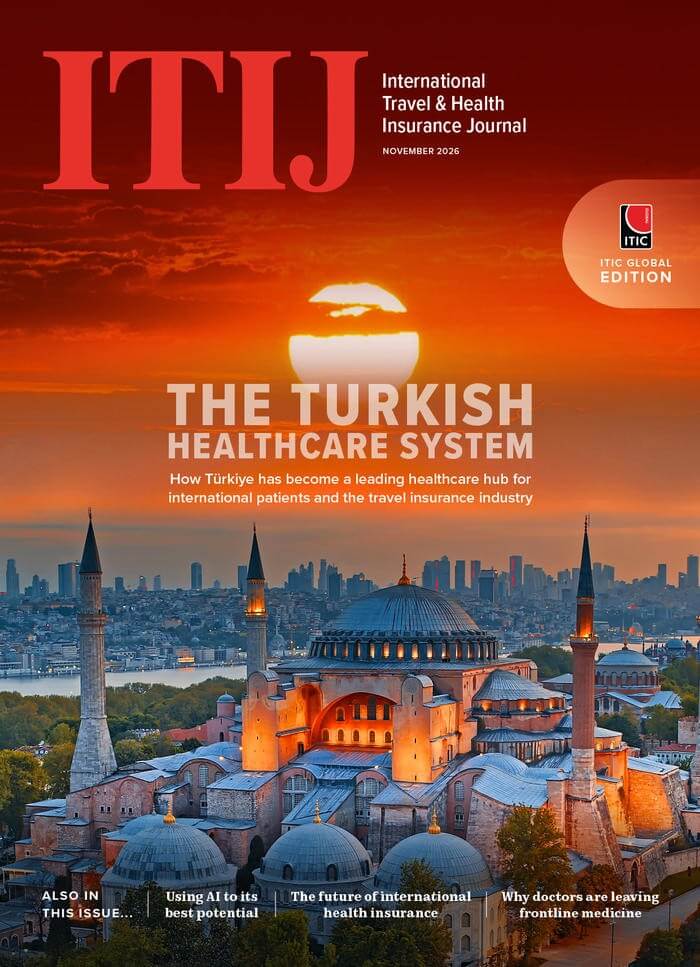
November 2026
Issue
In this, our biggest issue ever, our main focus is on artificial intelligence. After recent threats and warnings about the potential dangers of AI and calls for coordinated action to slow the technology's development, we speak to experts about the technology in a three-part special. We look at data-driven risk assessment, underwriting, and portfolio optimisation, which are all being transformed by AI, and ask what insurers and underwriters are doing to get the most out of the technology.
Editorial Team
The Editorial Team updates the ITIJ website daily, and works on features for the print edition. With expert industry knowledge and years of experience in writing about complex travel insurance issues, the Editorial Team is ready to investigate and report on the topics that matter most to ITIJ's readers.
