
Cruise insurance limitations and exclusions

Are existing cruise insurance policies keeping pace with the changing market? Alysia Cameron-Davies speaks to experts about current standard policies and what passengers need to know
As the cruise industry evolves, so do the demands on travel insurance. New, super-luxurious cruises are being launched, venturing to remote and exciting destinations, with some voyages lasting for months. These high-value cruises present unique risks, from complex trip cancellations to medical emergencies at sea.
Addressing the unique risks of cruise travel in policies
According to Stephen Samataro, Chief Revenue Officer at AXA Partners US, the latest cruise-line insurance policies are still falling behind the offerings of the broader travel insurance market as they often provide lower coverage limits for trip cancellation, medical expenses, and evacuation than third-party options. While cruise insurance coverage varies by policy, he explained that, for example, “a common cruise-line plan might cost US$140 for a $1,000 trip but only include $25,000 in medical coverage and $50,000 for evacuation. In contrast, a third-party plan costing under $100 could offer significantly higher coverage – $100,000 for medical and $500,000 for evacuation.”
Samataro also pointed out that cruise-line policies frequently cap medical coverage at around $30,000 and typically do not include waivers for pre-existing medical conditions. “Cruise-line-offered insurance tends to be more limited, both in terms of maximum coverage amounts and the reasons for coverage,” he said. “On the other hand, third-party comprehensive insurance plans generally offer higher coverage limits, more flexibility, and pre-existing condition waivers, making them a better option for those with medical concerns.”
Third-party comprehensive insurance plans generally offer higher coverage limits, more flexibility, and pre-existing condition waivers, making them a better option for those with medical concerns
Samataro confirmed that similar limitations apply to trip cancellations, as cruise-line policies often have stricter reimbursement criteria, whereas third-party plans typically cover a broader range of scenarios. Samataro explained that the limitations in many cruise-line policies can leave travellers – particularly those booking luxury cruises – “underinsured”. Additionally, he noted that bankruptcy and financial default protections remain weak, making it essential for travellers to “read the fine print” in their policy documents.
Given these gaps, Samataro concluded: “For travellers booking high-value cruises or those worried about medical emergencies at sea, a third-party comprehensive plan is often the smarter choice.”
Third-party policies
Angela Borden, Manager of Product and Underwriting at Seven Corners, agreed that third-party travel insurance is often the “stronger option” over cruise-line policies, even for trips where most of the journey takes place at sea. “This is because a true cruise insurance plan provides better coverage for the entire trip, including transportation to and from port as well as hotels on land, rather than just the cruise itself,” she said. She pointed out that when travellers cancel a cruise for a covered reason, cruise lines typically only reimburse the cost of the fare, leaving any additional expenses to the traveller, unless they have extra coverage.
Building on this, Dean Sivley, President of Berkshire Hathaway Travel Protection, explained: “Cruise-line plans typically provide coverage starting the moment you step on the ship, but a third-party plan can cover your nonrefundable airline investment if you need to cancel for a covered reason or cover flight delays encountered on the way to embarking on the cruise.” If a delay causes passengers to miss their cruise departure, he posed an important question: “How are you going to catch up, and at whose cost?”
Cover for medical evacuations from ships to hospitals of choice has become increasingly common, as have plans that include cover for children at no extra cost
Sivley noted that many comprehensive travel insurance plans in the US offer benefits for itinerary disruptions, such as a ship skipping a port due to bad weather or a river cruise being affected by water levels.
Additionally, he pointed out that cruise-line insurance often reimburses trip cancellations in the form of vouchers, whereas third-party plans generally provide cash refunds.
But missing a flight isn’t the only way passengers can find themselves stranded. More travellers are now missing their cruise departure after excursions – so does insurance cover that?
According to Samataro, it depends. Some policies offer missed connection or trip interruption benefits, but coverage isn’t guaranteed and usually hinges on the reason for the delay. “Policies vary by provider, product, and even state regulations,” he said. He stressed that, in order to avoid surprises, travellers should check their policy details carefully and, if in doubt, consult a licensed insurance agent before assuming they’re covered.
Despite the limitations of cruise-line policies, Borden acknowledged that cruise insurance is continually evolving to address the needs of travellers. “In addition to standard coverage for trip cancellation and trip delay, you’ll see more plans offering benefits like itinerary change for when you suffer financial loss because the cruise line changed the scheduled itinerary, missed tour or cruise connection, and cruise diversions and disablements,” she concluded.

Assessing coverage limits
Sivley noted that most US comprehensive travel insurance plans cover up to 100% of trip costs. He added that for high-value cruises, it’s important for travellers to choose a plan that covers the full, nonrefundable deposits, as some plans may have a cap on cancellation coverage.
“It’s very clear among most US comprehensive travel insurance plans what trip value you can cover since you must enter the nonrefundable cost of your cruise in order to get a quote,” he stated. “If your trip value exceeds the allowable trip cost, you won’t be given a quote. However, there are a number of plan options available, and cruisers should select what’s best for their cruise investment and travel concerns.”
Borden echoed this, explaining that for trip protection plans where the premium is based on trip cost, it should be clear at the point of purchase whether adequate coverage is available. She emphasised that when in doubt, reviewing the schedule of benefits and confirming the coverage maximum is essential to ensure it’s sufficient to cover the total trip costs.
Moreover, she stressed that reviewing the list of covered reasons for trip cancellation is equally important. “Reimbursement for any amount must be triggered by a specific reason as listed in the plan document. In basic, less expensive plans, that list of covered reasons tends to be more restrictive. A plan with broader trip cancellation triggers may be more expensive, but that’s because you’re being protected in more situations. Having this broader coverage may be more important to travellers than the actual dollar amount covered.”
Enhancing travel insurance for cruise passengers
Reflecting on the improvements already made, Sivley emphasised that US travel insurance plans have continued to evolve. Over the past couple of decades, he noted, cover for medical evacuations from ships to hospitals of choice has become increasingly common, as have plans that include cover for children at no extra cost, thanks to the rise in family cruising.
He added that in response to growing concerns about cruise disruptions, diversions, and potential quarantines, travel insurers are now incorporating coverage for these issues into their plans.
Even on a US-based cruise, healthcare typically isn’t covered as if you were on US soil, and this comes as a major surprise to many cruise travellers
Borden stressed that the travel industry could do more to educate travellers, helping them better understand their responsibilities and rights on a cruise. “Many Americans view their cruise ship as an extension of their home base,” she said. “Even on a US-based cruise, healthcare typically isn’t covered as if you were on US soil, and this comes as a major surprise to many cruise travellers. It rarely crosses their mind that their domestic health insurance might not cover them if they need medical care on board, so if they do get sick or hurt, they’re often stunned at the out-of-pocket expense they now face.

“Medical care on a cruise ship is expensive,” she continued. “Helping travellers recognise the reality of paying for treatment during a cruise and guiding them to travel insurance that can protect them in those situations is vitally important.”
From the perspective of a medical provider, Joe Scott, Senior Director of Fleet Medical Operations for Carnival Corporation, stressed: “Cruising is a 24/7 adventure, one in which emergencies can occur at any time. Insurers can better serve the needs of their customers by also being available around the clock. As a medical provider, it can be very challenging to provide the best possible care when the patient’s travel insurer is only available during business hours.”
To finish, Borden highlighted that long-term cruise protection could be one of the biggest growth opportunities. “The market continues to create more itineraries lasting several months. Providing appropriate coverage for cruise travellers who plan to be away from home, sometimes for a year or more, requires additional consideration.”
Conclusion
While cruise insurance policies are evolving, they still lag behind the broader travel insurance market in key areas such as coverage limits, pre-existing condition protections and flexibility. The gaps in cruise-line policies can leave customers underinsured, particularly those booking high-value cruises or facing medical concerns. In contrast, third-party insurers typically offer more comprehensive protection, covering pre-departure expenses and a wider range of potential disruptions throughout the journey.
As the cruise industry continues to expand into more remote destinations and offer longer itineraries, insurance providers – both cruise-line and third-party – must adapt. Potential areas for improvement include expanding coverage for extended voyages, strengthening protections for itinerary disruptions, and improving customer education around policy limitations. Addressing these areas could help ensure that cruise insurance keeps pace with the evolving demands of the market, providing travellers with the necessary protection in an increasingly complex landscape.
June 2025
Issue
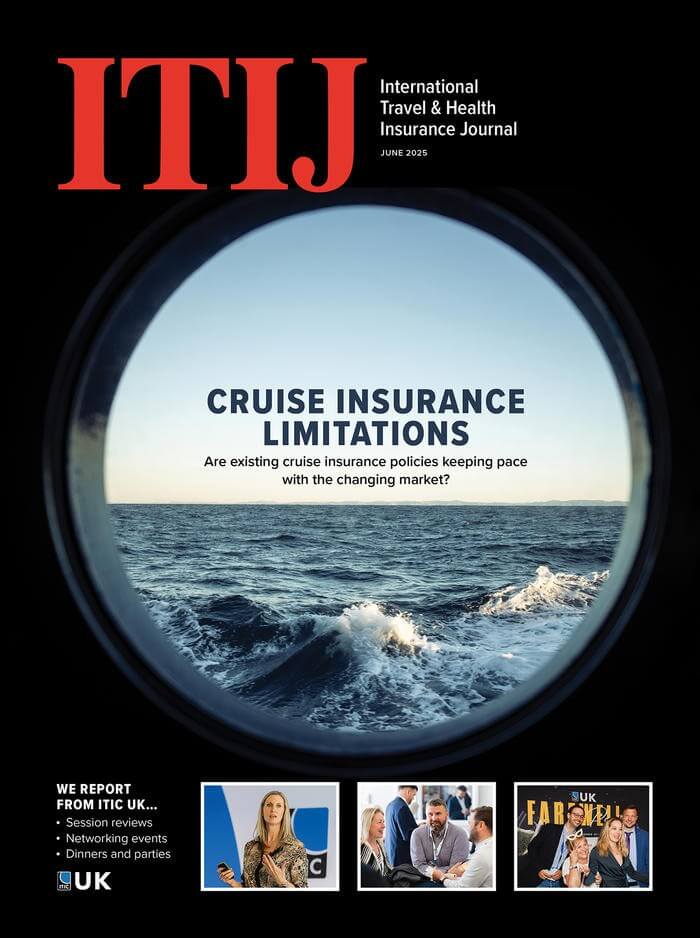
In this issue of ITIJ we examine the repatriation of mortal remains, and look at the trends, challenges and local expertise required. We also consider cruise insurance limits and exclusions and ask whether the latest cruise insurance policies are keeping up with what the travel market is offering.
Alysia Cameron-Davies
Alysia is a copy writer for Voyageur Publishing.