
The changing face of medical repatriation

As increasing numbers of older people travel internationally, air ambulance providers face the challenge of caring for patients with increasingly complex medical needs
Aretrospective research study examining international medical repatriation missions conducted by Fox Flight Air Ambulance, a Toronto-based medical transport provider, has been published in the Air Medical Journal. The study, led by Fox Flight Medical Director Dr Raymond Kao, examines patient transports conducted by the company between 2009 and 2024.
The findings
Dr Kao and his colleagues analysed data from 3,905 individual patient transports. Most patients included in the study were over 60 and had a range of medical conditions, including orthopaedic trauma as well as cardiovascular, neurovascular and infectious diseases. The retrospective observational cohort study extracted chart data relating to demographics, diagnoses, transport modality, team composition and medical interventions.
There is relatively limited research focused specifically on this area, particularly research involving a cohort of this size
“The objective of the study was to describe the patient demographics, clinical indications, transport characteristics and in-flight events associated with international fixed-wing air medical repatriations,” said Dr Kao. “There is relatively limited research focused specifically on this area, particularly research involving a cohort of this size. We had a substantial amount of archived data available, so we felt it would be useful to analyse and share it.”
Through subgroup analysis, the study identified significant associations between in-flight interventions and mechanical ventilation, team composition and age group.
Independent predictors of in-flight events included age, orthopaedic/trauma diagnoses, neoplasm-related diagnoses, oxygen therapy and invasive mechanical ventilation. The findings may help inform risk assessment, team composition and operational planning for international medical repatriation missions.
“The air ambulance platform is unique because the medical team is limited in what it can do,” said Dr Kao. “If a patient’s condition changes or deteriorates during a transfer, the team cannot easily access additional diagnostic testing or specialist consultation. That makes careful pre-flight assessment particularly important, including understanding the patient’s condition, selecting an appropriately experienced medical team and anticipating potential changes during the flight.”
Hopes for more data
Dr Kao said he hopes the study will encourage other air ambulance providers to examine their own transport data and contribute to a broader body of research in the field.
The need for research in this area will only grow as international travel increases and travellers become older and medically more complex. The study notes that international travel volumes are projected to reach 1.8 billion trips annually by 2030. At the same time, changes in traveller demographics and medical complexity, along with operational and logistical challenges, will place additional demands on air ambulance services.
Dr Kao said: “This is going to be a challenge for years to come, because as more older people travel, some will experience falls, pneumonia and other medical problems while away from home. The more data we can generate as an industry to better understand these patients and the challenges associated with transporting them, the more informed our approach to their care can be.”
A link to the Air Medical Journal article can be found at foxflight.com
Dr Raymond Kao
Medical Director, Fox Flight Air Ambulance
Dr Kao is a Professor of Medicine at Western University and an internist and critical care physician at London Health Sciences Centre. He has served as Medical Director of Fox Flight Air Ambulance since its inception and completed 42 years of Canadian Forces service. He holds an MBA and MPH.
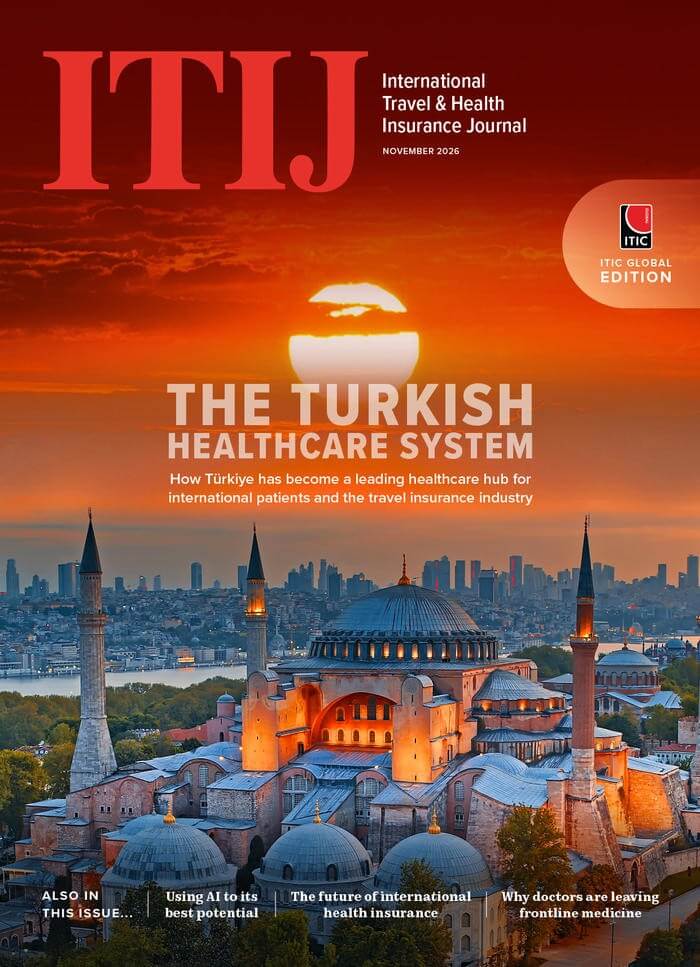
November 2026
Issue
In this, our biggest issue ever, our main focus is on artificial intelligence. After recent threats and warnings about the potential dangers of AI and calls for coordinated action to slow the technology's development, we speak to experts about the technology in a three-part special. We look at data-driven risk assessment, underwriting, and portfolio optimisation, which are all being transformed by AI, and ask what insurers and underwriters are doing to get the most out of the technology.
Editorial Team
The Editorial Team updates the ITIJ website daily, and works on features for the print edition. With expert industry knowledge and years of experience in writing about complex travel insurance issues, the Editorial Team is ready to investigate and report on the topics that matter most to ITIJ's readers.
